Css

CSS Best Practices for Clean, Maintainable Code
Writing CSS that works today is easy. Writing CSS that still makes sense in a year, after a redesign, three new team members, and a hundred feature r
Continue Reading
The Future of CSS: Upcoming Features to Watch
CSS is moving faster than it ever has. A few years ago, a new layout feature took the better part of a decade to go from proposal to something you co
Continue Reading
Building a Design System with Modern CSS
A design system is the difference between a product that feels coherent and one that feels like five teams built it in five different years. It's
Continue Reading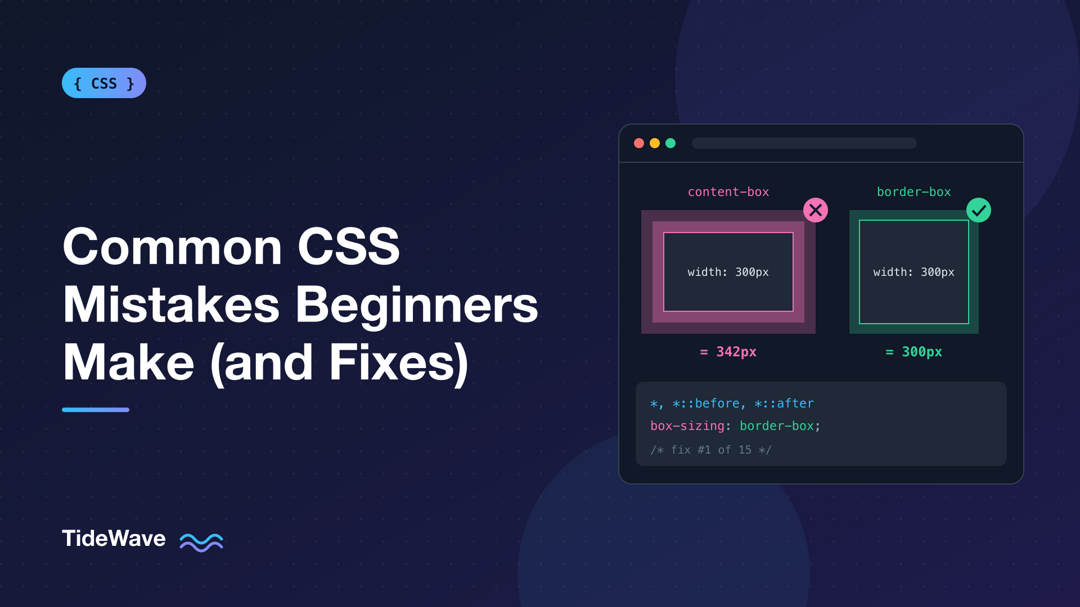
Common CSS Mistakes Beginners Make and How to Fix Them
Everyone who learns CSS goes through the same rite of passage. You write what looks like perfectly reasonable code, refresh the page, and something i
Continue Reading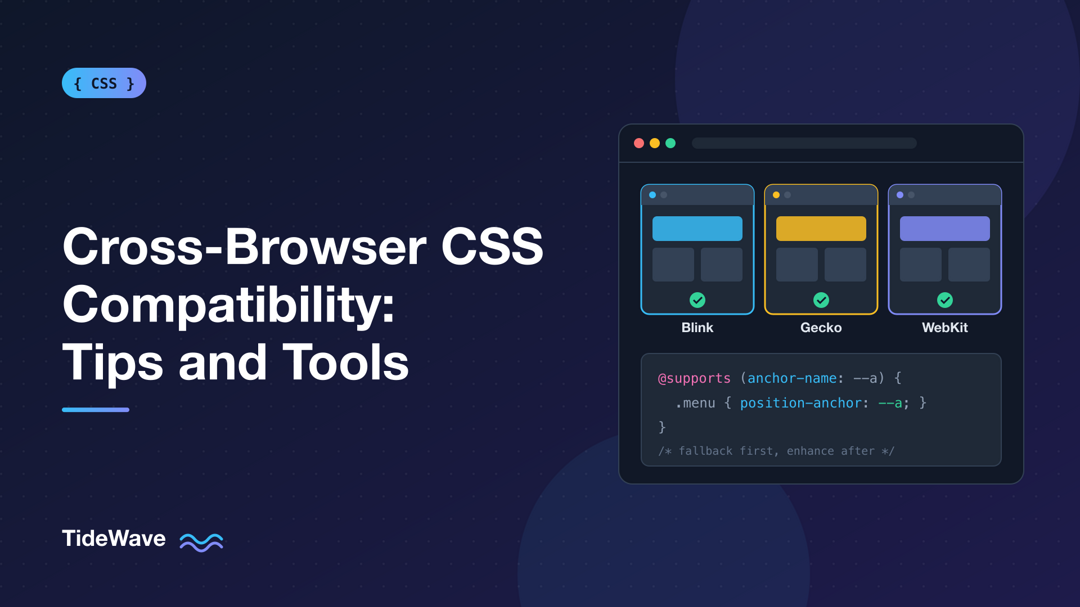
Cross-Browser CSS Compatibility: Tips and Tools
You finish a component, check it in Chrome, and it looks exactly like the design. Then someone on the team opens it on an iPhone and the sticky heade
Continue Reading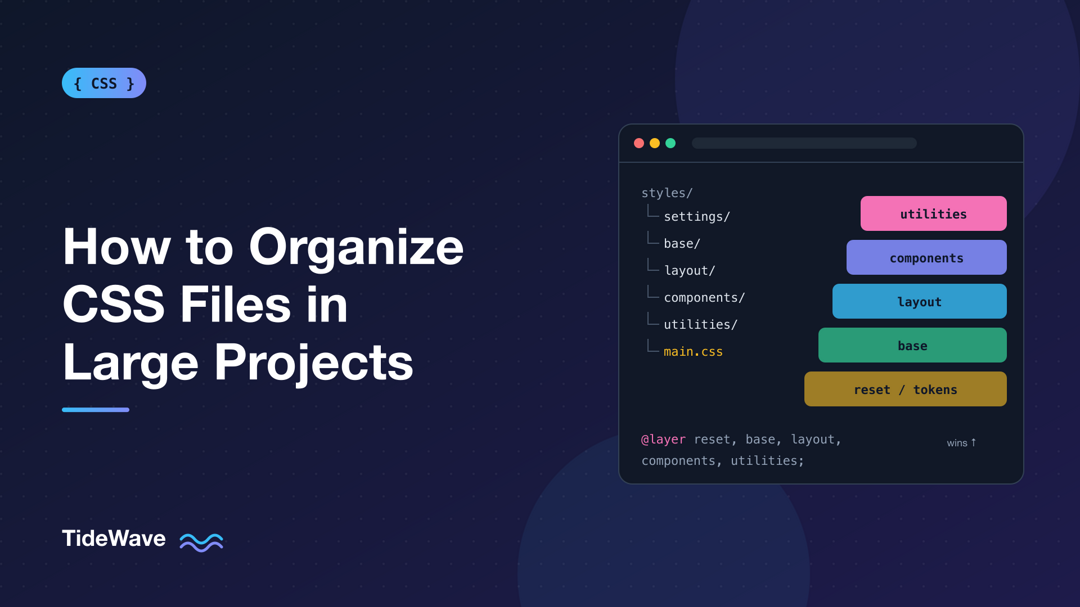
How to Organize CSS Files in Large-Scale Projects
A single styles.css file is perfect for a landing page. It's still fine for a small marketing site. But somewhere along the way, as the product gro
Continue Reading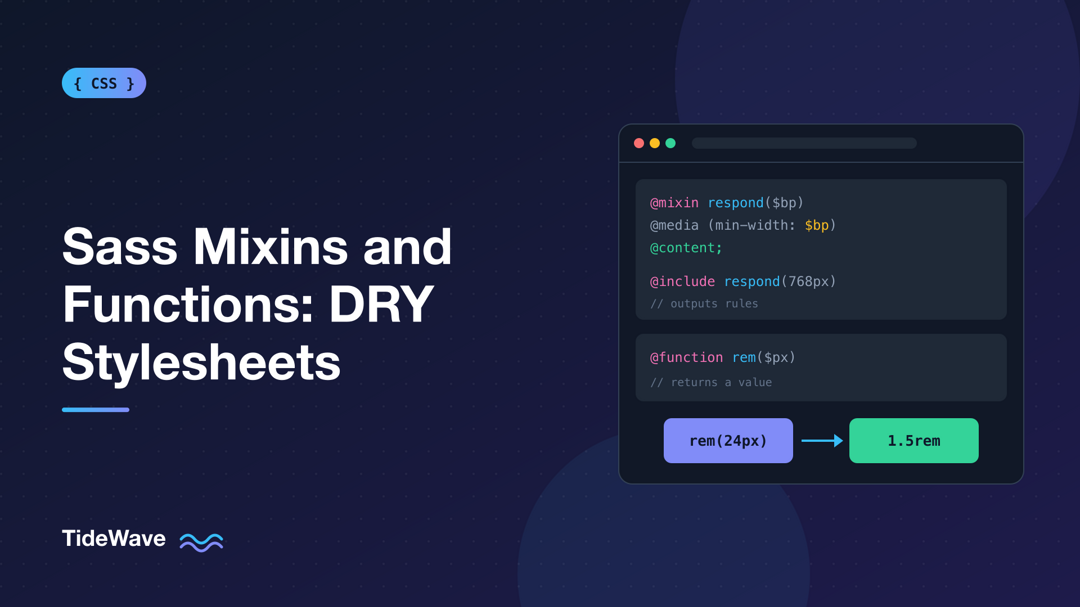
Sass Mixins and Functions: Writing DRY Stylesheets
Every stylesheet eventually grows a little copy-paste problem. The same breakpoint query shows up in forty components. The same five lines of "visual
Continue Reading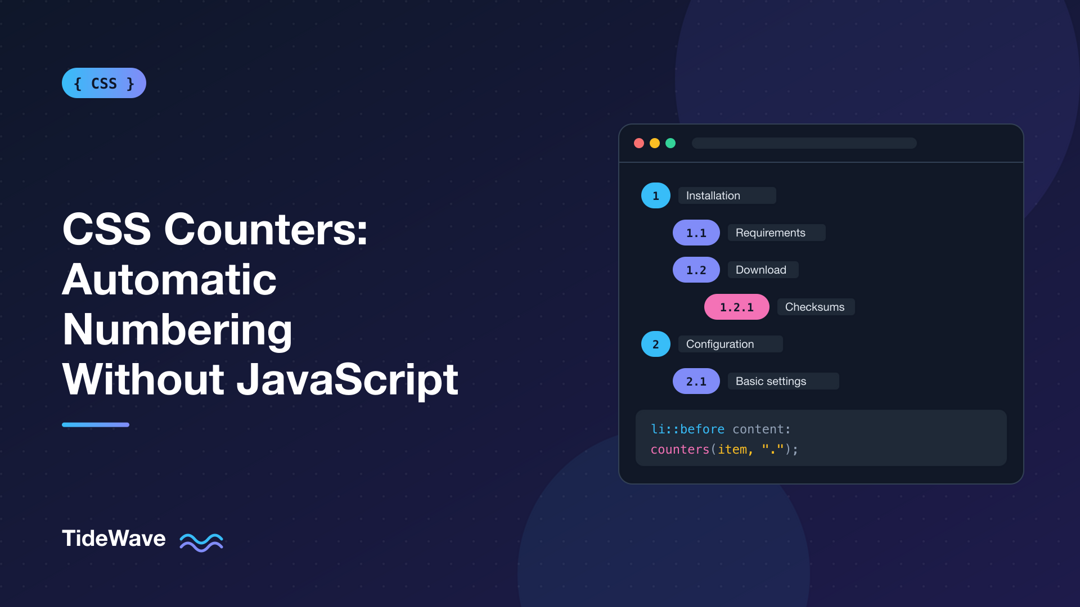
CSS Counters: Automatic Numbering Without JavaScript
Numbering things by hand is one of those jobs that seems simple until it isn't. You write "Step 1", "Step 2", "Step 3", then someone inserts a new st
Continue Reading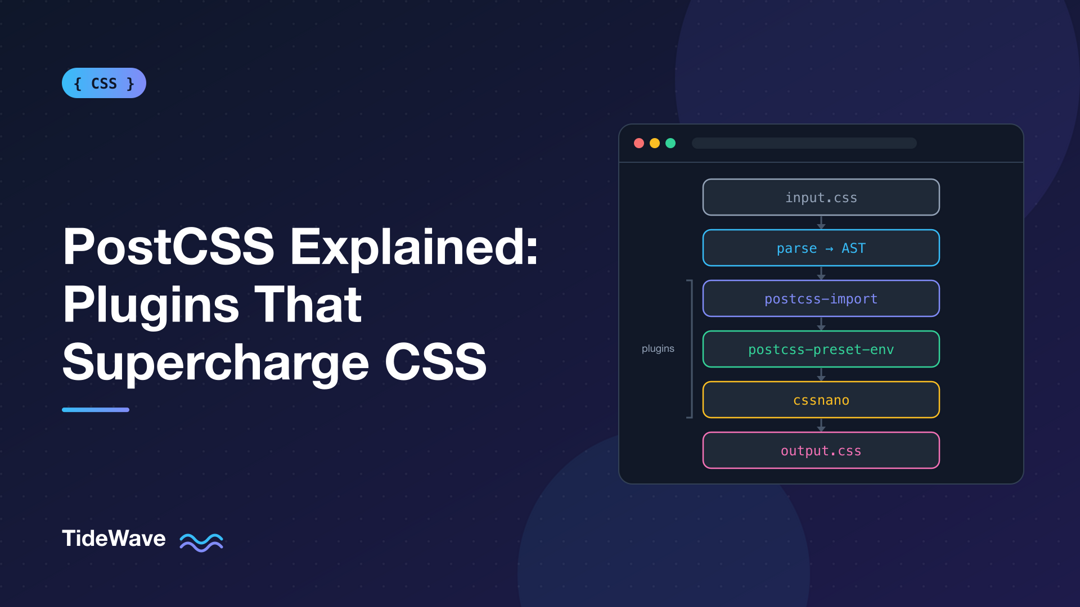
PostCSS Explained: Plugins That Supercharge Your CSS
If you've built a front-end project in the last few years, there's a very good chance PostCSS has touched your CSS, even if you never installed i
Continue Reading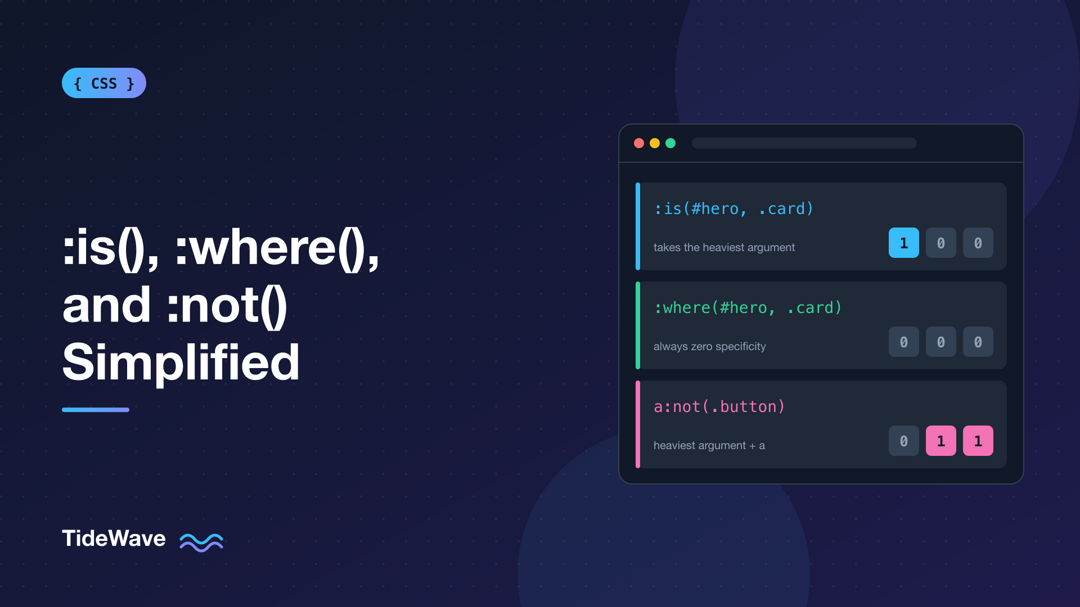
:is(), :where(), and :not(): Simplifying Complex Selectors
If you've maintained a stylesheet for more than a few months, you've probably seen selectors like this one: .article h1 a:hover, .article h2
Continue Reading
CSS Selectors Cheat Sheet: From Basic to Advanced
Every CSS rule you write starts with a selector. It's the part that answers the question "which elements should these styles apply to?" Get it ri
Continue Reading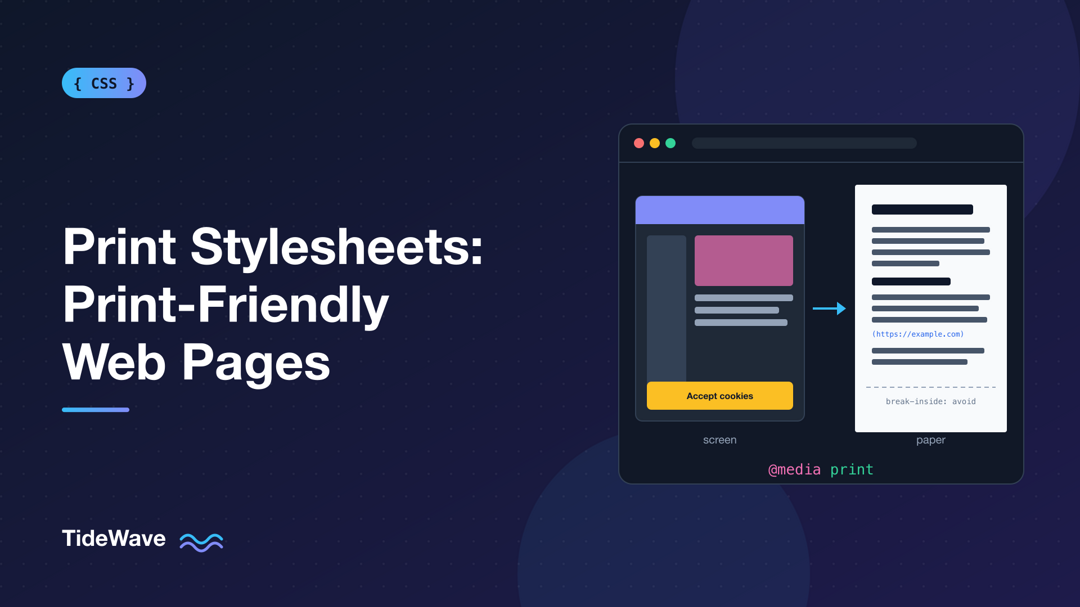
Print Stylesheets: How to Make Web Pages Print-Friendly
It's easy to forget that people still print web pages. But they do: recipes, boarding passes, invoices, receipts, event tickets, documentation, legal
Continue Reading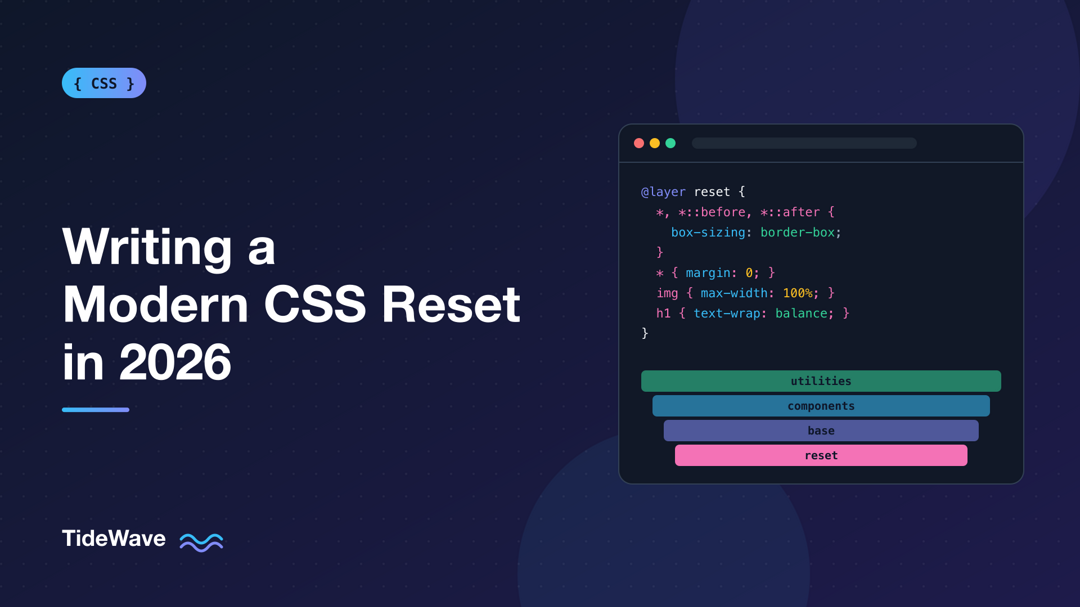
Writing a Modern CSS Reset in 2026
A lot of the CSS resets still copied into projects today were written for a different web. They patched Internet Explorer quirks, fixed HTML5 element
Continue Reading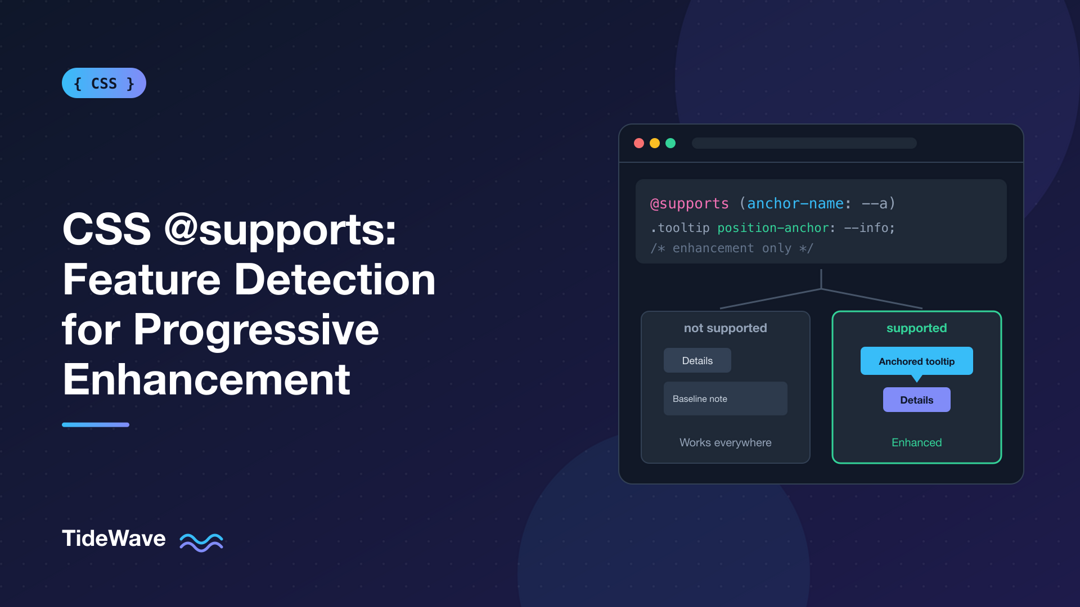
CSS @supports: Feature Detection for Progressive Enhancement
CSS moves faster today than it ever has. Container queries, :has(), cascade layers, anchor positioning, scroll-driven animations, and relative colo
Continue Reading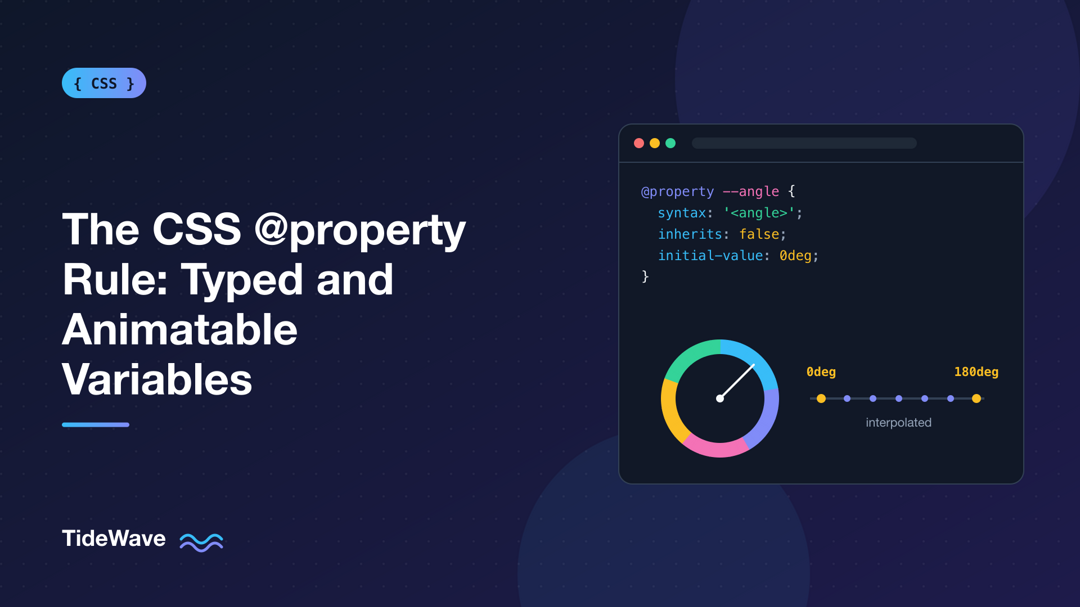
The CSS @property Rule: Typed and Animatable Variables
Try this experiment. Put a gradient on a button using a custom property for the angle, then transition that property on hover: .button { --
Continue Reading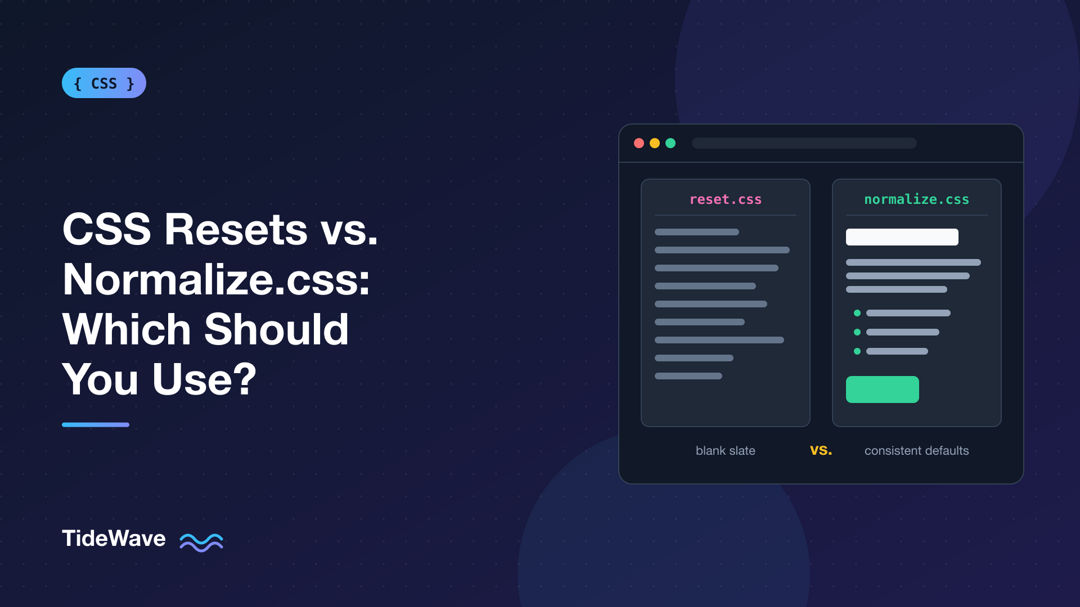
CSS Resets vs. Normalize.css: Which Should You Use?
Every browser ships with a default stylesheet. It's the reason an unstyled h1 is large and bold, a ul has bullets and indentation, and body has
Continue Reading
Theming Websites with CSS Custom Properties
Theming used to mean maintaining separate stylesheets. A "dark" stylesheet overrode every color in the "light" one, a "high contrast" version overrod
Continue Reading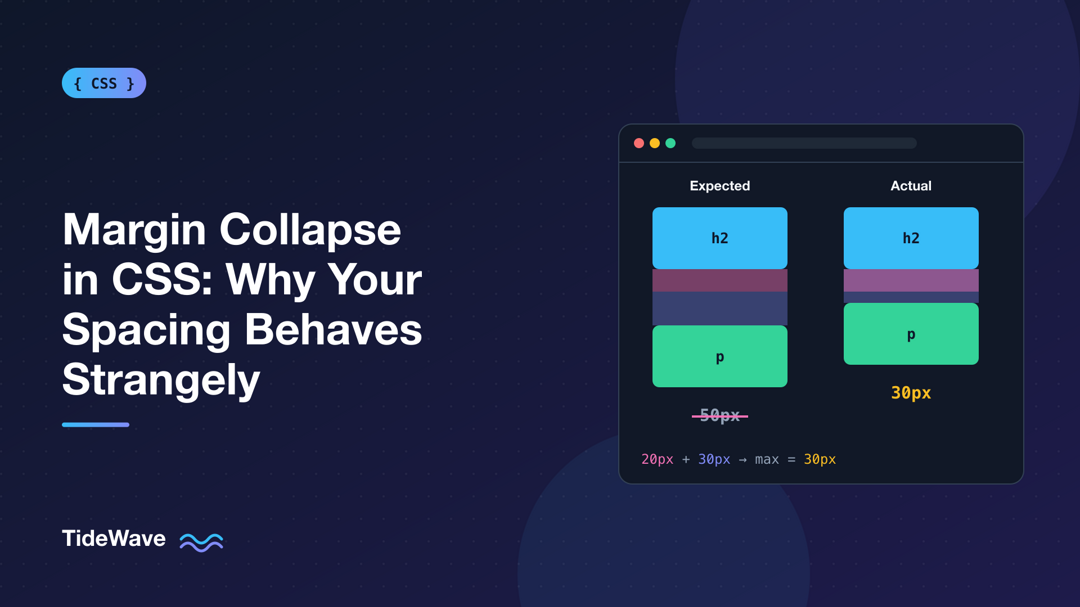
Margin Collapse in CSS: Why Your Spacing Behaves Strangely
You give a heading margin-bottom: 20px and the paragraph after it margin-top: 30px. You'd expect 50px of space between them. The browser shows 30
Continue Reading
Flexbox Deep Dive: flex-grow, flex-shrink, and flex-basis
Most developers learn flexbox by copying flex: 1 onto a few elements and watching them share space. That works until it doesn't. Two items with `fl
Continue Reading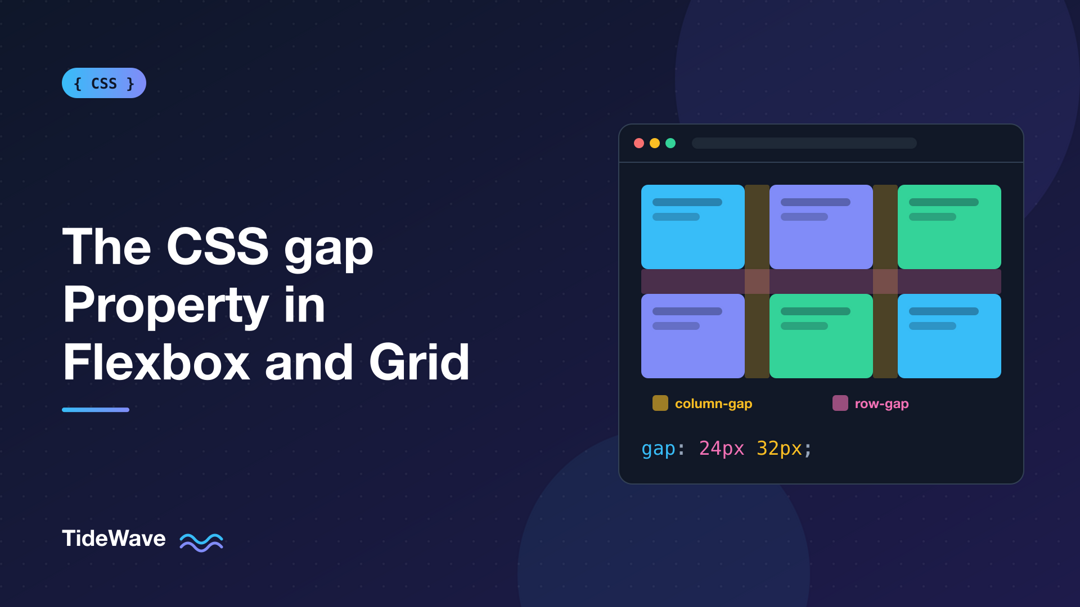
The CSS gap Property: Spacing Made Simple in Flexbox and Grid
Spacing items evenly sounds like the simplest thing in CSS, yet for a long time it was surprisingly awkward. Put a margin on every item and you get u
Continue Reading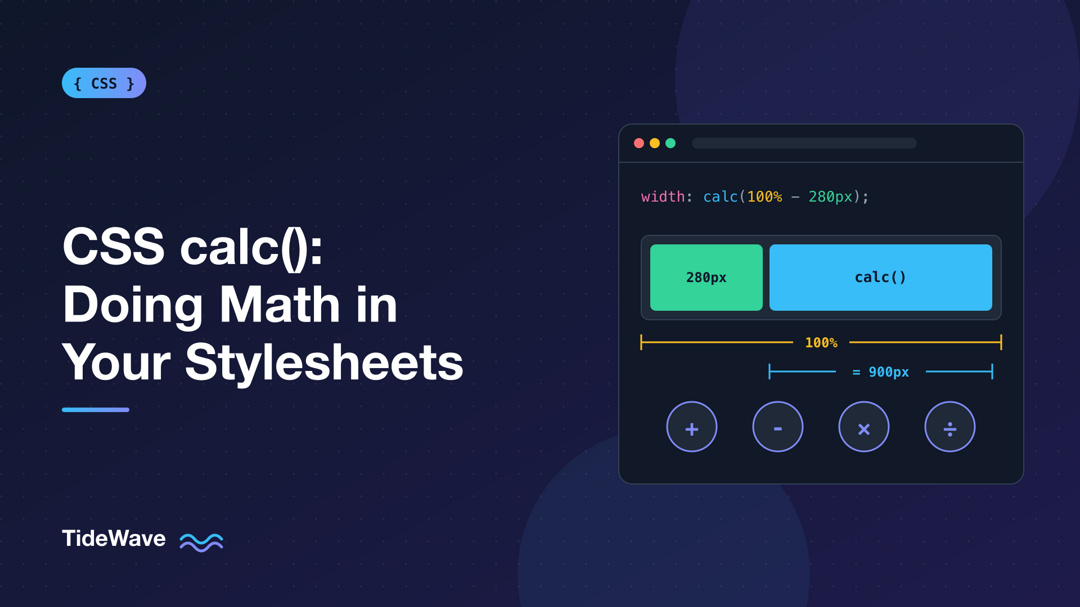
CSS calc(): Doing Math in Your Stylesheets
For years, one of the most common frustrations in CSS was simple arithmetic. You wanted a sidebar that was "the full width minus 300 pixels," or a co
Continue Reading
auto-fit vs. auto-fill in CSS Grid: What's the Difference?
There's one line of CSS Grid that shows up in almost every modern card layout: grid-template-columns: repeat(auto-fill, minmax(200px, 1fr));
Continue Reading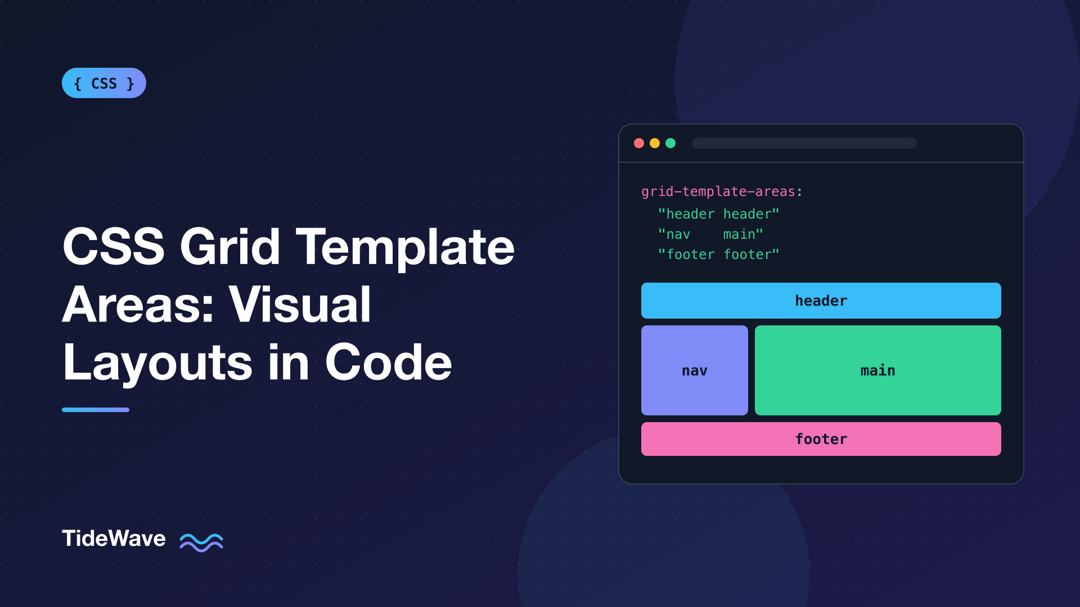
CSS Grid Template Areas: Visual Layouts in Code
Most CSS layout code is abstract. You read grid-column: 2 / 4 or flex: 1 1 0 and have to picture the result in your head. grid-template-areas i
Continue Reading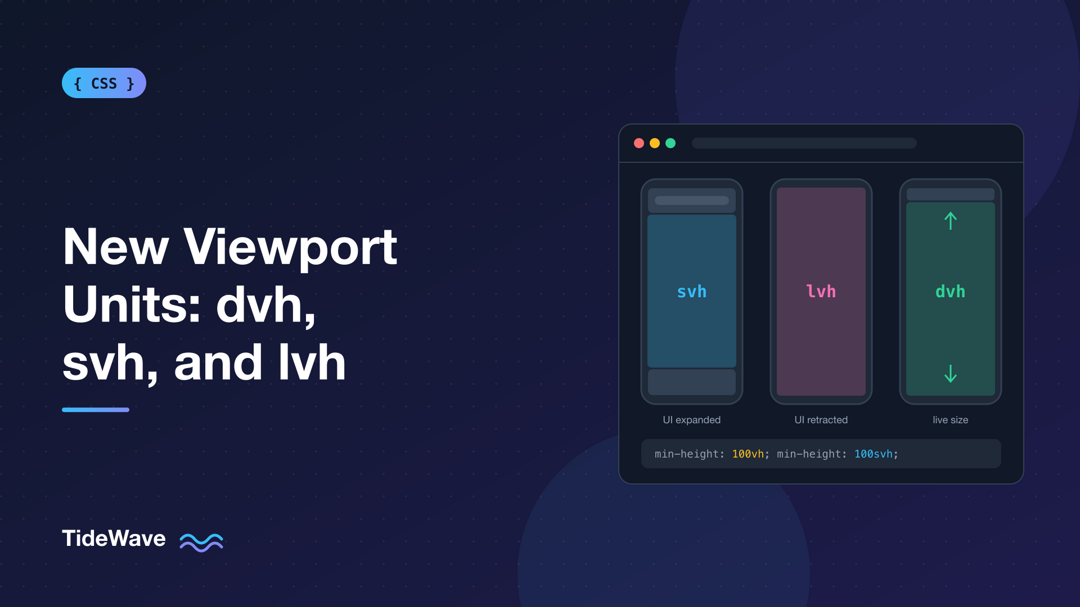
New Viewport Units: dvh, svh, and lvh Explained
If you've ever built a full-screen hero section with height: 100vh, you've probably opened it on a phone and found the bottom cut off. The call-to-
Continue Reading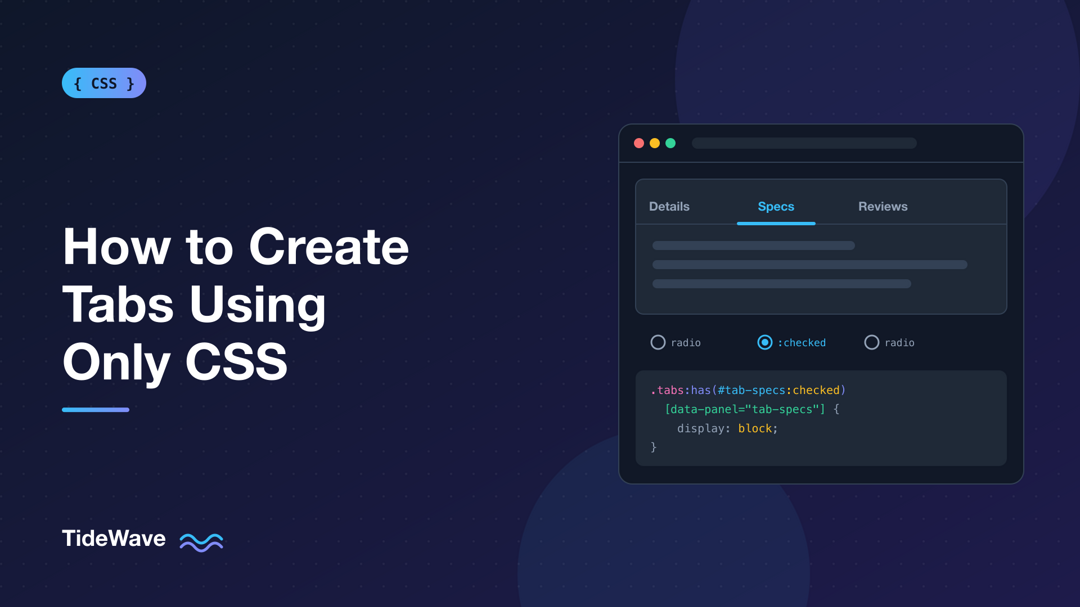
How to Create Tabs Using Only CSS
Tabs are a tidy way to put several related panels of content in the same space: product descriptions and reviews, code samples in different languages
Continue Reading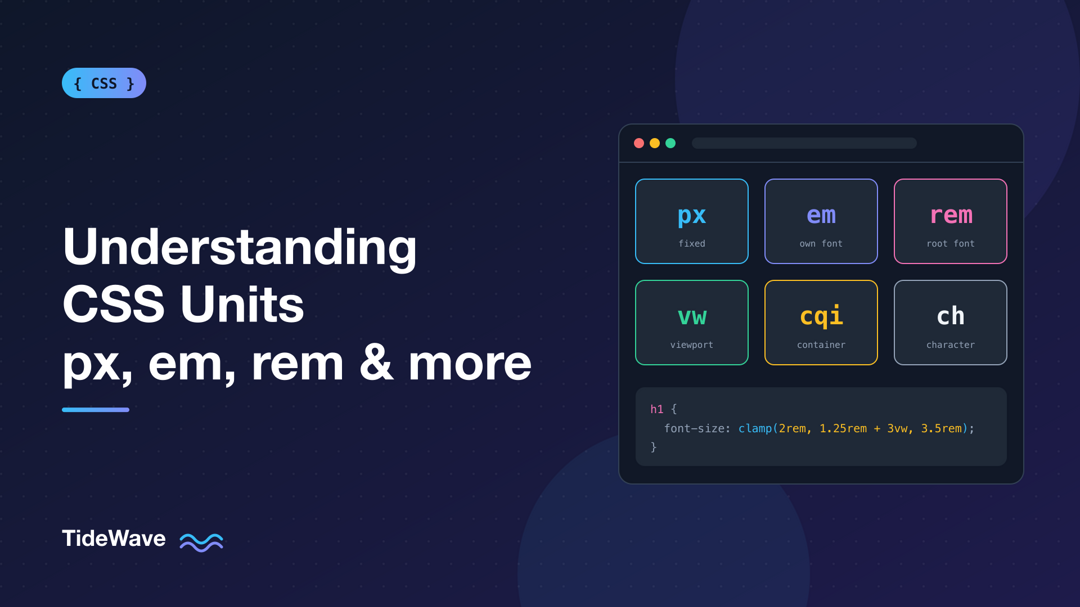
Understanding CSS Units: px, em, rem, vw, vh, and More
Every length in CSS comes with a unit, and the one you pick decides how that length behaves when things change. Will this padding grow when the user
Continue Reading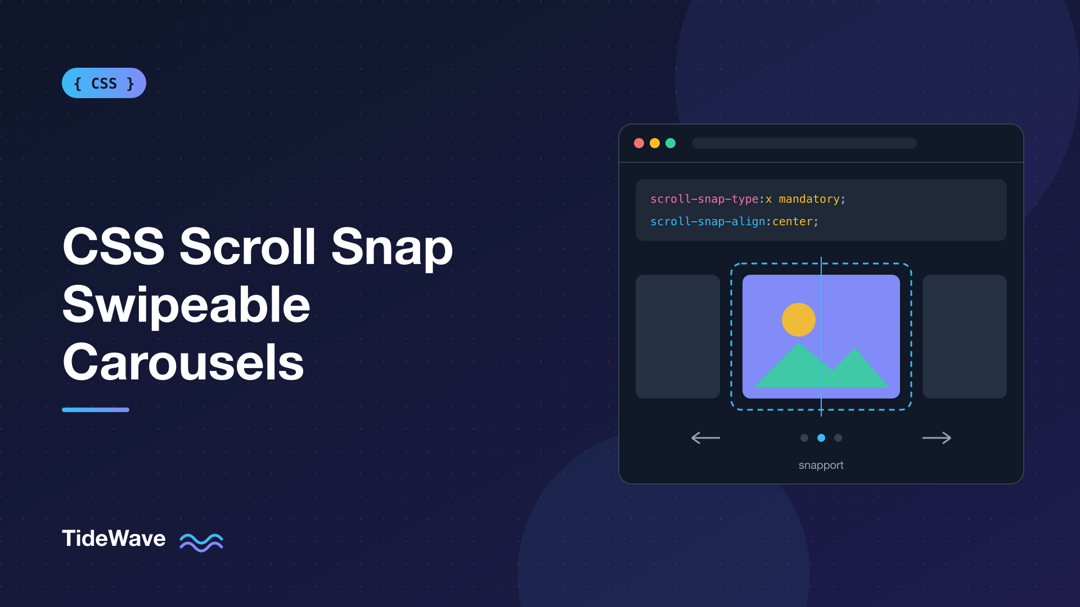
CSS Scroll Snap: Creating Smooth, Swipeable Carousels
Carousels have a reputation problem. Many of them are heavy JavaScript widgets that hijack touch events, fight the browser's own scrolling physics, a
Continue Reading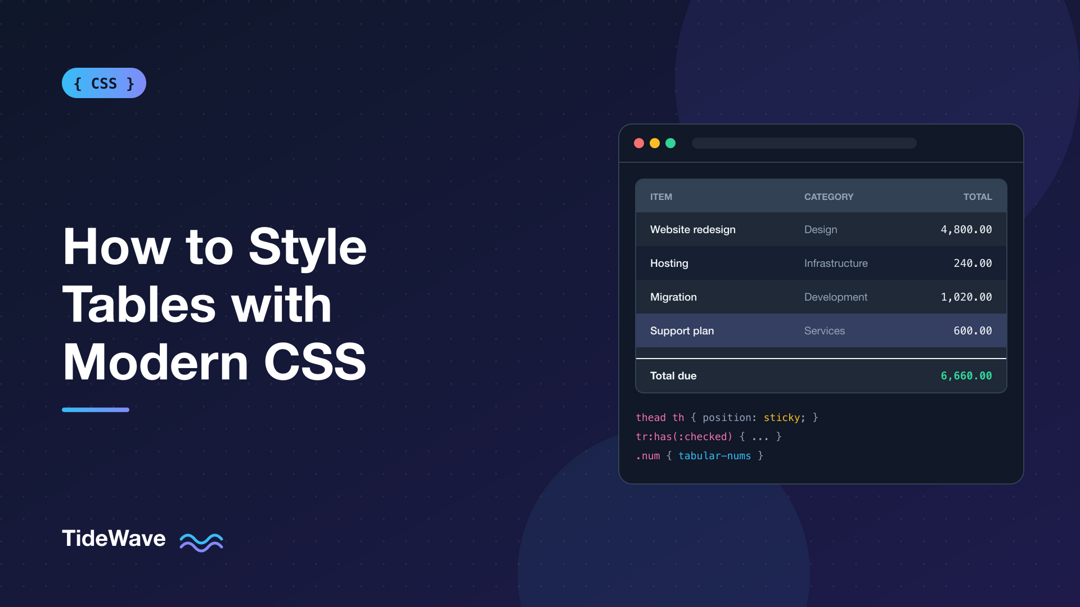
How to Style Tables with Modern CSS
Tables have a complicated history on the web. For years they were abused for page layout, then CSS layout arrived and developers overcorrected, treat
Continue Reading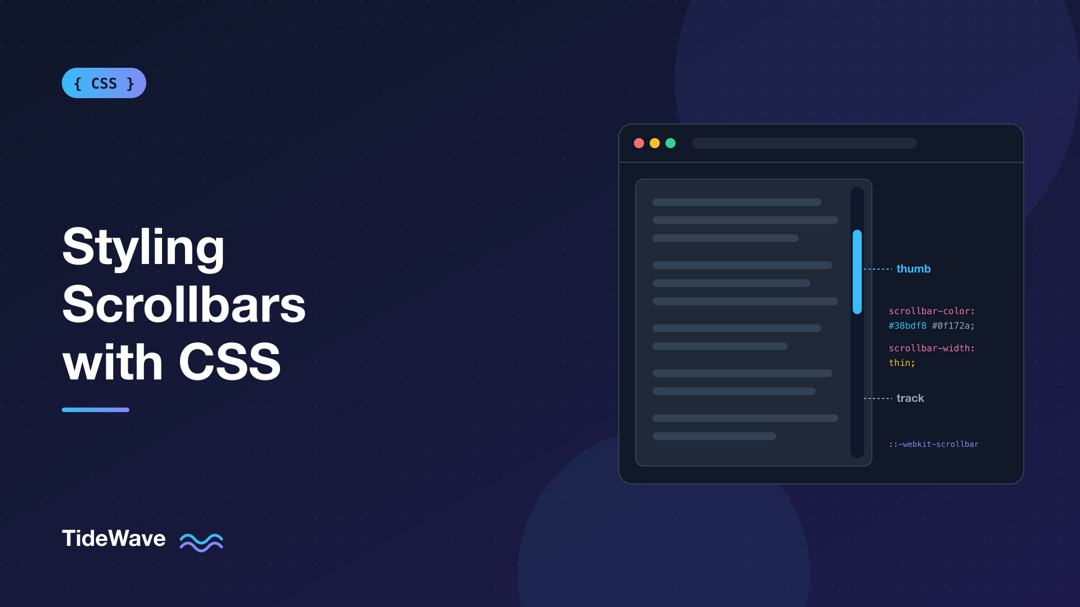
Styling Scrollbars with CSS: A Cross-Browser Guide
Scrollbars are one of the few pieces of browser chrome that sit inside your design. On a dark-themed dashboard, a bright gray system scrollbar runnin
Continue Reading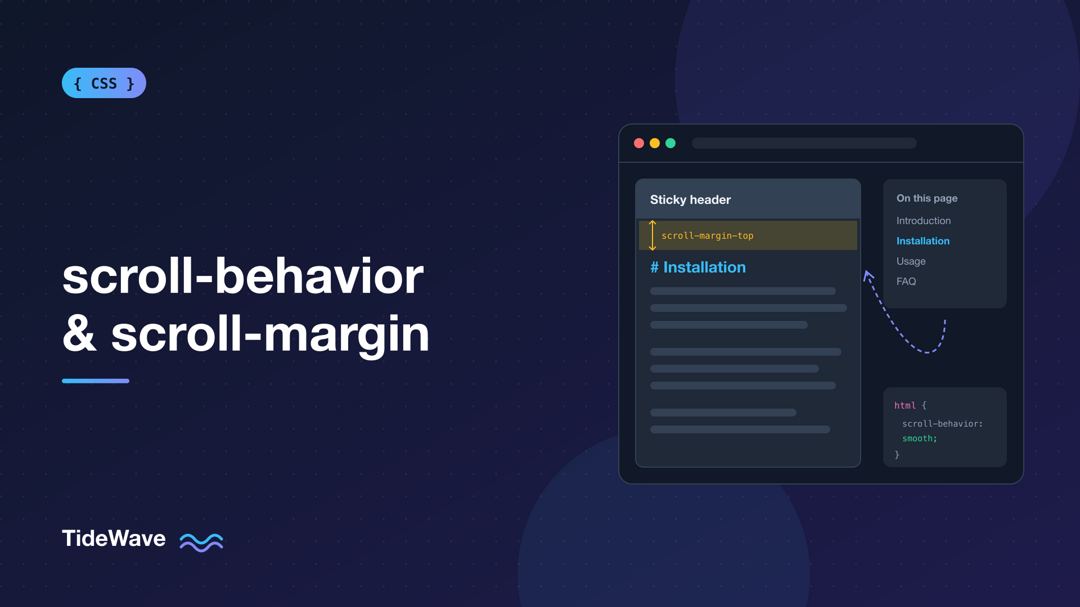
scroll-behavior and scroll-margin: Better In-Page Navigation
In-page links are everywhere: tables of contents on long articles, "back to top" buttons, skip links, FAQ jump lists, and one-page marketing sites wh
Continue Reading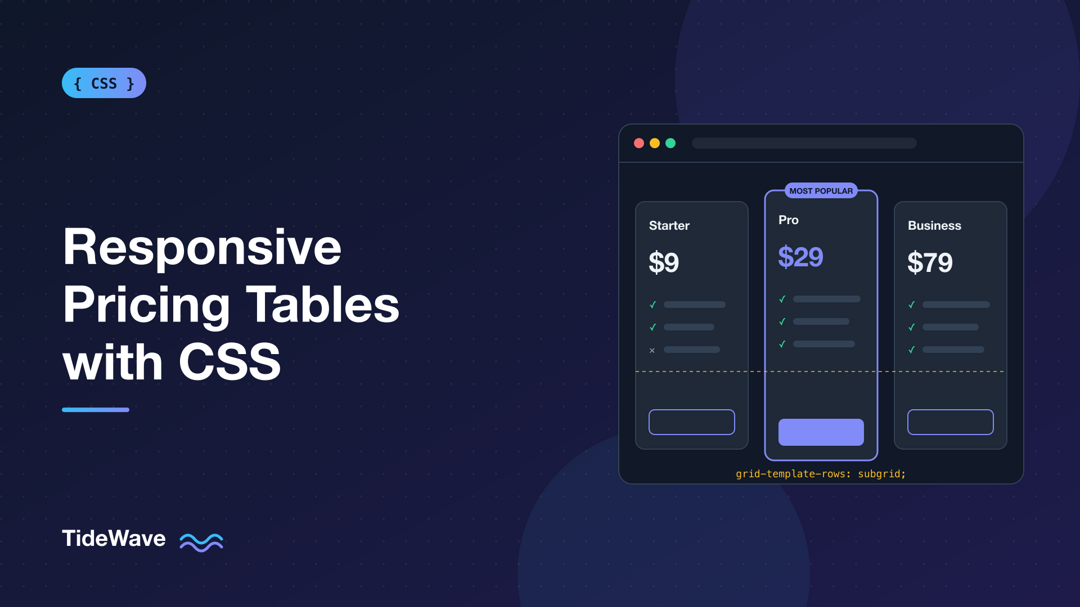
How to Build a Responsive Pricing Table with CSS
The pricing page is where a visitor decides whether to become a customer, and the pricing table is the centerpiece of that page. It needs to present
Continue Reading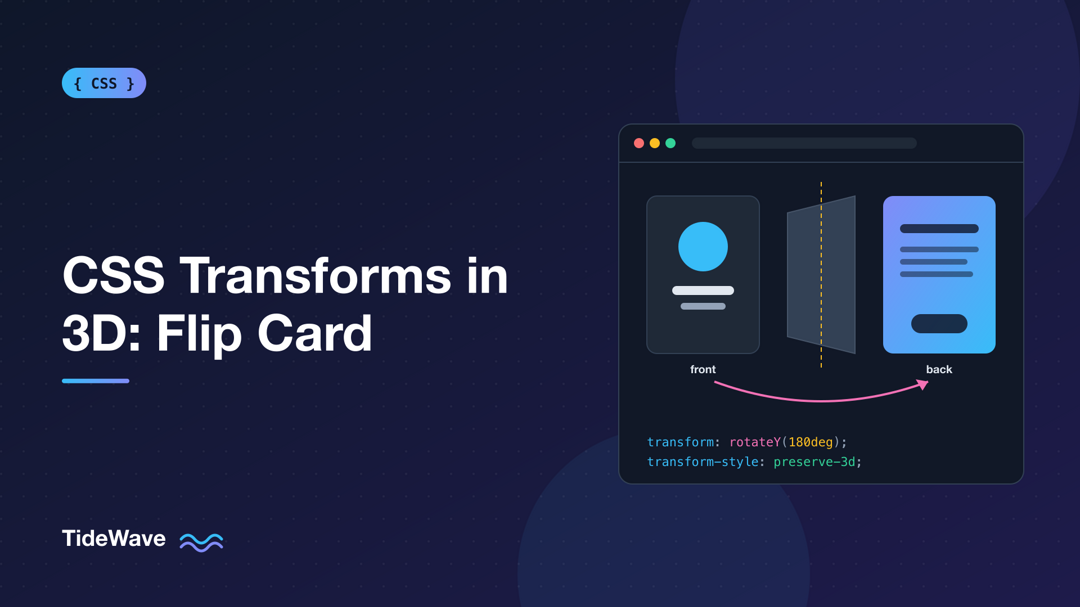
CSS Transforms in 3D: Building a Flip Card Effect
Most CSS transforms you write are flat: translate() to nudge, scale() to grow, rotate() to spin. But CSS also has a full 3D transform system, w
Continue Reading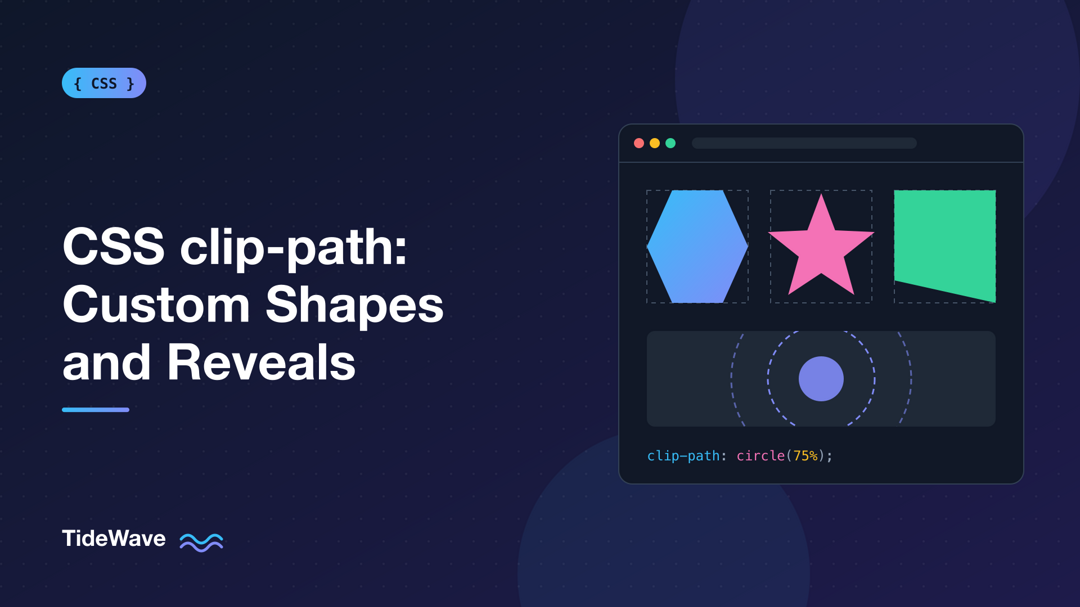
CSS clip-path: Creating Custom Shapes and Reveals
The web is built out of rectangles. Every element, whether it's a heading, an image, or a button, is laid out as a box. But the way an element _looks
Continue Reading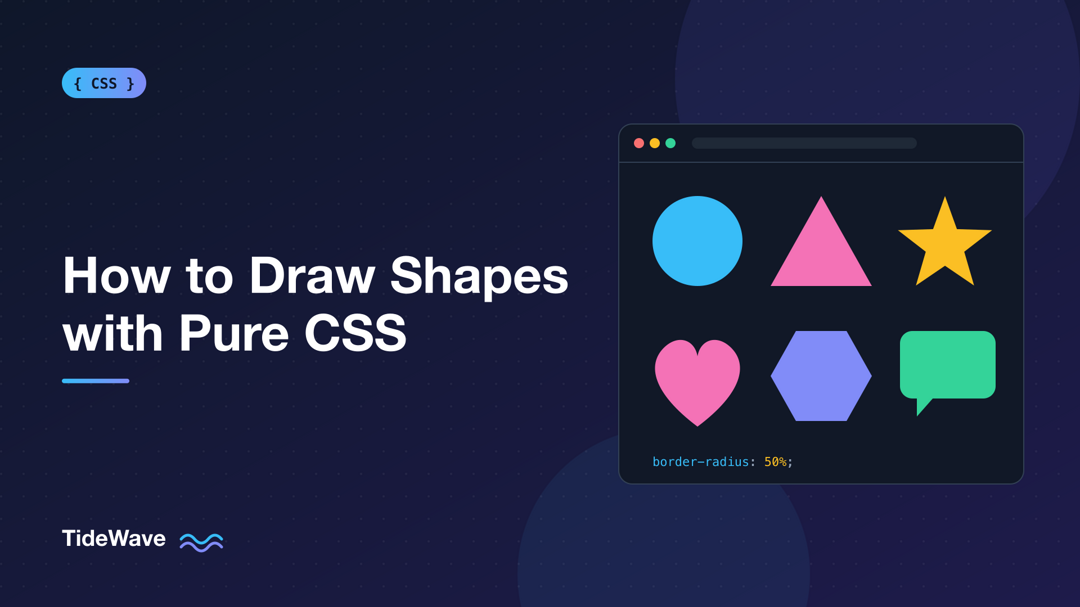
How to Draw Shapes with Pure CSS
Drawing shapes with CSS is part party trick, part genuinely useful skill. Tooltips need arrows, badges need circles, ribbons need notches, and loadin
Continue Reading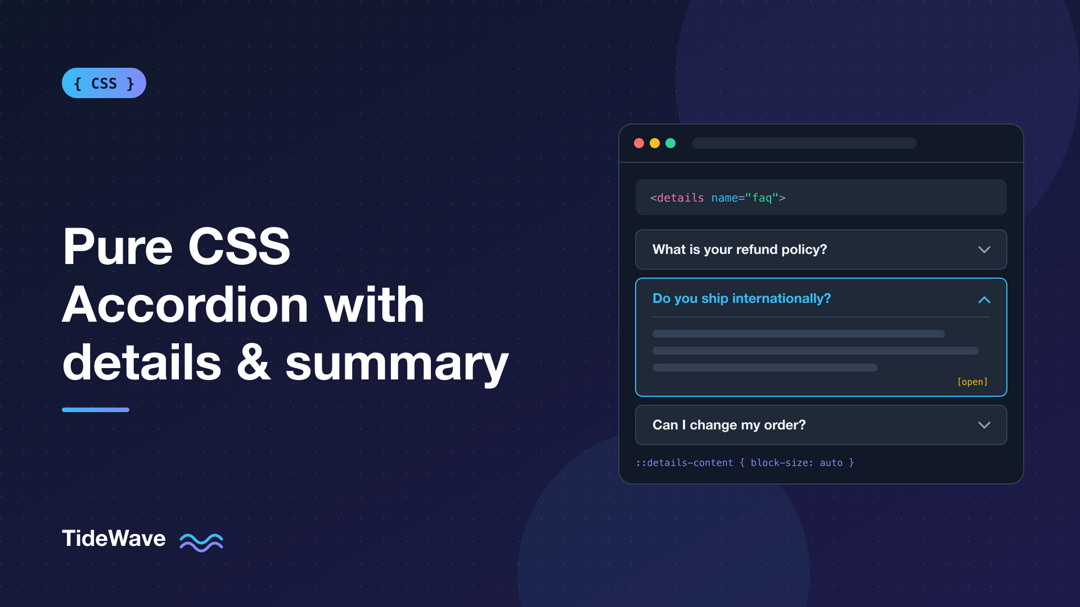
Building a Pure CSS Accordion with details and summary
Accordions are everywhere: FAQ pages, product specs, settings panels, mobile navigation. For a long time, building one meant writing a click handler,
Continue Reading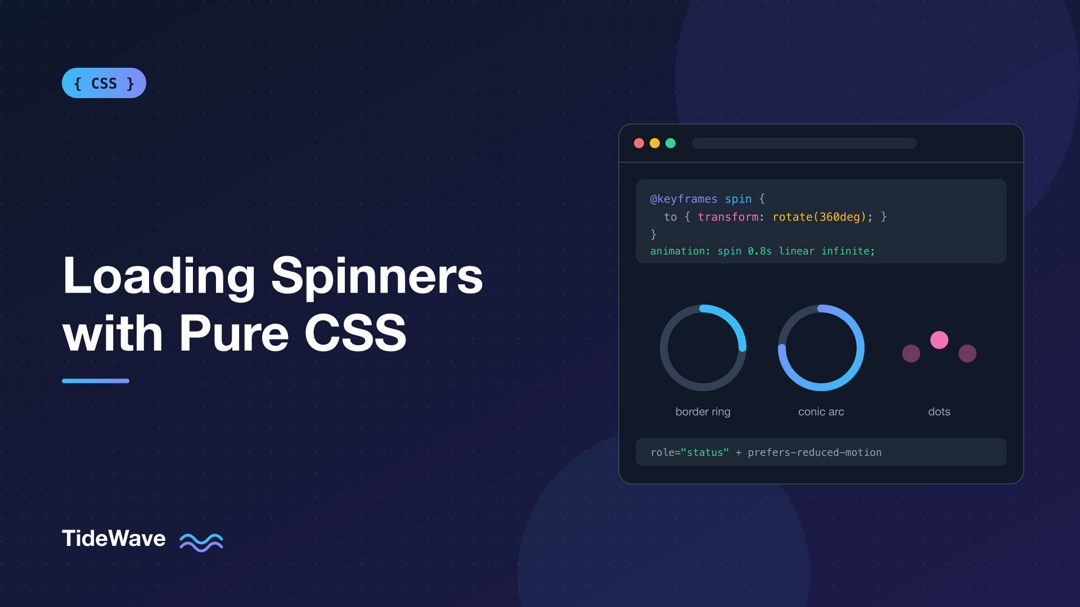
How to Create a Loading Spinner with Pure CSS
A loading spinner is one of the smallest pieces of UI on a page, but it carries real weight. It tells the user that their click registered, that the
Continue Reading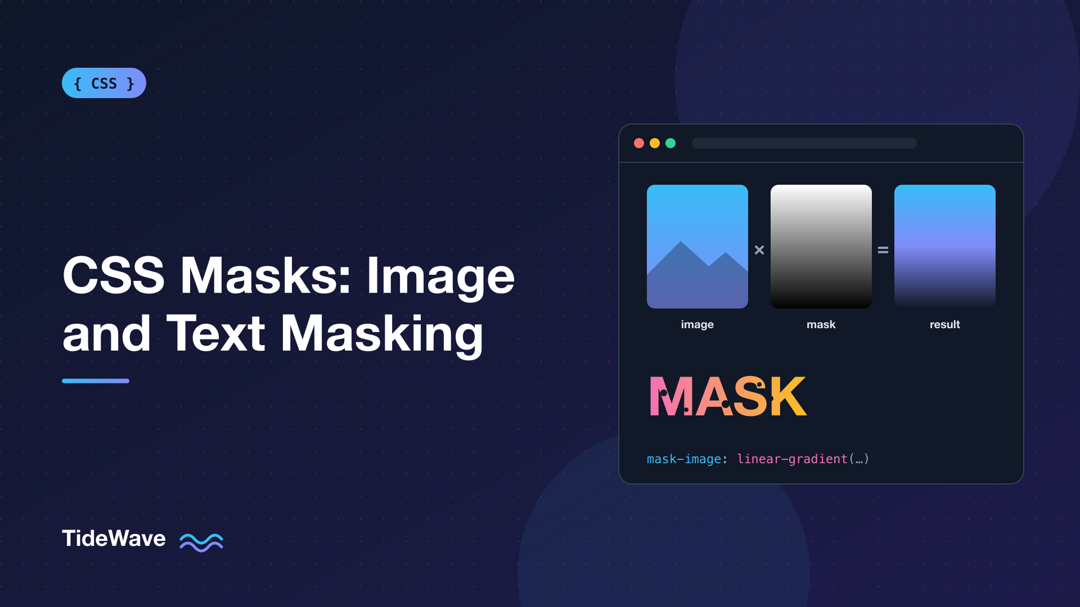
CSS Masks: Advanced Image and Text Masking Techniques
clip-path cuts an element with a hard edge: a pixel is either visible or it isn't. CSS masks are the more flexible sibling. A mask is an image,
Continue Reading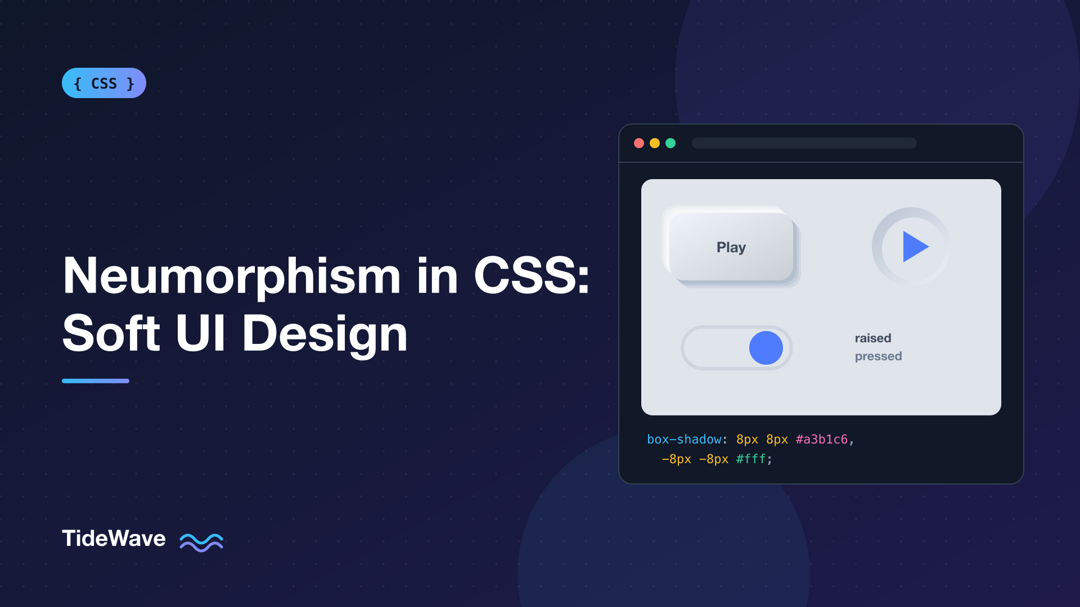
Neumorphism in CSS: Soft UI Design Techniques
Neumorphism, also called soft UI, is the style where interface elements look like they've been molded out of the background material itself.
Continue Reading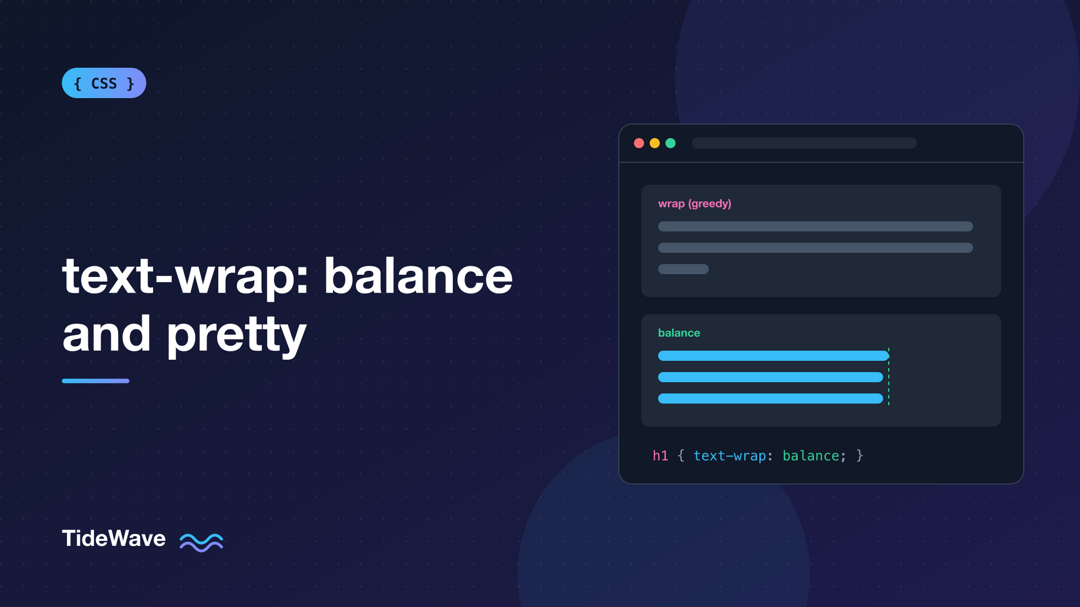
text-wrap: balance and pretty: Better Typography with One Line of CSS
Every designer has seen it: a big, beautiful headline that breaks into one long line followed by a single sad word on the second line. Or a paragraph
Continue Reading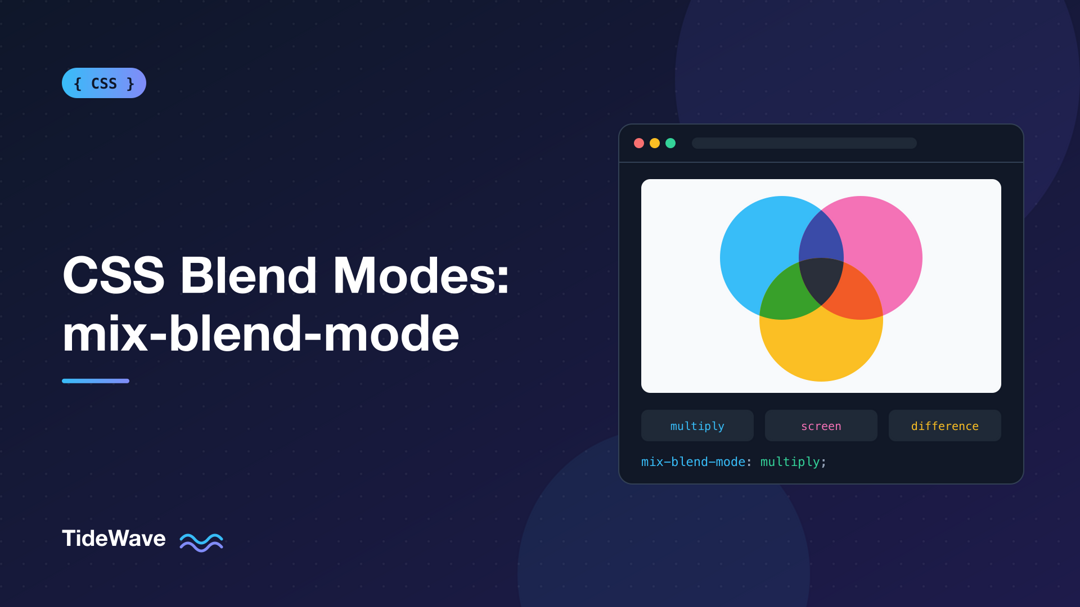
CSS Blend Modes: Creative Effects with mix-blend-mode
If you've ever used layers in Photoshop, Figma, or Affinity, you've met blend modes: settings like Multiply, Screen, and Overlay that control how
Continue Reading
How to Create Glassmorphism Effects with backdrop-filter
Glassmorphism is the design style behind the frosted panels you see in operating system menus, music players, and countless dashboard mockups. A
Continue Reading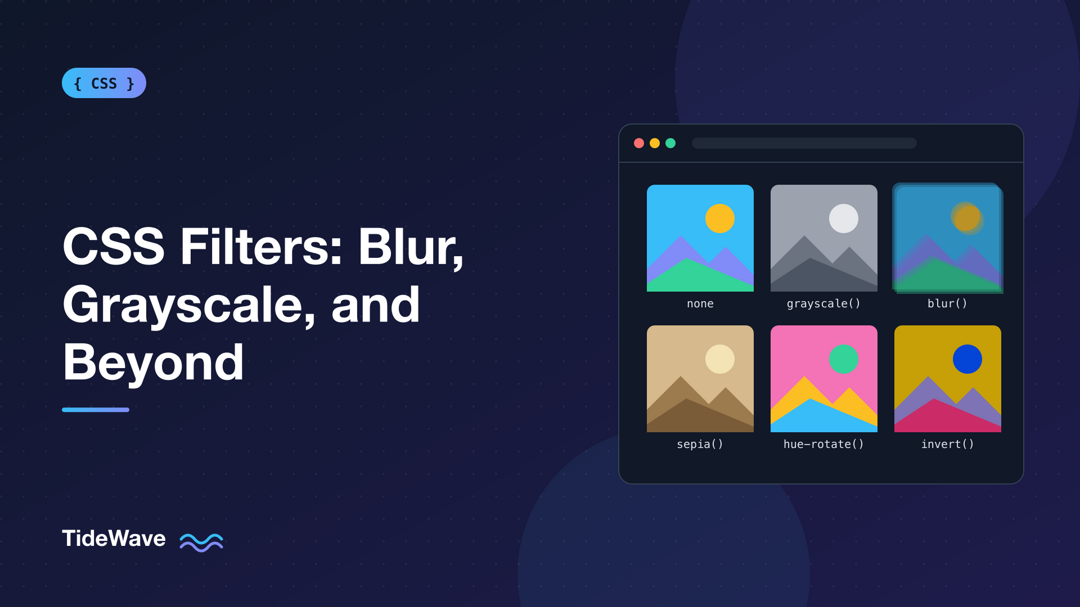
CSS Filters: Blur, Grayscale, and Beyond
Before CSS filters, turning a color logo gray on hover meant exporting two images. Blurring a background meant preparing a blurred version in an imag
Continue Reading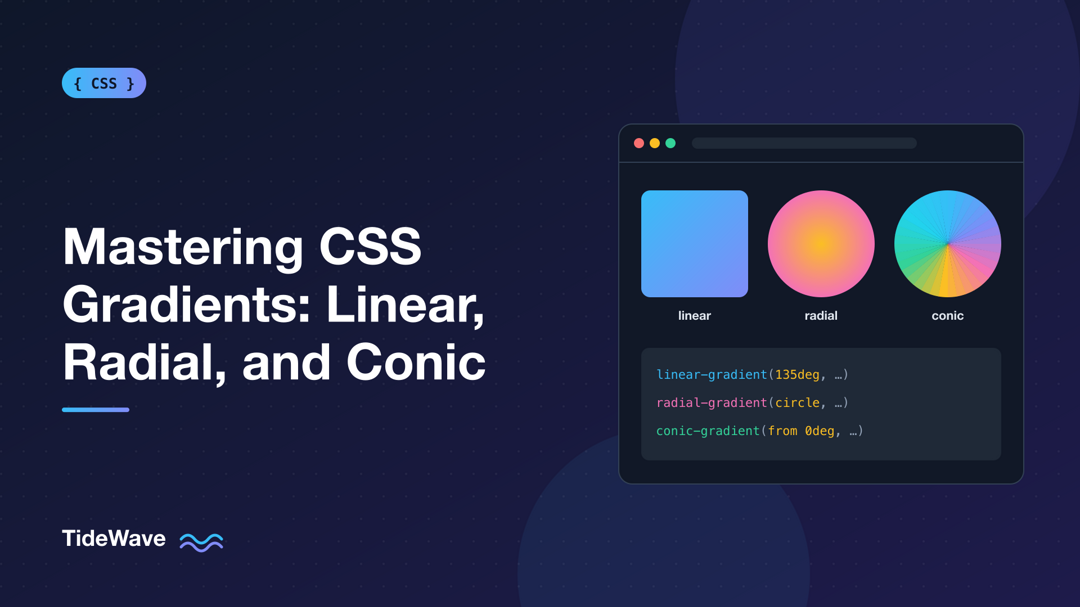
Mastering CSS Gradients: Linear, Radial, and Conic
Gradients used to mean exporting a PNG from Photoshop and hoping it didn't band on someone's monitor. Today, CSS gradients are resolution-independent
Continue Reading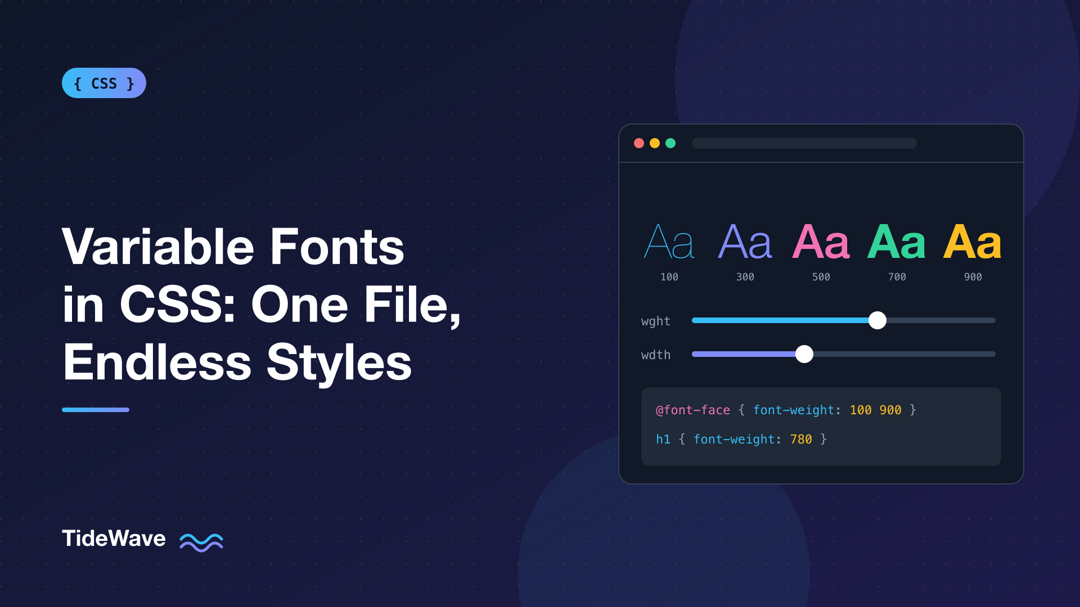
Variable Fonts in CSS: One File, Endless Styles
A traditional font family ships as a collection of separate files: Regular, Italic, Medium, Semibold, Bold, Bold Italic, and so on. Each style your d
Continue Reading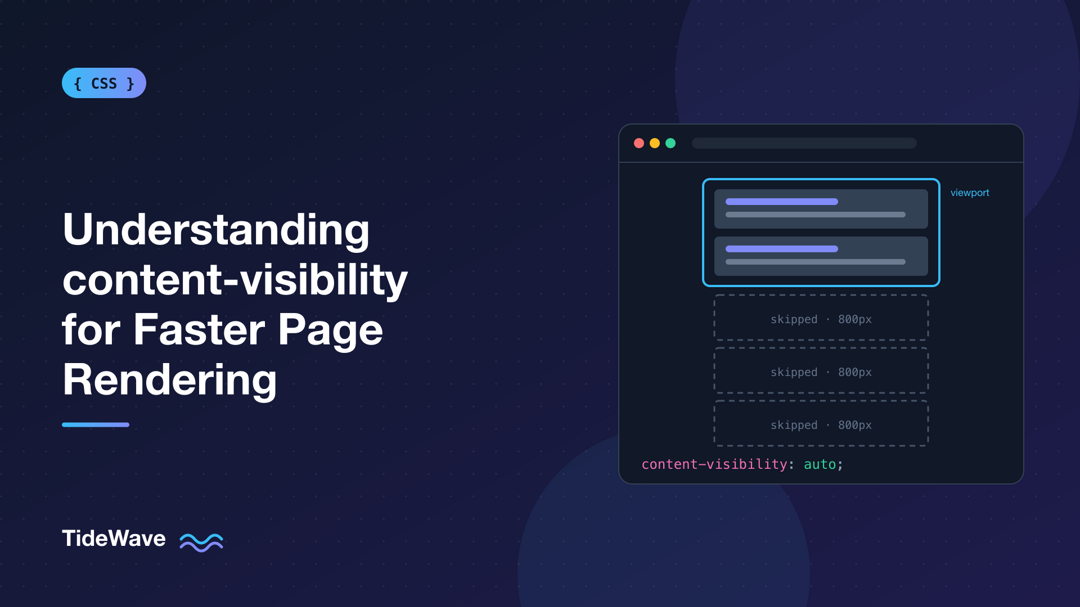
Understanding content-visibility for Faster Page Rendering
Long pages are expensive to render. A blog archive, a documentation page, a product listing, or a comment thread might contain thousands of elements,
Continue Reading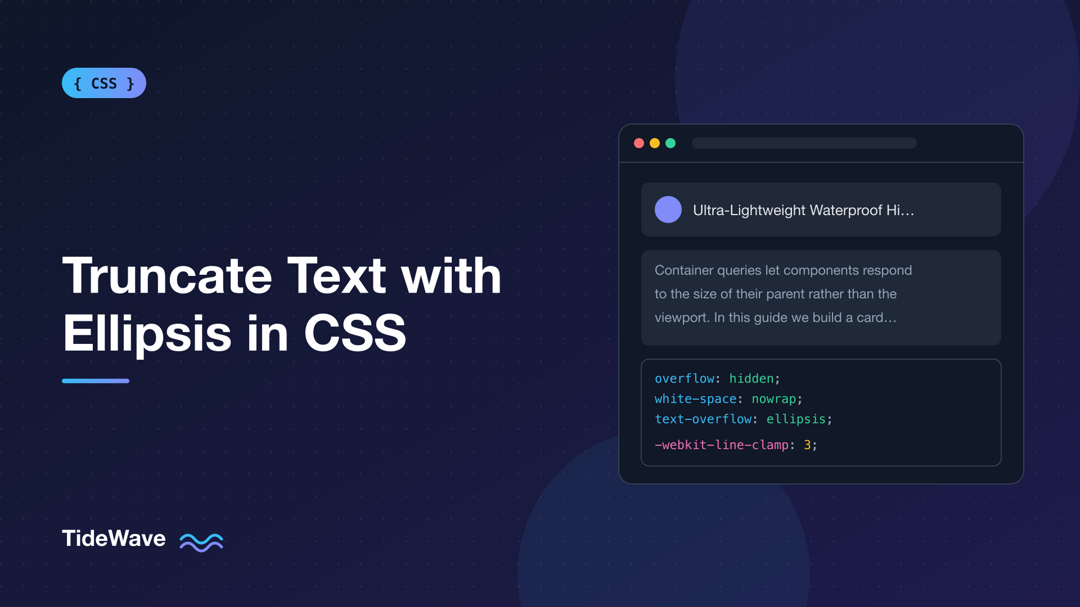
How to Truncate Text with Ellipsis in CSS (Single and Multi-Line)
Real content never matches the mockup. The product name that looked perfect in the design turns out to be forty characters longer in the database, a
Continue Reading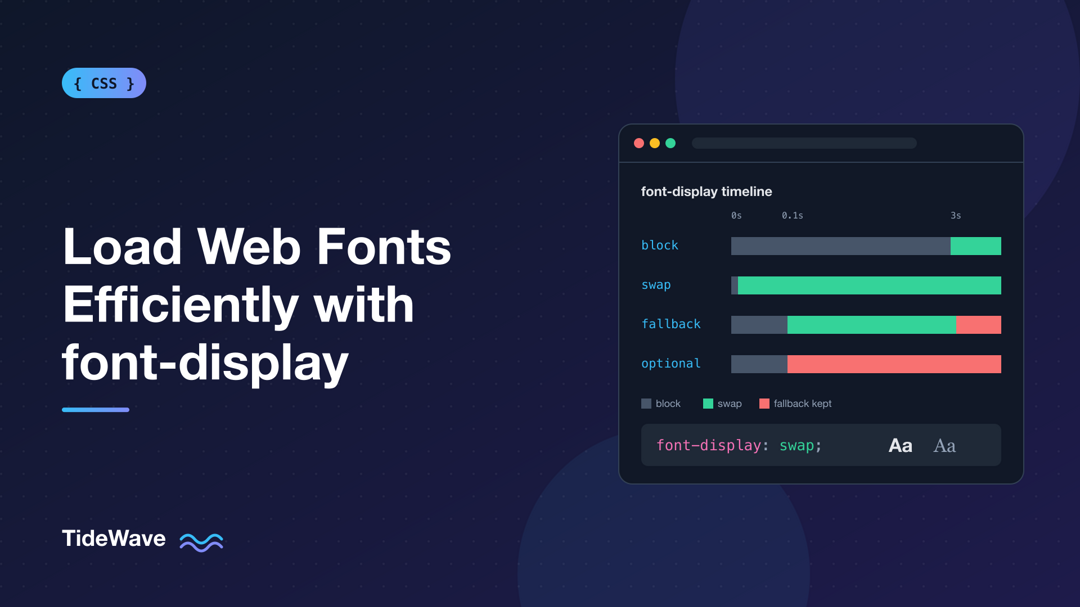
How to Load Web Fonts Efficiently with font-display
Custom fonts give a site its personality, but they come with a loading problem. A font file is a separate download that often isn't discovered until
Continue Reading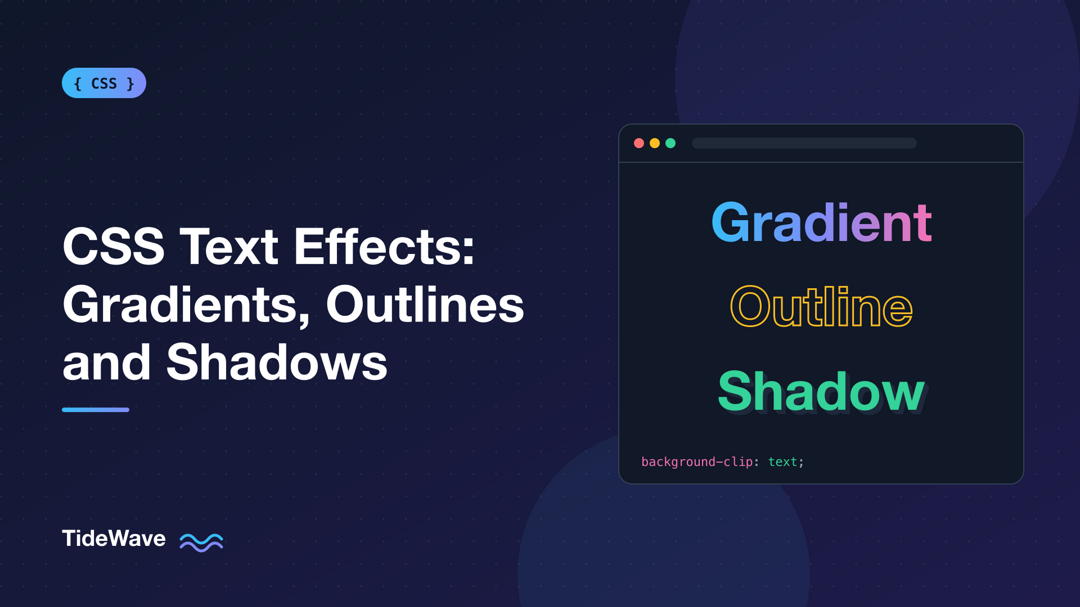
CSS Text Effects: Gradients, Outlines, and Shadows
Eye-catching headlines used to mean exporting text as an image from a design tool. That meant extra requests, blurry results on high-density screens,
Continue Reading
The will-change Property: When to Use It and When to Avoid It
will-change has a reputation as a magic performance switch. Add will-change: transform to something, the thinking goes, and it animates smoothly.
Continue Reading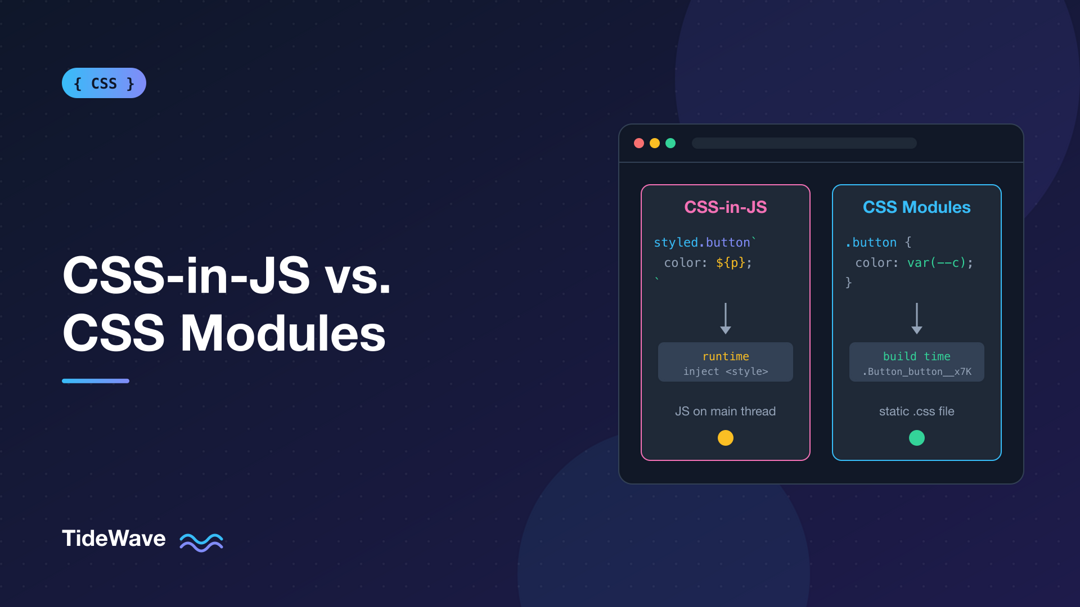
CSS-in-JS vs. CSS Modules: Choosing a Styling Strategy
Every component-based project eventually has to answer the same question: where do the styles live, and how do you stop one component's CSS from leak
Continue Reading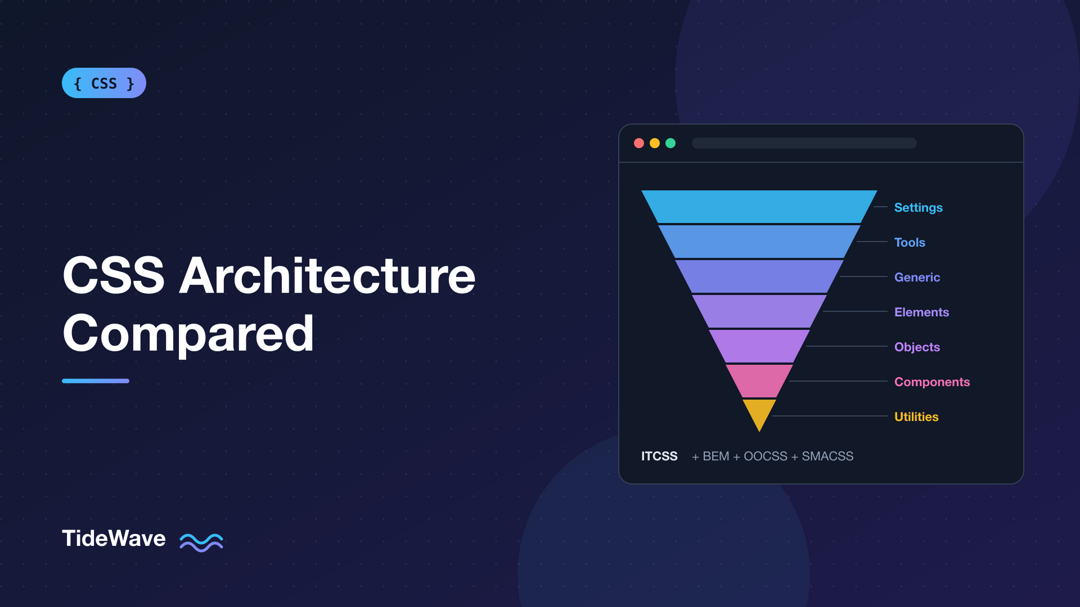
CSS Architecture Compared: BEM, OOCSS, SMACSS, and ITCSS
Every stylesheet starts clean. A few hundred lines in, it's still manageable. A few thousand lines and three developers later, you're adding `!import
Continue Reading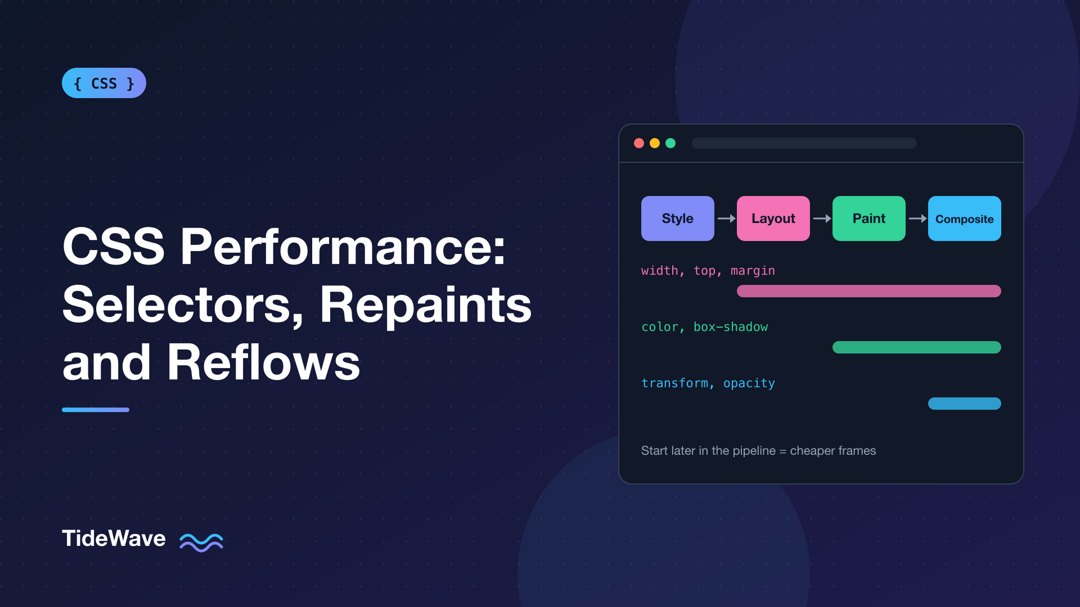
CSS Performance Optimization: Selectors, Repaints, and Reflows
When people talk about CSS performance, they usually mean file size: how many kilobytes the browser has to download before it can paint. That matters
Continue Reading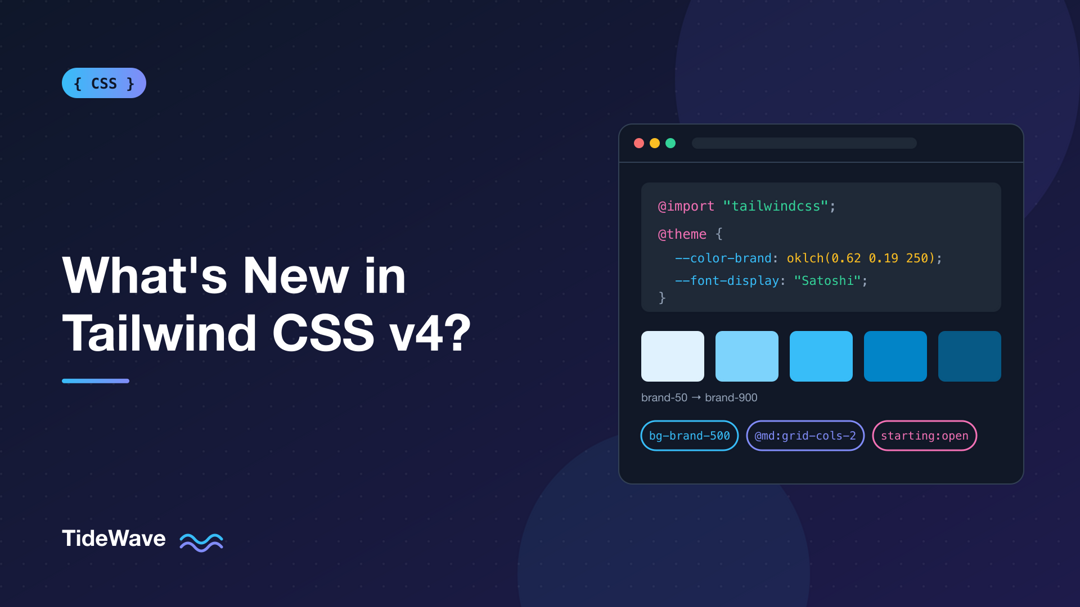
What's New in Tailwind CSS v4?
Tailwind CSS v4 is the biggest rewrite the framework has had since it launched. On the surface you still write flex, pt-4, and text-center in y
Continue Reading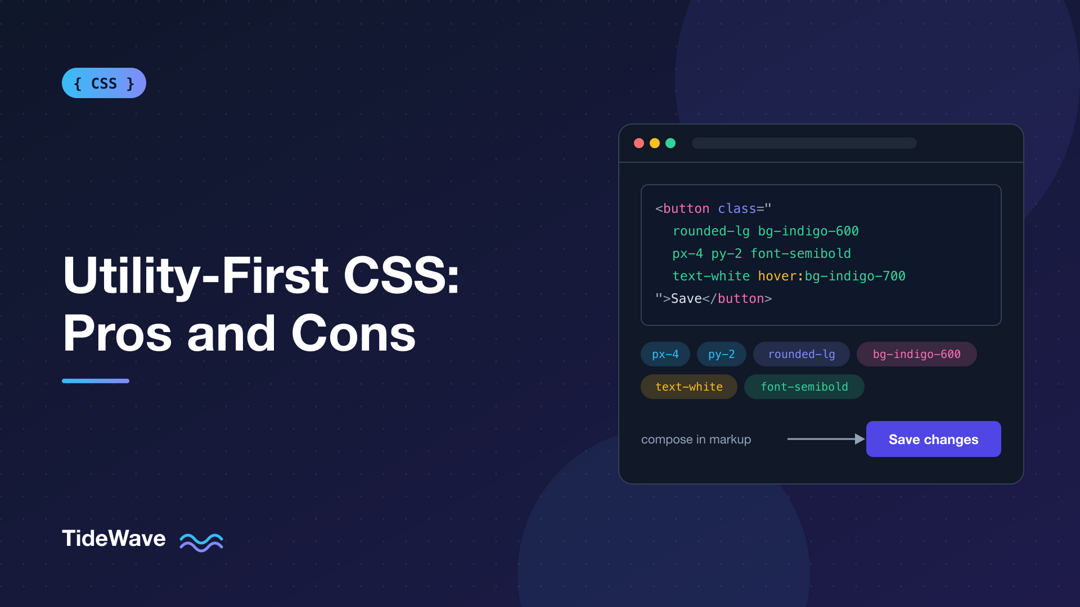
Utility-First CSS: Pros and Cons of the Tailwind Approach
Few CSS topics start arguments as reliably as utility-first CSS. To some developers, a button with fifteen classes in its markup looks like a return
Continue Reading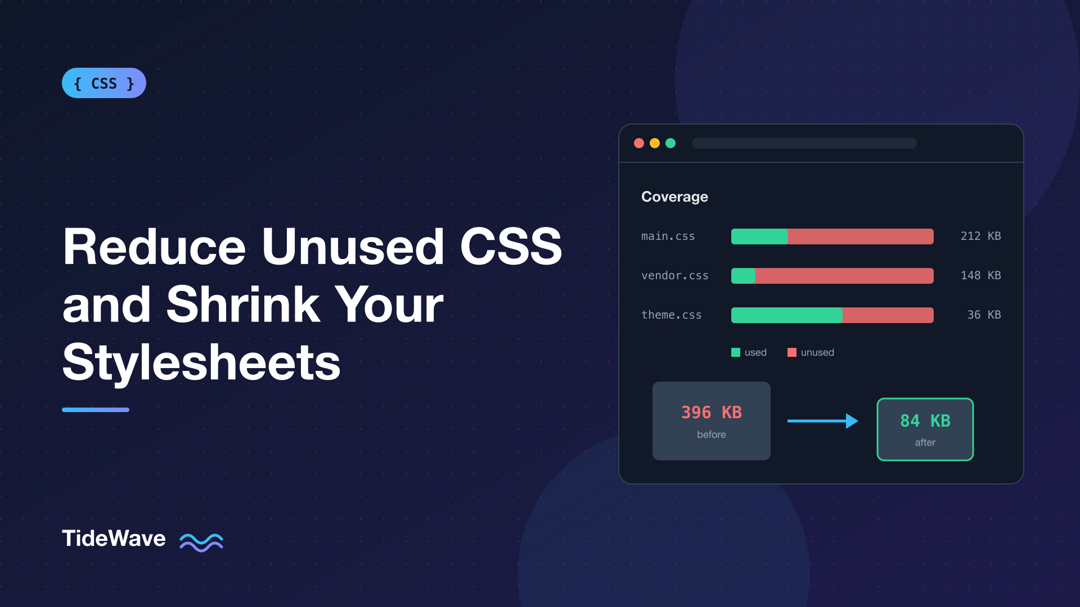
How to Reduce Unused CSS and Shrink Your Stylesheets
Open the Coverage panel on almost any production website and you'll see a long red bar next to the main stylesheet. That red is CSS the browser downl
Continue Reading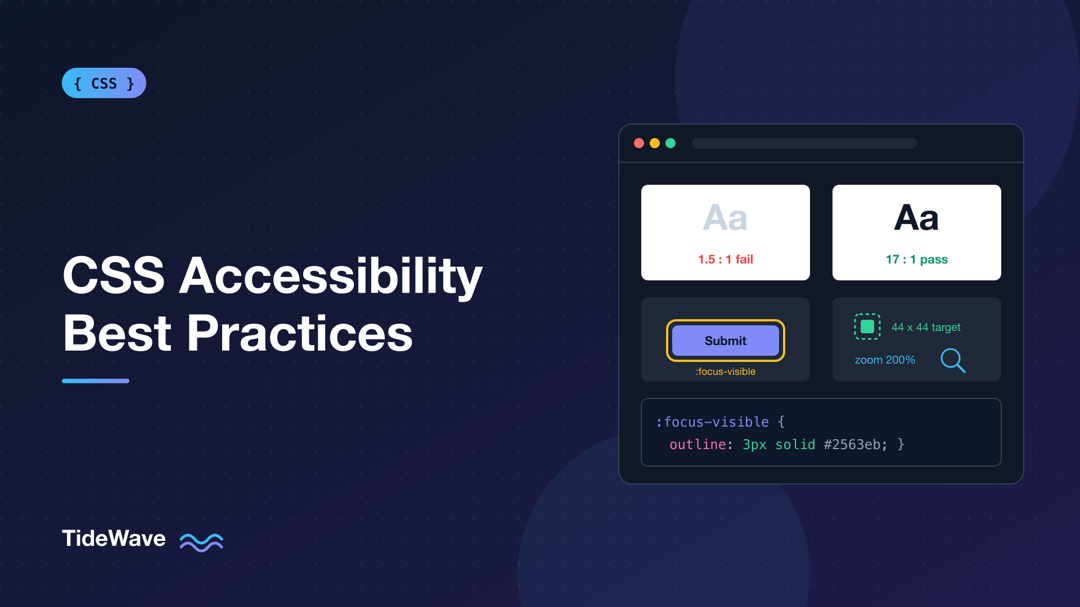
CSS Accessibility Best Practices Every Developer Should Know
When developers talk about web accessibility, the conversation usually turns to semantic HTML, ARIA attributes, and screen readers. Those matter enor
Continue Reading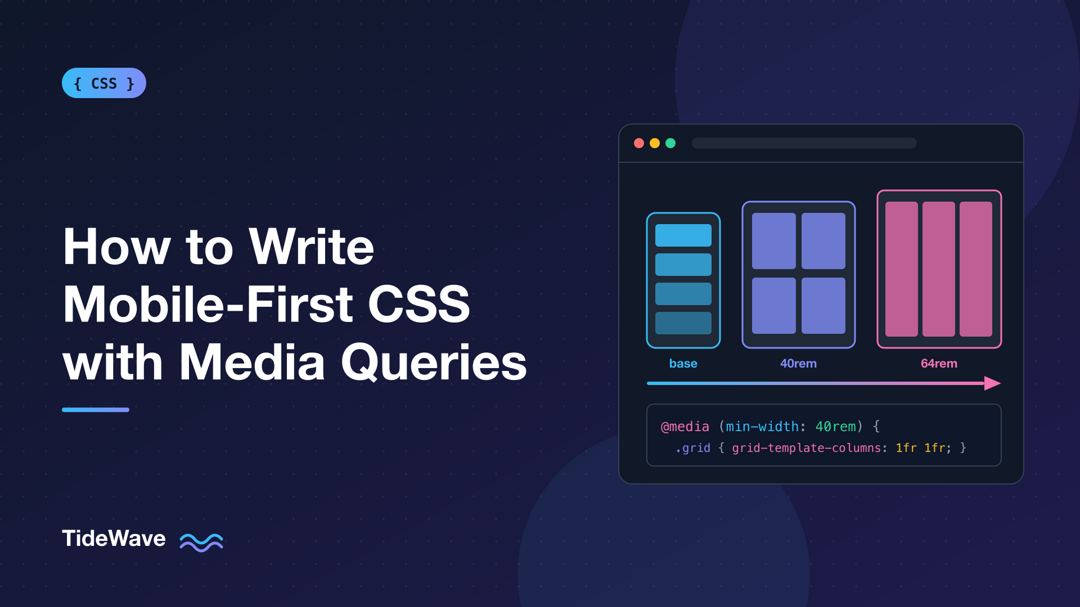
How to Write Mobile-First CSS with Media Queries
Most stylesheets I inherit on client projects were written desktop-first. The base styles describe a three-column layout, and then a pile of `max-wid
Continue Reading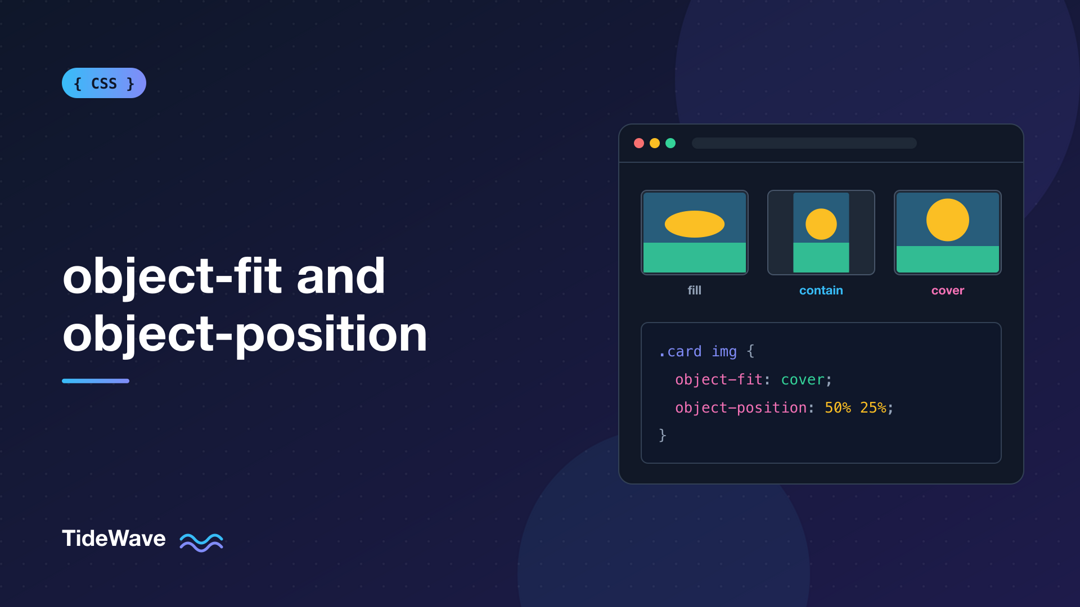
object-fit and object-position: Controlling Images Like a Pro
Every content-driven site eventually hits the same problem. The design calls for a neat grid of identical thumbnails, but the images coming out of th
Continue Reading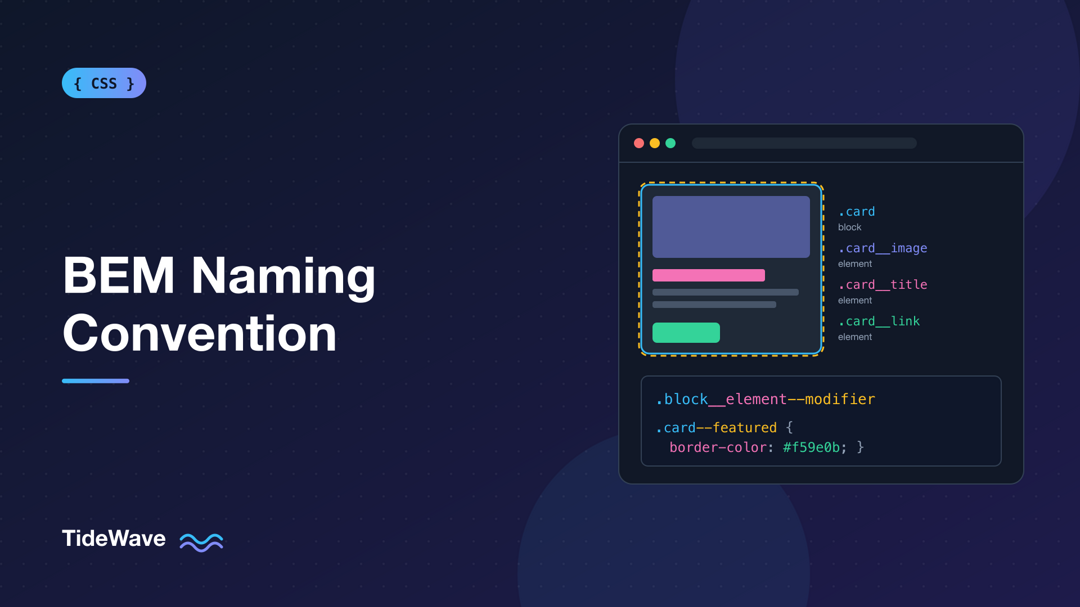
BEM Naming Convention: Writing Maintainable CSS Class Names
Naming things is famously one of the hard problems in programming, and CSS makes it harder than most languages. Every class name lives in one global
Continue Reading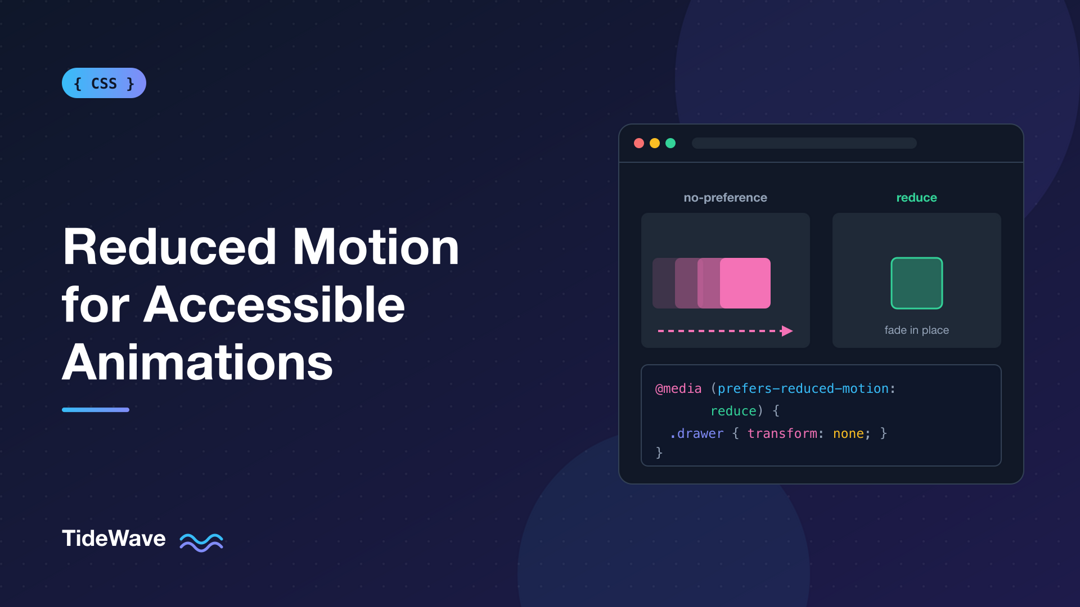
How to Respect prefers-reduced-motion for Accessible Animations
Animation is one of the best tools we have for making an interface feel responsive and alive. A card that lifts on hover, a menu that slides into pla
Continue Reading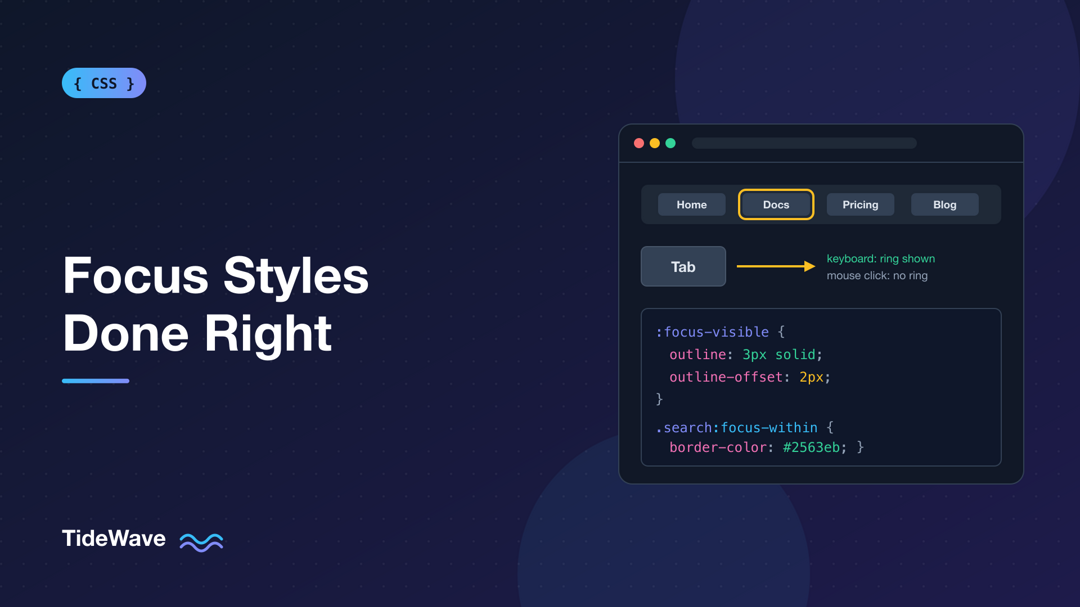
Focus Styles Done Right: :focus-visible and Keyboard Navigation
There's a moment in almost every project where someone clicks a button, sees a blue ring appear around it, and files a bug: "Weird outline on buttons
Continue Reading
CSS Media Queries Level 4 and 5: Range Syntax and User Preferences
For a long time, "media query" meant one thing: @media (min-width: 768px). Width was the only question most of us asked the browser. But the specs
Continue Reading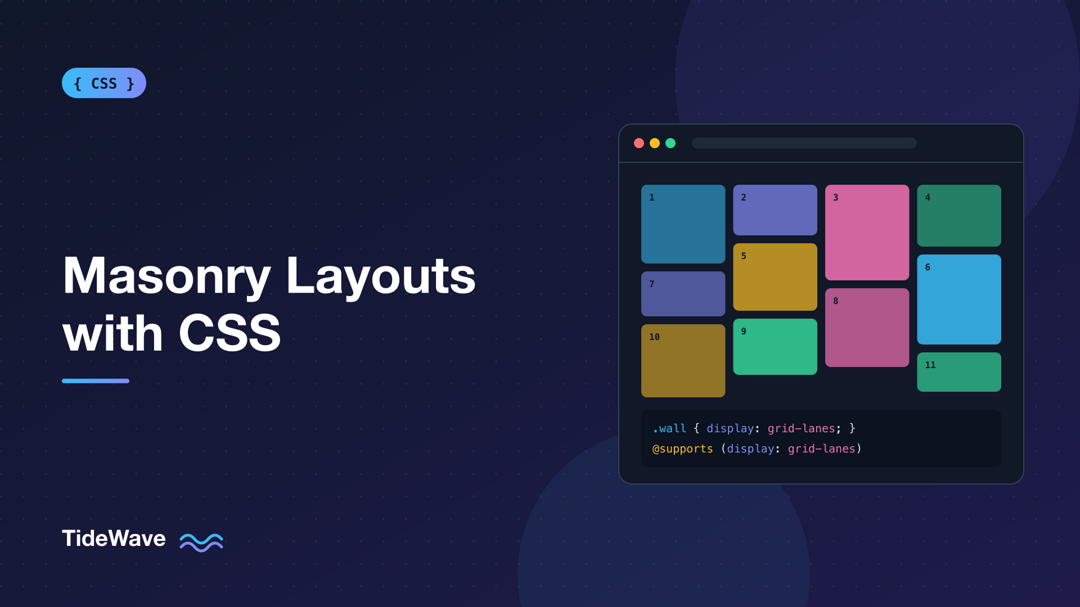
How to Create a Masonry Layout with CSS
A masonry layout arranges items of different heights into columns, packing each new item into whichever column is currently shortest. There are n
Continue Reading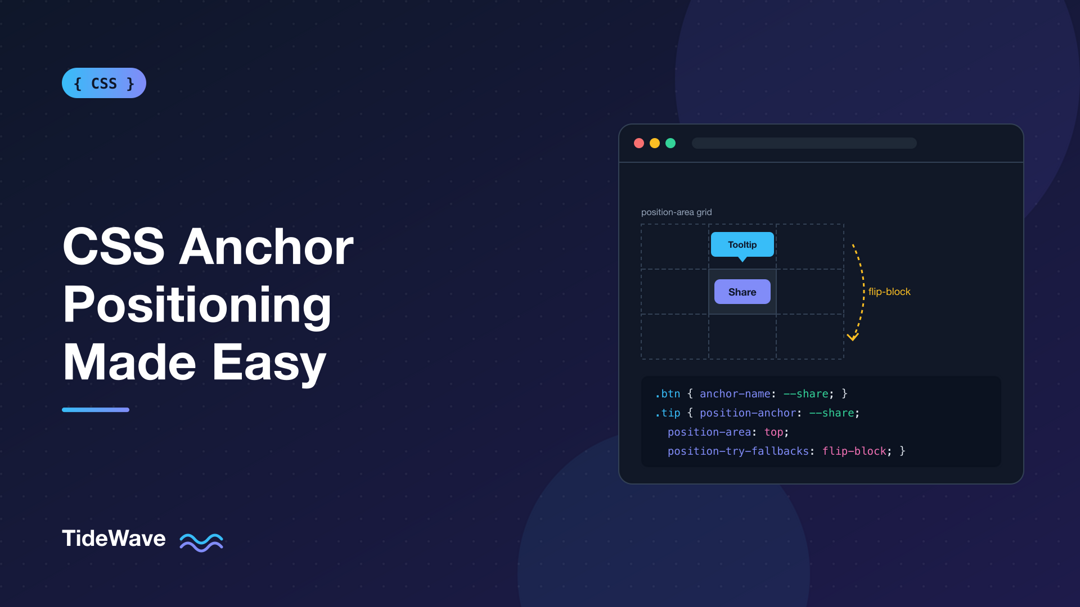
CSS Anchor Positioning: Tooltips and Popovers Made Easy
Tooltips, dropdown menus, date pickers, and context menus all share one annoying problem: they need to appear right next to another element, and stay
Continue Reading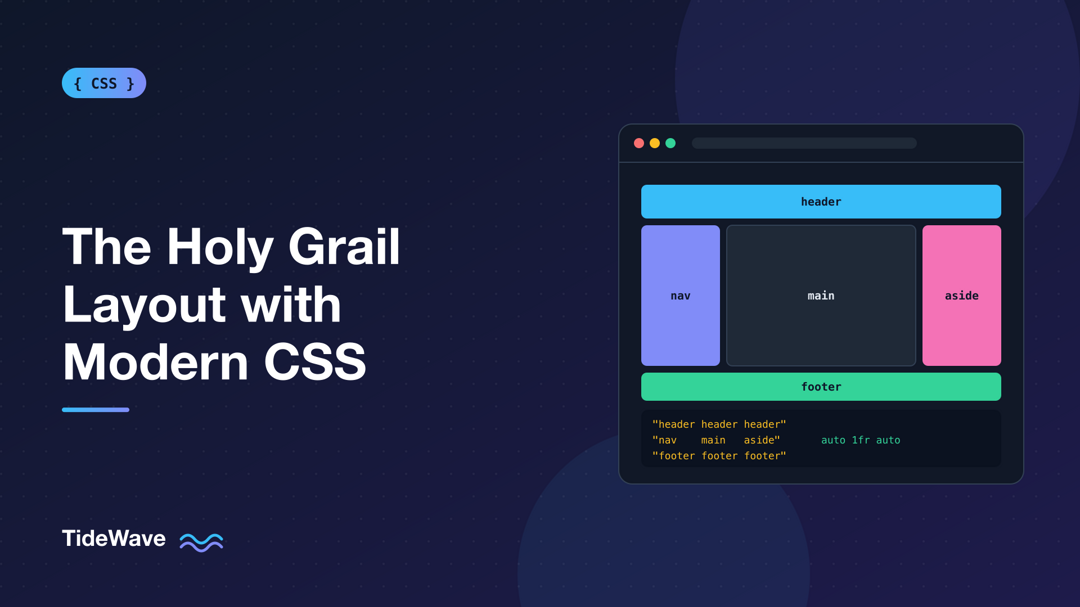
The Holy Grail Layout with Modern CSS
The Holy Grail layout earned its name in the mid-2000s because it was so hard to build. The requirements sound simple: a header across the top, a
Continue Reading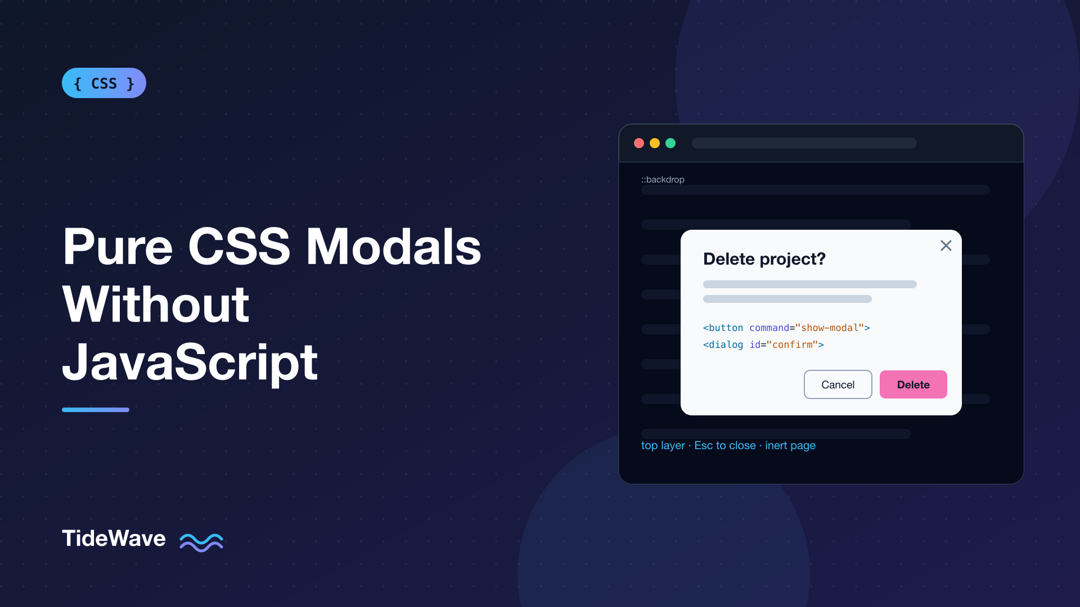
How to Create a Pure CSS Modal Without JavaScript
Modals are everywhere: sign-up prompts, confirmation dialogs, image lightboxes, cookie settings, and "are you sure?" warnings. Traditionally, every o
Continue Reading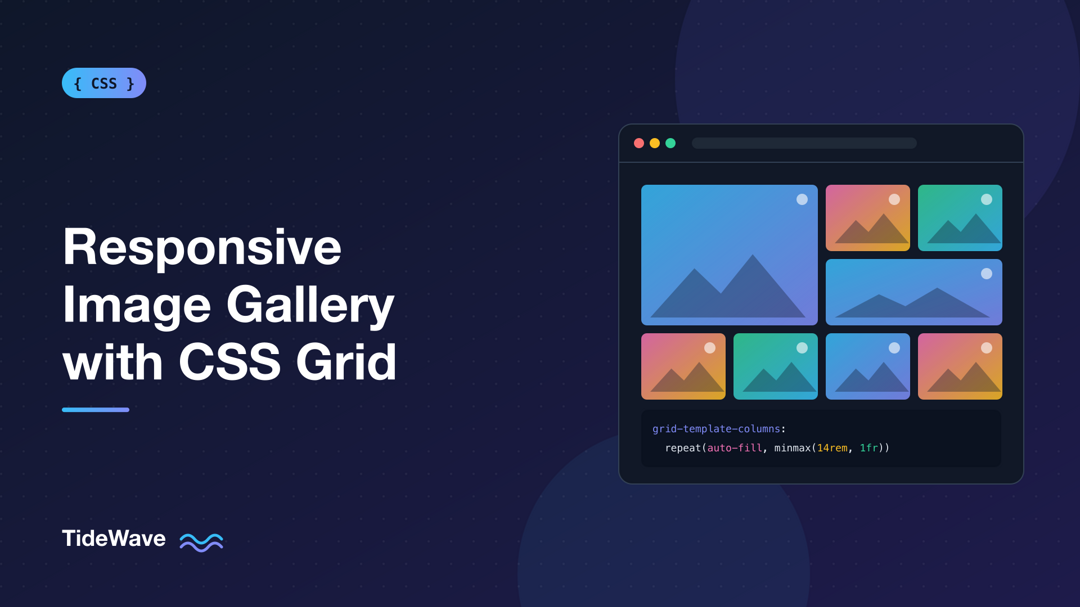
How to Build a Responsive Image Gallery with CSS Grid
Image galleries show up on portfolios, product pages, travel blogs, real estate listings, and team pages. They look simple, but getting one right mea
Continue Reading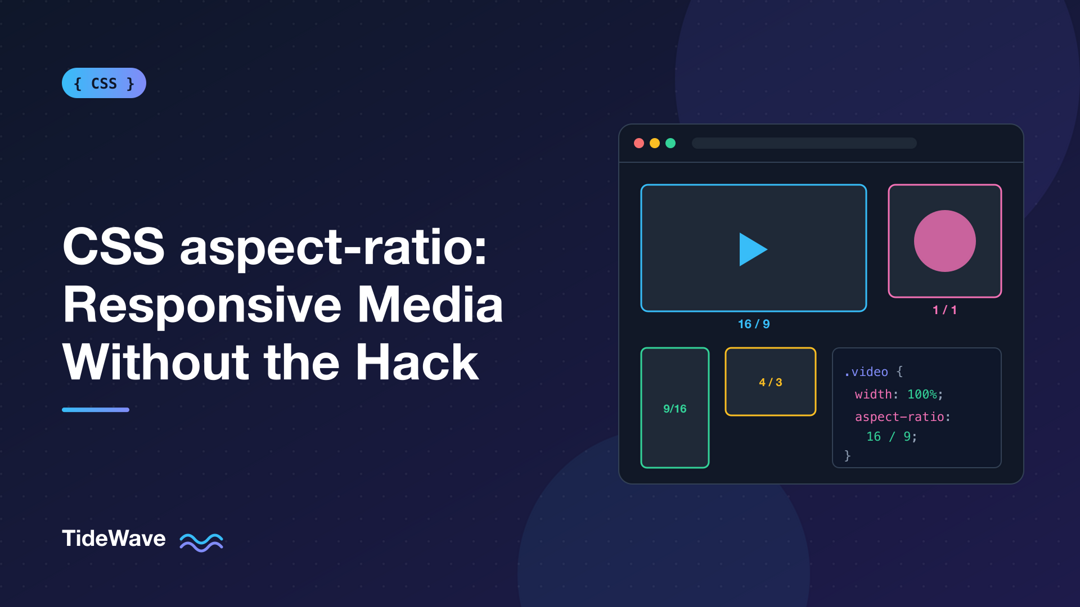
CSS aspect-ratio: Responsive Media Without the Padding Hack
If you've been writing CSS for more than a few years, you probably have a snippet somewhere that looks like padding-top: 56.25%. It was the only re
Continue Reading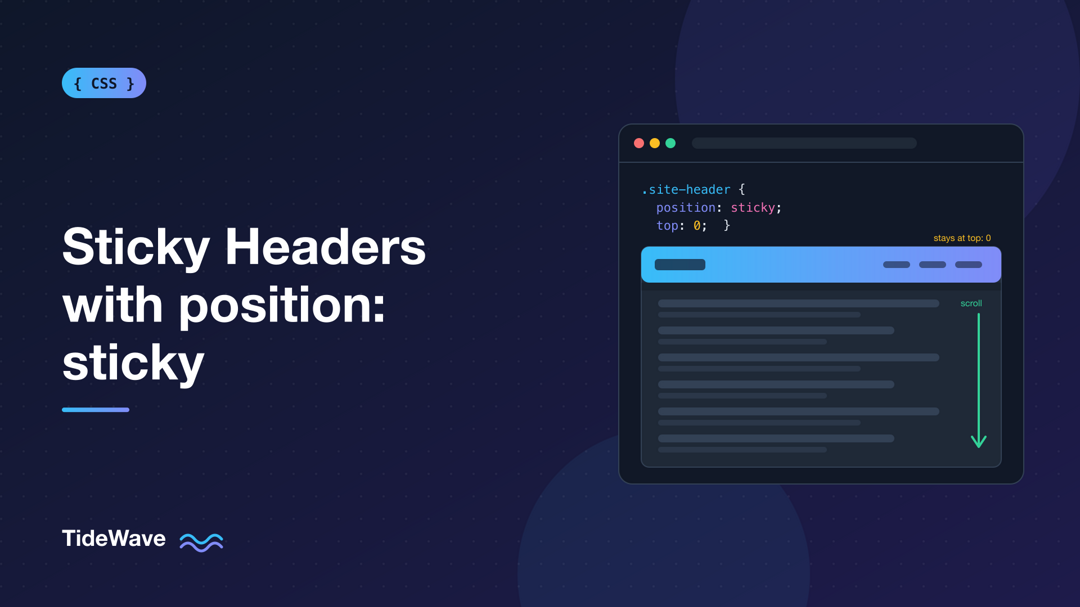
How to Make a Sticky Header with position: sticky
A header that stays visible while the rest of the page scrolls is one of the most common patterns on the web. Navigation stays one click away, the br
Continue Reading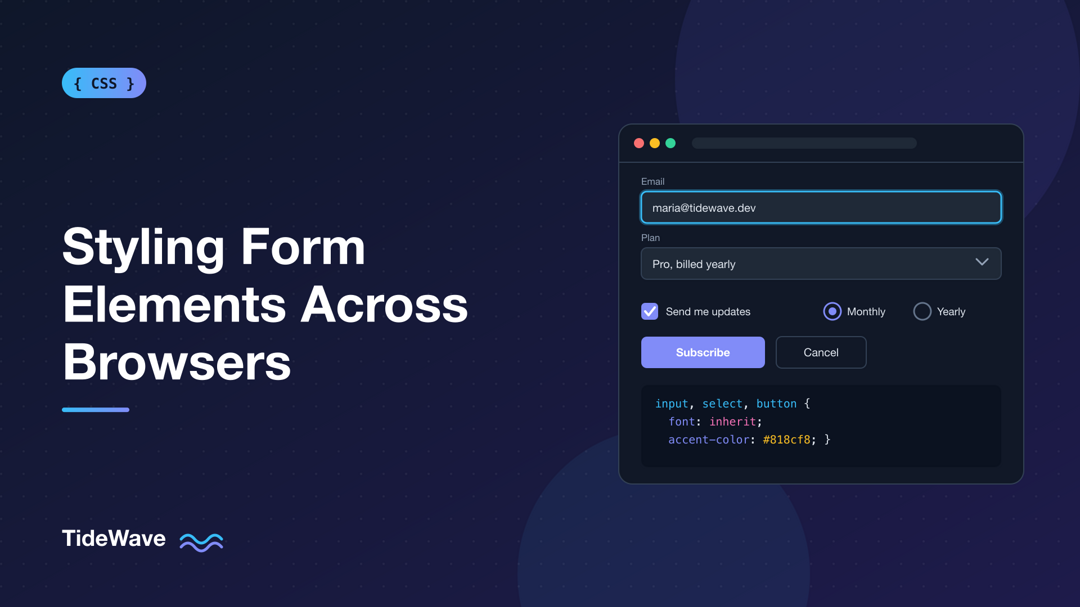
How to Style Form Elements Consistently Across Browsers
Forms are where most design systems quietly fall apart. The mockup shows crisp inputs with matching heights, a custom select arrow, and buttons that
Continue Reading
CSS Pseudo-Classes and Pseudo-Elements: A Practical Guide
Pseudo-classes and pseudo-elements are some of the most useful tools in CSS, and also some of the most commonly confused. One uses a single colon, th
Continue Reading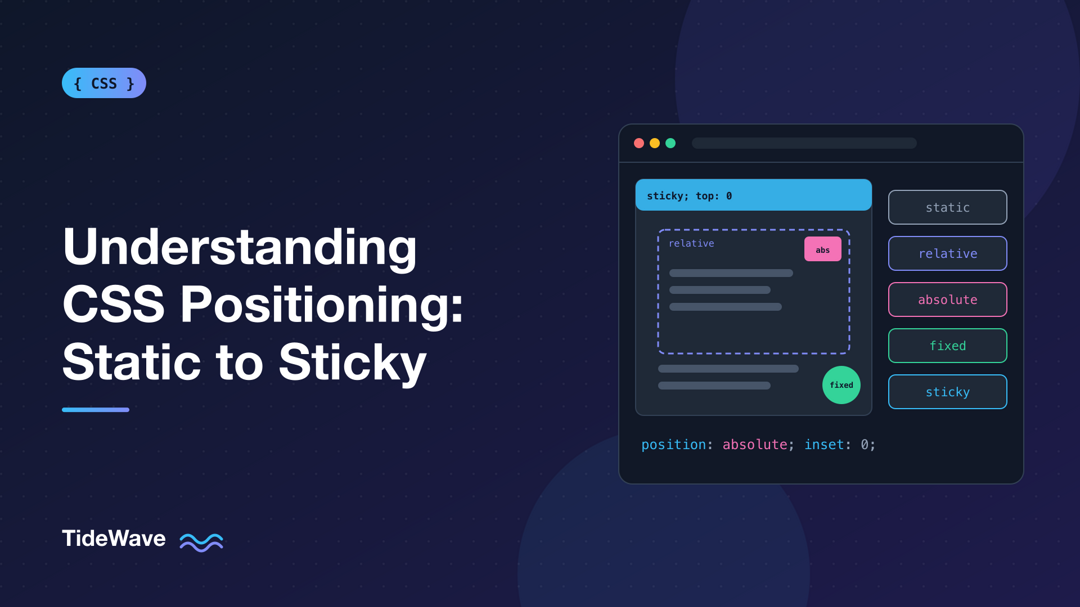
Understanding CSS Positioning: Static, Relative, Absolute, Fixed, and Sticky
You add position: absolute and top: 0; right: 0 to a close button, expecting it to sit in the corner of its modal. Instead, it shoots up to the c
Continue Reading
Building Custom Checkboxes and Radio Buttons with CSS
Checkboxes and radio buttons are tiny, but they show up everywhere: sign-up forms, settings pages, filters, surveys, and checkout flows. And native c
Continue Reading
The Stacking Context Demystified: Why Your z-index Isn't Working
Every front-end developer has been here. A dropdown menu disappears behind a hero section. You give it z-index: 10. Nothing. You try z-index: 999
Continue Reading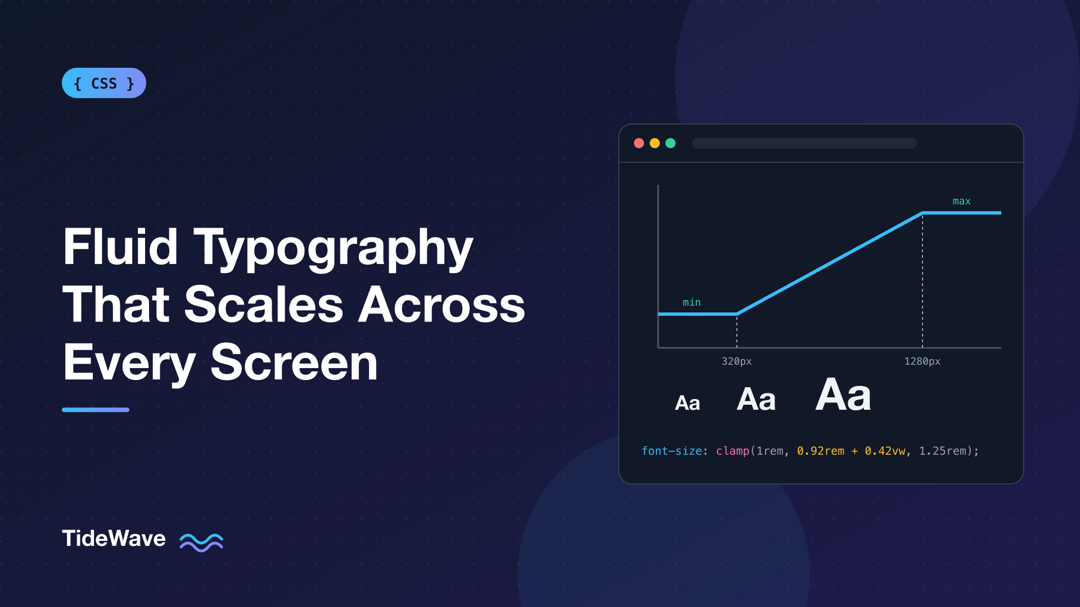
How to Build Fluid Typography That Scales Across Every Screen
Look at the stylesheet of almost any site built a few years ago, and you'll find something like this: a headline at 2rem, then 2.5rem at 768 pixe
Continue Reading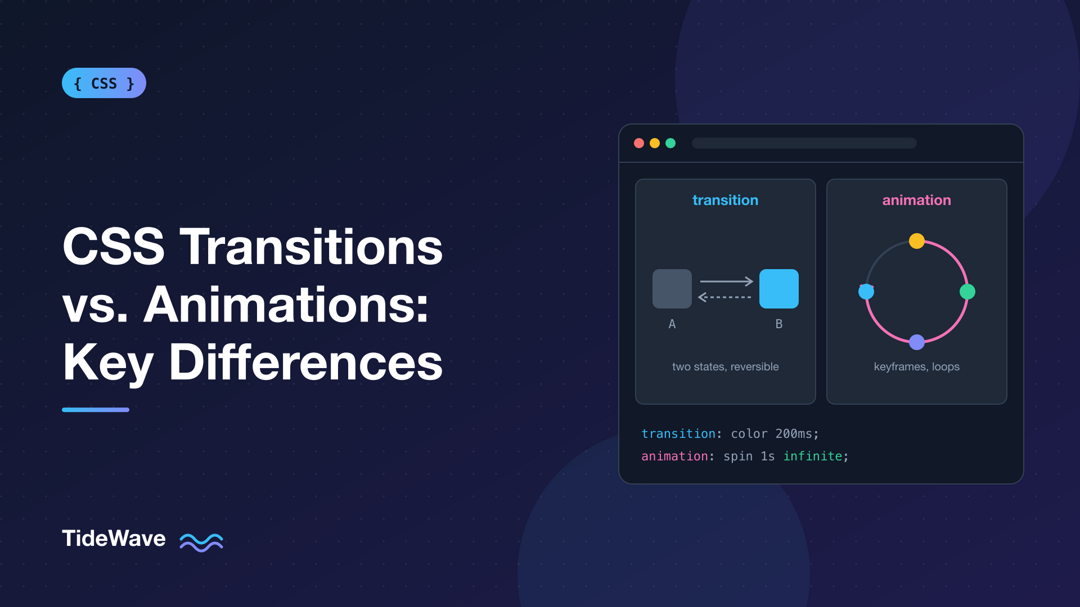
CSS Transitions vs. Animations: Key Differences and Use Cases
You want a button's background to fade when someone hovers over it. Do you write a transition or an animation? Most developers pick one out of ha
Continue Reading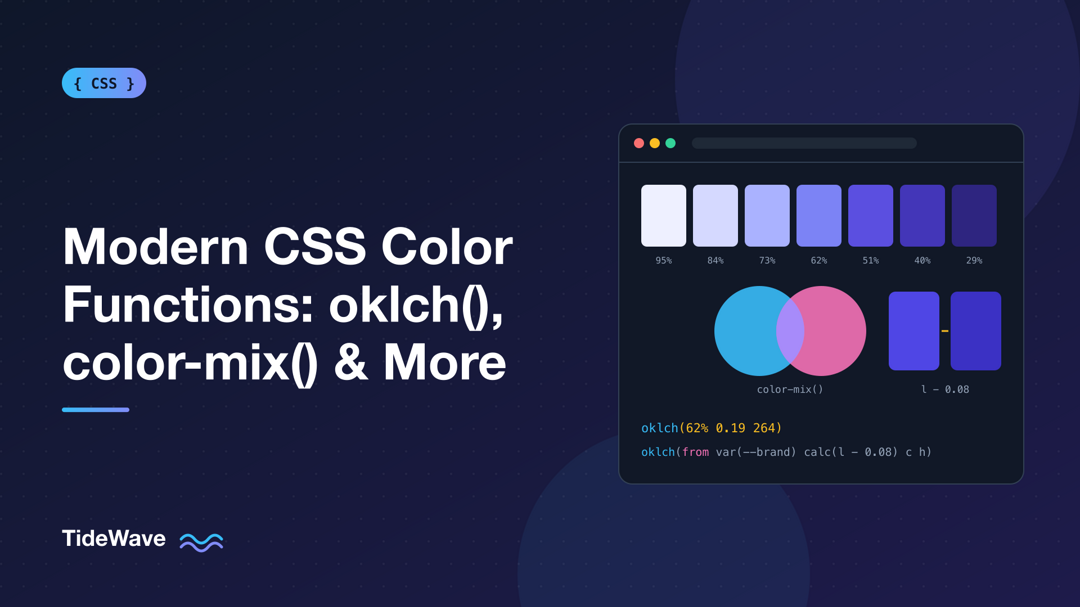
Modern CSS Color Functions: oklch(), color-mix(), and Relative Colors
Here's a familiar situation: the designer hands you a brand colour, and you need a hover state that's a bit darker, a disabled state that's washed ou
Continue Reading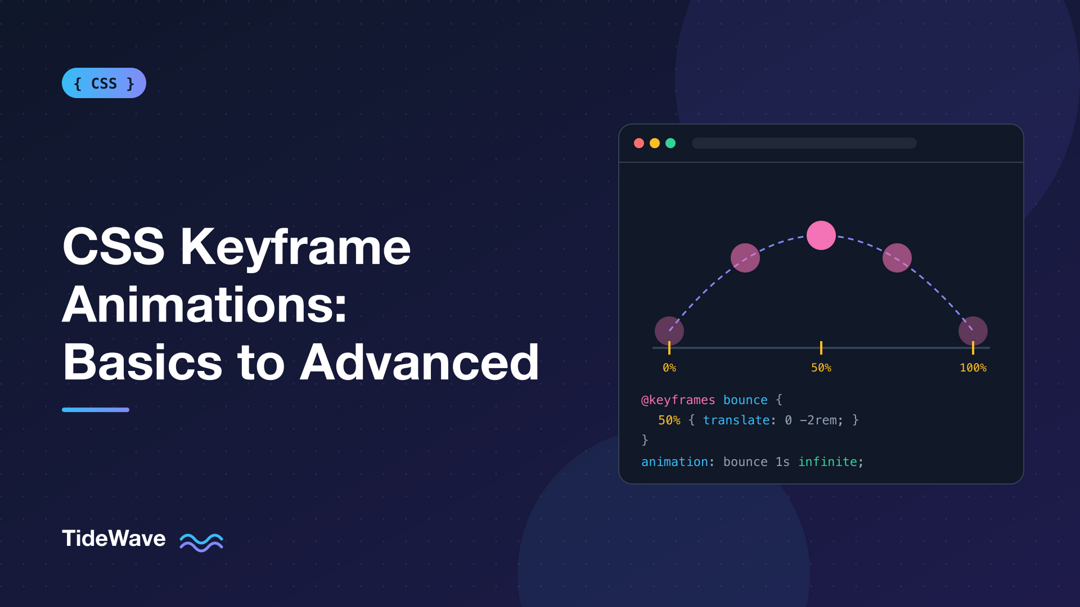
CSS Keyframe Animations: From Basics to Advanced Techniques
A loading spinner that rotates forever. A notification badge that pulses gently to catch your eye. A hero headline that slides in word by word. All o
Continue Reading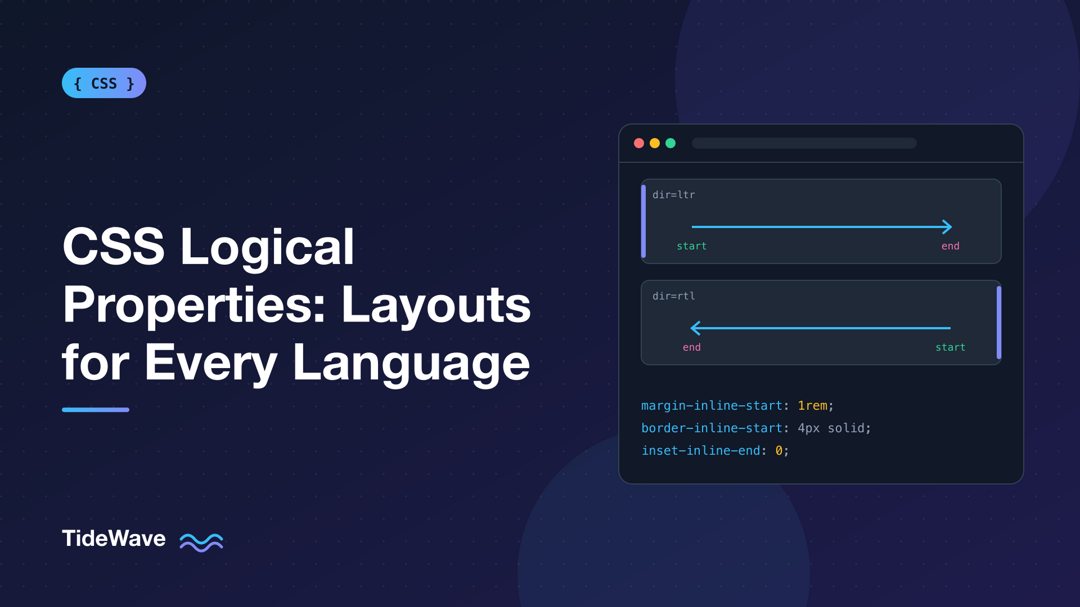
CSS Logical Properties: Writing Layouts for Every Language
Your product is launching in Arabic next month. You add dir="rtl" to the html element, reload, and the layout is a mess. Icons sit on the wrong s
Continue Reading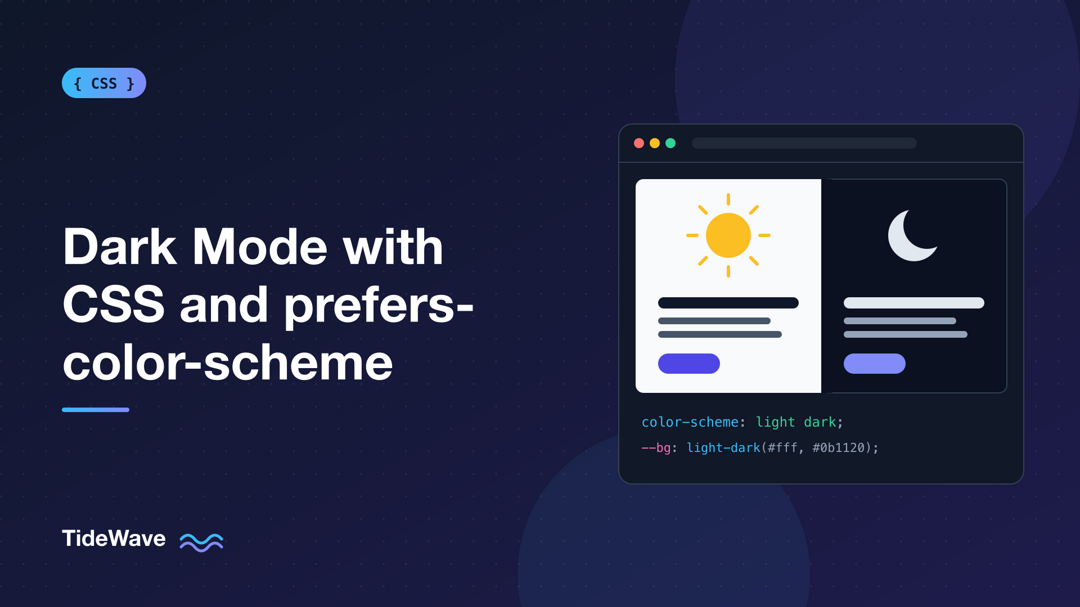
How to Implement Dark Mode with CSS and prefers-color-scheme
Open your phone's settings at night and there's a good chance dark mode switches on automatically. Many of your visitors browse this way, and landing
Continue Reading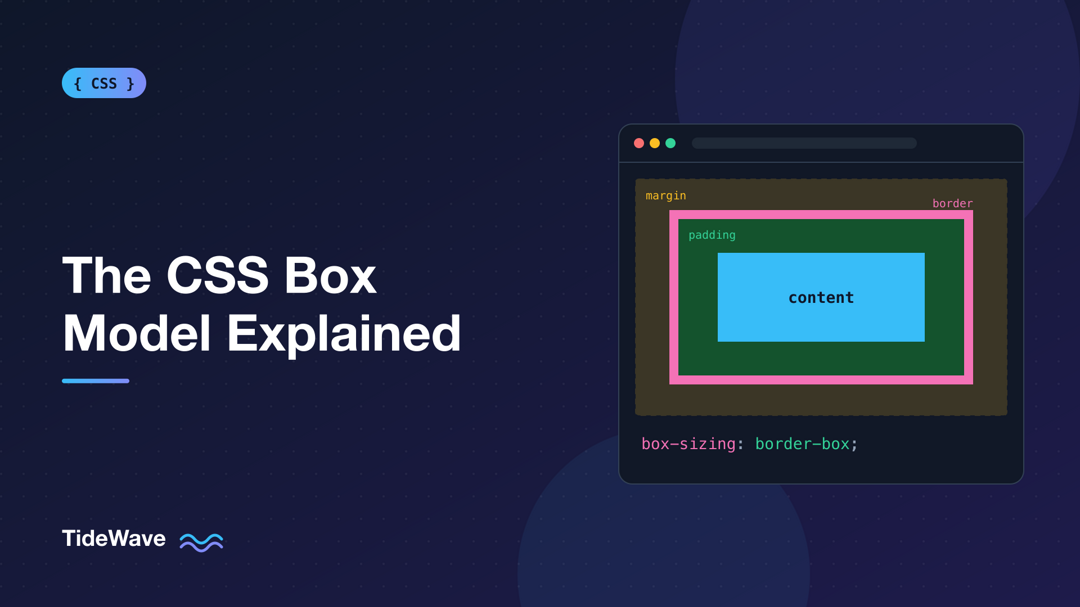
The CSS Box Model Explained: Content, Padding, Border, and Margin
Every element you put on a web page, from a paragraph to a button to an image, is drawn as a rectangle. The rules that decide how big that rectangle
Continue Reading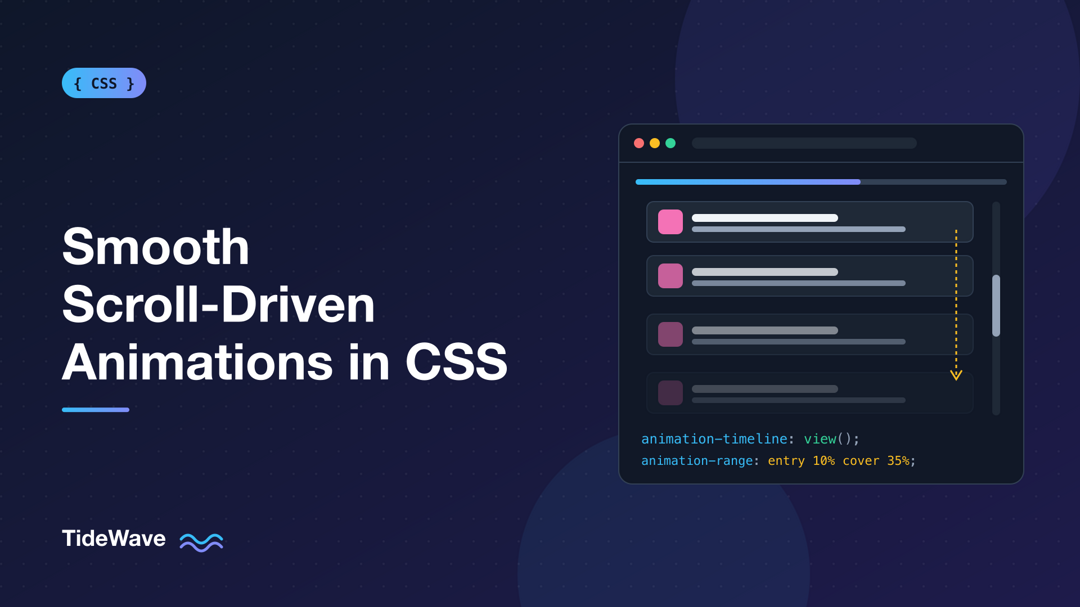
How to Create Smooth Scroll-Driven Animations with CSS
For years, anything that moved in response to scrolling meant JavaScript. You attached a scroll listener, read scrollY, did some maths, and wrote
Continue Reading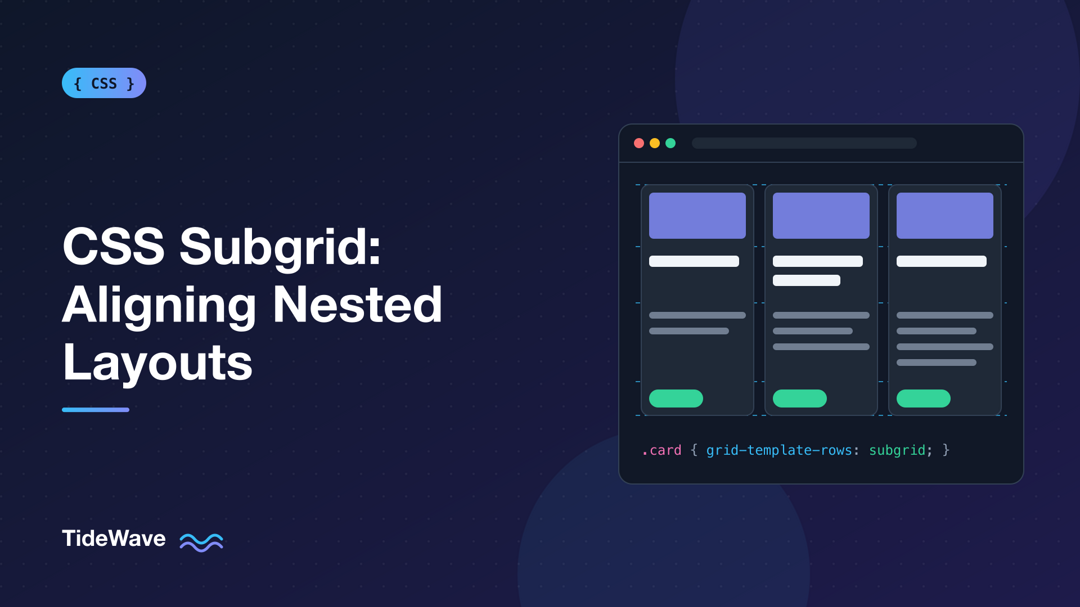
CSS Subgrid: Aligning Nested Layouts
You've built a row of cards with CSS Grid. The cards themselves line up perfectly, but inside them, things fall apart: one card has a two-line title,
Continue Reading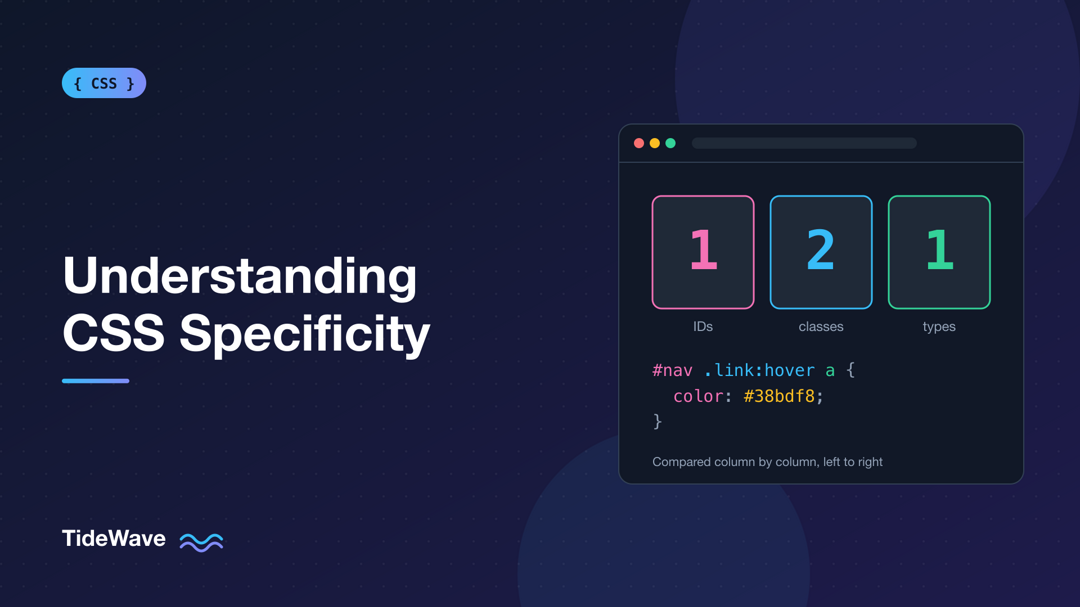
Understanding CSS Specificity: How the Browser Decides Which Rule Wins
You write a rule, save the file, refresh the page, and nothing changes. You open DevTools and see your declaration crossed out, beaten by some other
Continue Reading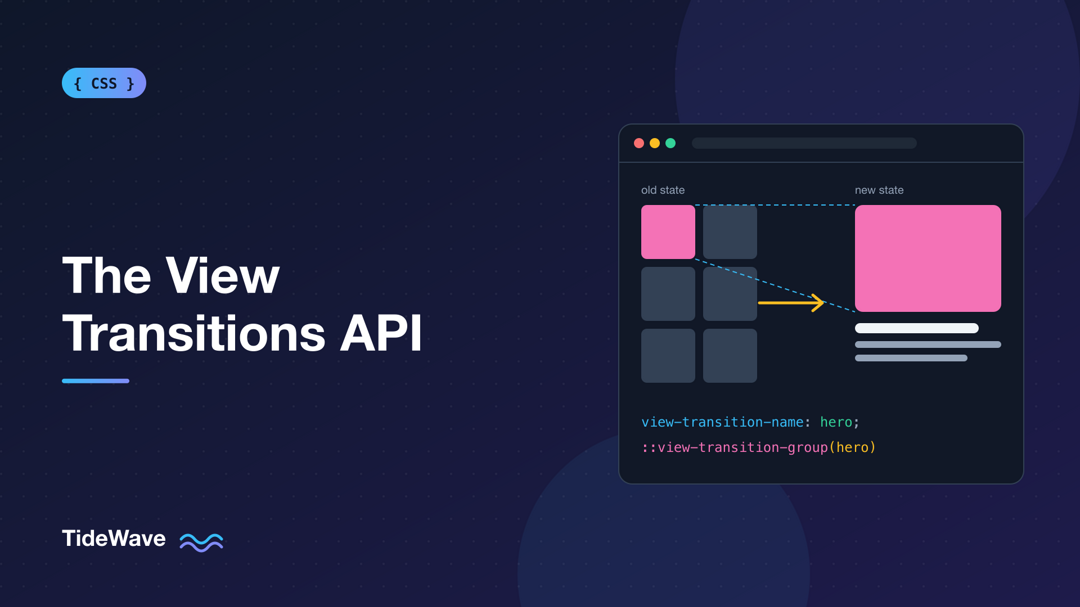
The View Transitions API: Seamless Page Transitions with CSS
Tap a photo in a native mobile app and it usually grows smoothly into a full-screen view. Tap back and it shrinks into its place in the grid. On the
Continue Reading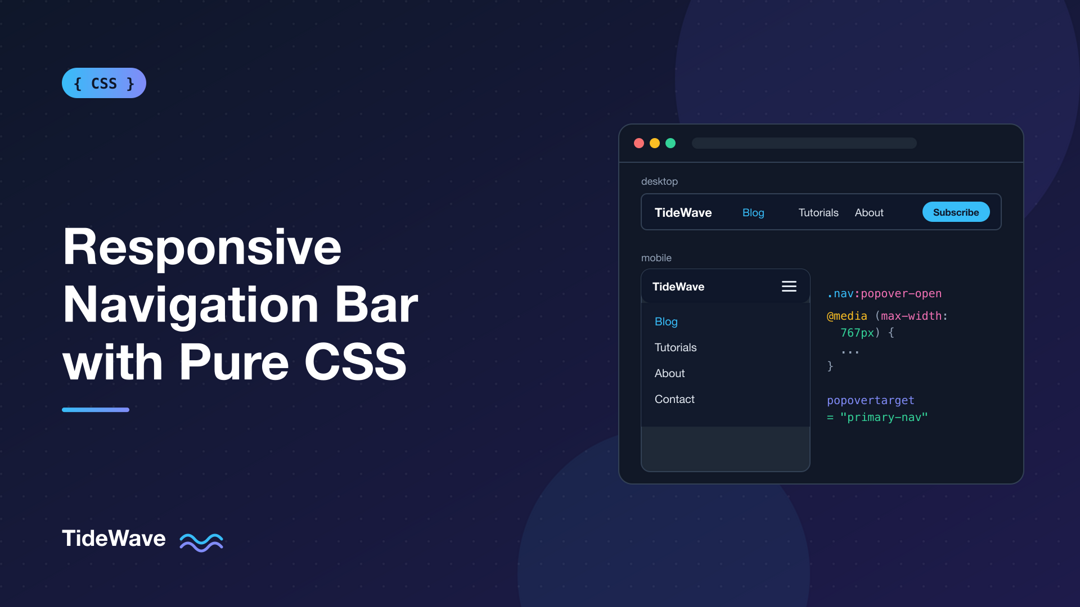
How to Build a Responsive Navigation Bar with Pure CSS
The navigation bar is the first component most visitors interact with, and it's also one of the first places developers reach for JavaScript. A hambu
Continue Reading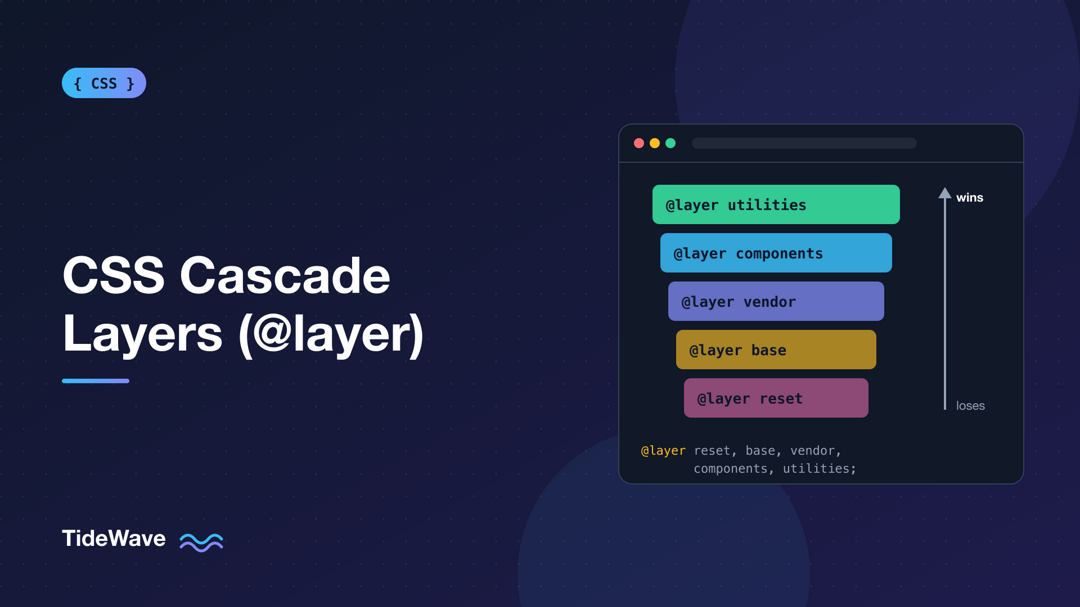
How to Use CSS Cascade Layers (@layer) to Tame Specificity
Every CSS codebase eventually hits the same wall. A third-party library ships a selector like .datepicker .header button.nav, and you need to overr
Continue Reading
A Complete Guide to CSS Container Queries
For more than a decade, responsive design meant one thing: media queries. You asked the browser how wide the viewport was and adjusted your layout ac
Continue Reading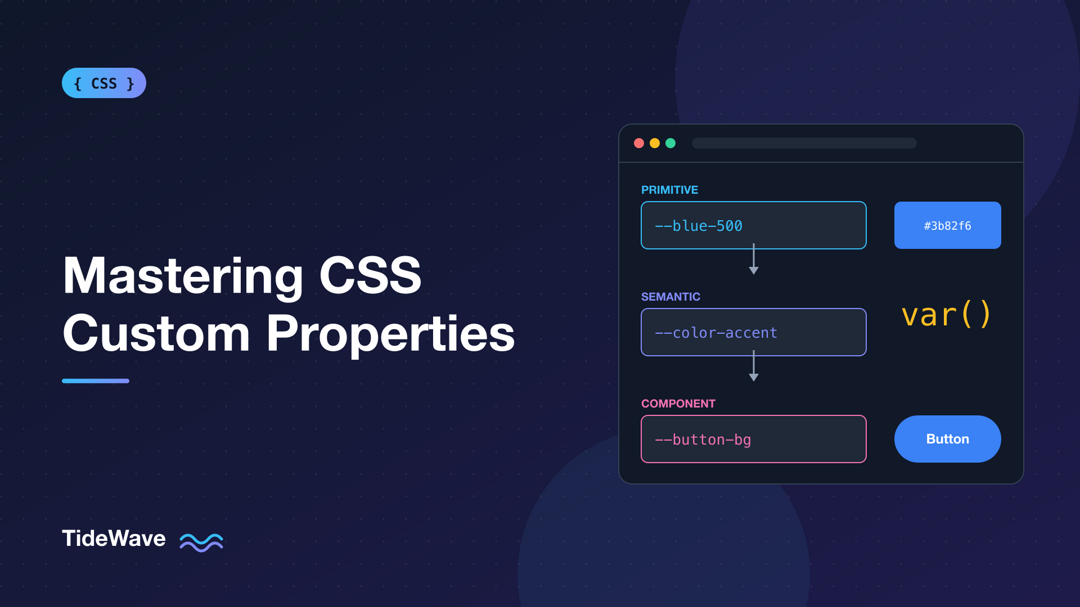
Mastering CSS Custom Properties (Variables) for Scalable Design Systems
Almost every CSS codebase uses custom properties by now. Most of them use them the same way: a list of colors at the top of a stylesheet, referenced
Continue Reading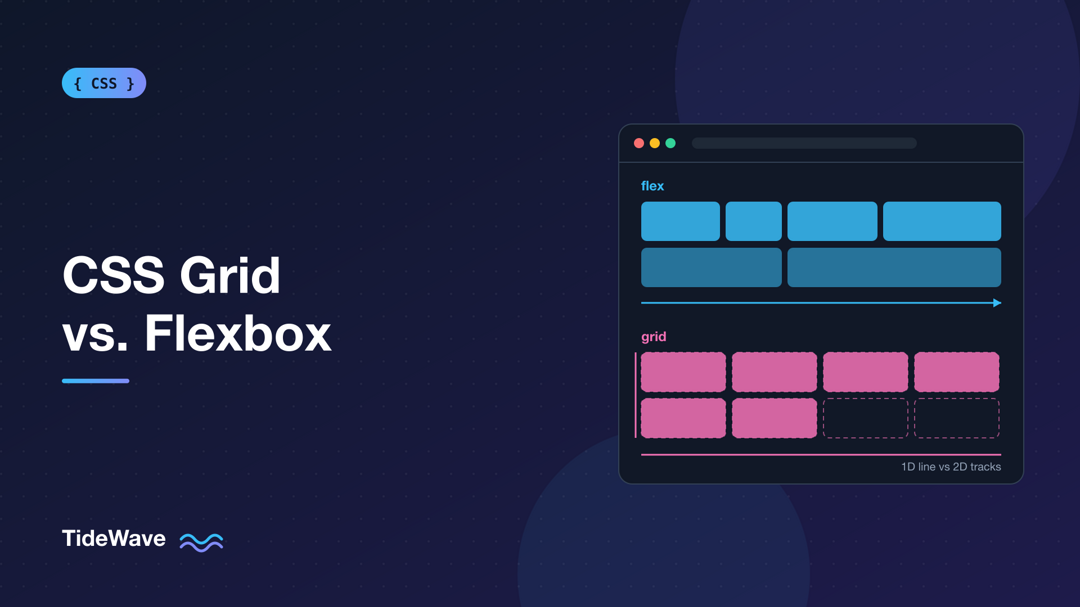
CSS Grid vs. Flexbox: When to Use Which?
CSS Grid and Flexbox are both fully supported in every modern browser, both handle alignment beautifully, and both can produce layouts that look almo
Continue Reading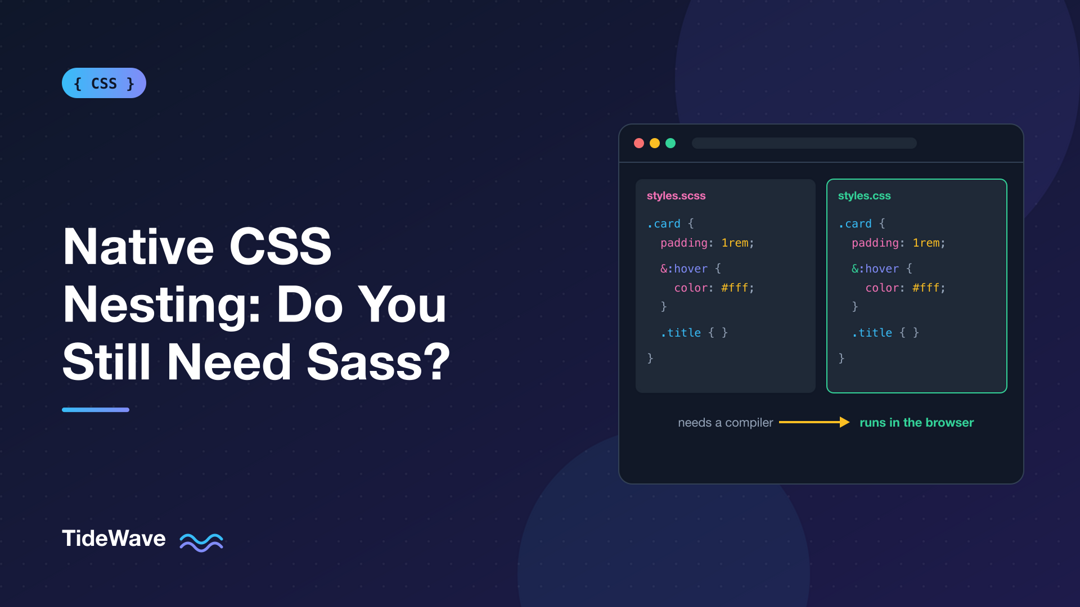
Native CSS Nesting: Do You Still Need Sass?
Ask a developer why they installed Sass, and the most likely answer is "nesting". Being able to write a component's styles inside one block, with hov
Continue Reading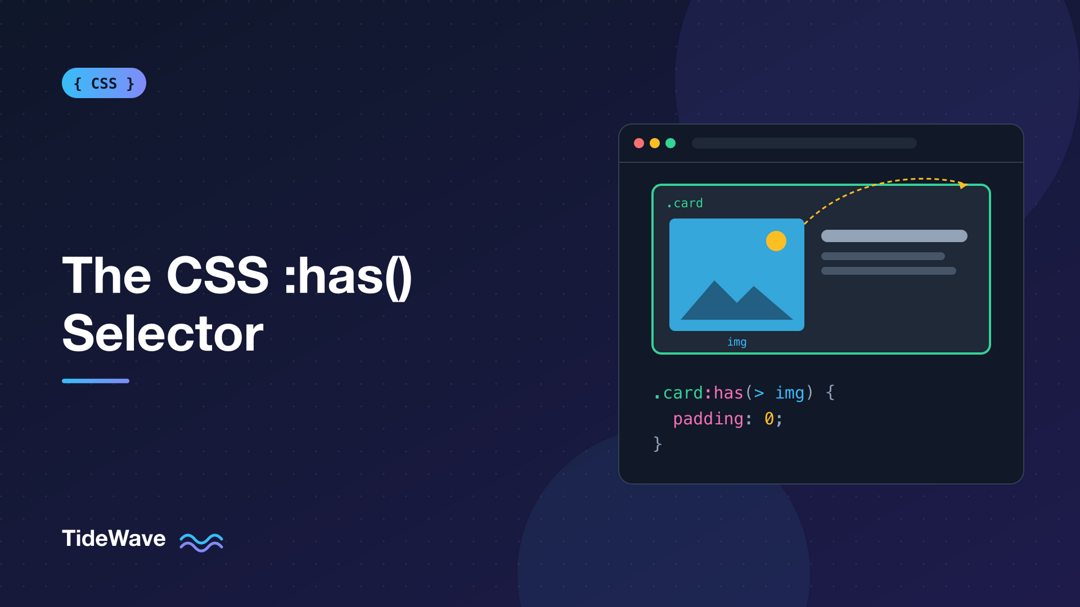
The CSS :has() Selector: The Parent Selector We Always Wanted
For most of CSS's history, selectors only worked in one direction: down. You could style a child based on its parent, a sibling based on an earlier s
Continue Reading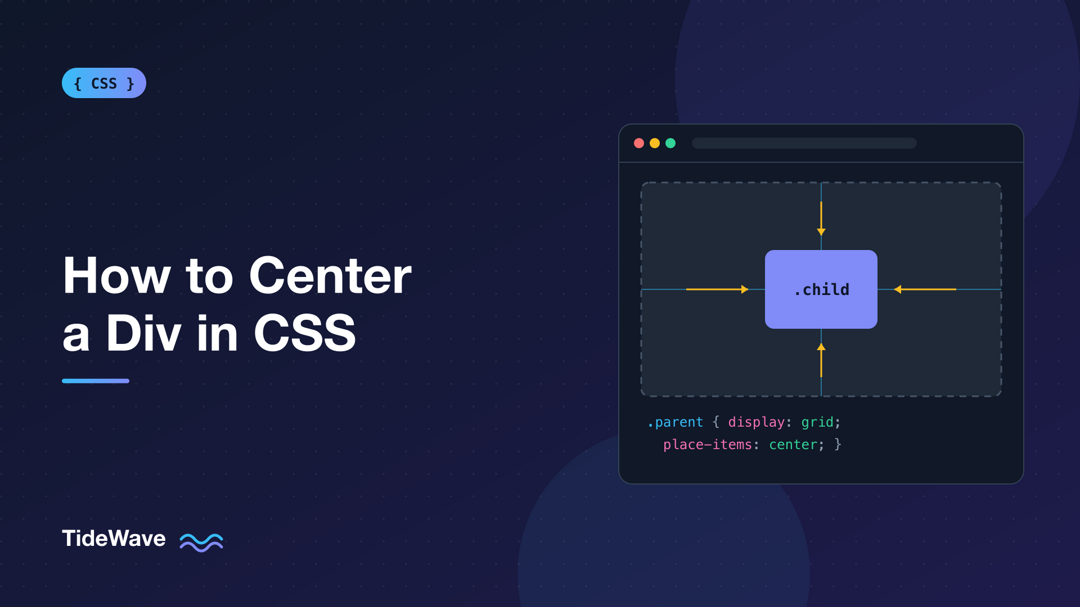
How to Center a Div in CSS: Every Method Explained
"How do I center a div?" has been a running joke among web developers for as long as CSS has existed. The joke landed because, for years, the answer
Continue Reading
A Comprehensive Guide to Installing Next.js
Next.js has emerged as a powerful framework for building React applications, offering features like server-side rendering, static site generation, an
Continue Reading
Critical CSS: Speeding Up Your Website’s First Paint
Have you ever landed on a webpage that took forever to load, only to stare at a blank screen before content appeared? That frustrating delay, where
Continue Reading
Advanced CSS with clamp(), min(), and max(): Simplifying Dynamic Styling
CSS has evolved significantly, and modern tools like clamp(), min(), and max() are powerful game-changers in dynamic styling. If you’ve struggl
Continue Reading
Debugging CSS Like a Pro: Tools and Techniques You Didn’t Know Existed
Debugging CSS can often feel like a mix of detective work and problem-solving. While writing CSS might seem like a straightforward task,
Continue Reading
Pure CSS Hover Effects That Will Make Your Buttons Unforgettable
Hover effects not only add interactivity but also enhance the aesthetic appeal of web designs. With CSS-only hover effects, you can bring buttons
Continue Reading
Writing Your Own Magic with the Future of Styling CSS
CSS Houdini is more than just a fancy tool—it's a revolution in how we interact with stylesheets. Imagine being able to write custom CSS that
Continue Reading
Embrace the Future of CSS: Harness Houdini to Unleash the Power of Browser Rendering
CSS has been the foundation of web design, enabling developers to style elements and build layouts efficiently. However, CSS has always faced certain
Continue Reading