Lysosomes: The Cell's Recycling Centers
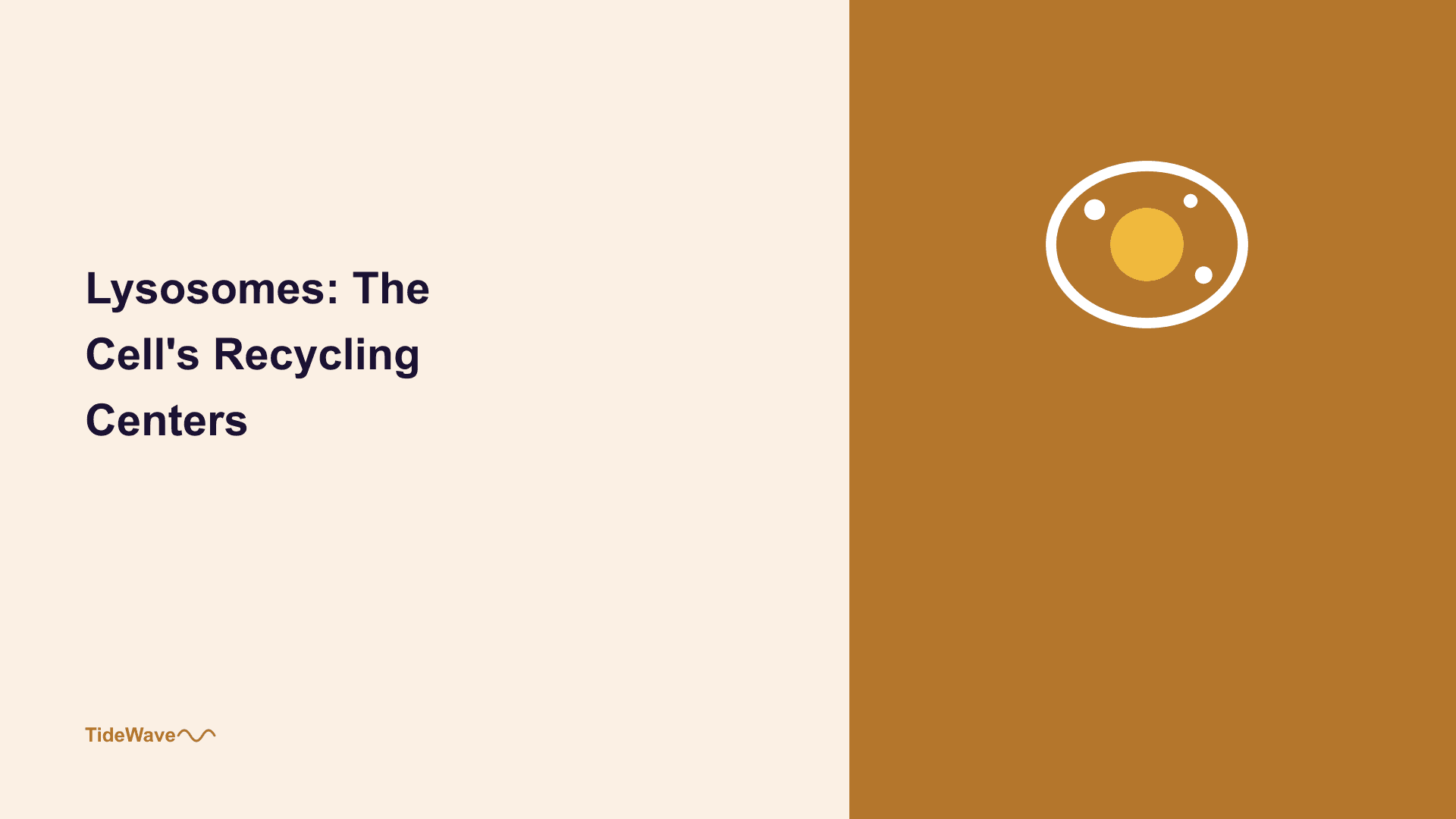
Cells are not tidy by default. Proteins misfold, organelles wear out, and unwanted material constantly needs to be broken down and cleared away. That job falls to lysosomes, small membrane-bound sacs filled with digestive enzymes that act as the cell's recycling and disposal centers. Without them, a cell would slowly fill up with damaged components it has no way to remove.
What a Lysosome Actually Is
A lysosome is a roughly spherical organelle, produced by the Golgi apparatus, enclosed by a single membrane and packed with more than 50 different hydrolytic enzymes. These enzymes can break down virtually every class of biological molecule: proteins, nucleic acids, complex sugars, and lipids. Keeping them enclosed in their own compartment isn't a minor detail, it's the entire point of the design.
Why the Interior Is So Acidic
The inside of a lysosome is kept at a pH of around 4.5-5.0, far more acidic than the neutral pH of the surrounding cytoplasm. This acidity is maintained by proton pumps embedded in the lysosomal membrane that actively transport hydrogen ions inward. Two things follow from this:
- Enzyme activation: Lysosomal enzymes are acid hydrolases, they're built to work best at low pH and are far less active at the cytoplasm's neutral pH.
- Built-in safety mechanism: If a lysosome ruptures and spills its contents into the cytoplasm, the enzymes are suddenly in the wrong chemical environment and largely shut down, which limits (though doesn't eliminate) accidental damage to the rest of the cell.
What Lysosomes Actually Digest
Lysosomes handle several distinct waste streams, each arriving through a different route:
- Phagocytosis: Immune cells like macrophages engulf bacteria or debris into a vesicle called a phagosome, which then fuses with a lysosome to destroy the contents.
- Autophagy: The cell's own worn-out organelles (like a damaged mitochondrion) are wrapped in a double membrane and delivered to a lysosome for breakdown, literally "self-eating."
- Endocytosis: Material taken up from outside the cell in vesicles is routed to lysosomes for processing, including receptors and molecules absorbed from the extracellular environment.
Recycling, Not Just Destruction
The word "digestion" undersells what's happening. Lysosomes break complex molecules down into simple building blocks, amino acids, simple sugars, nucleotides, fatty acids, that are then released back into the cytoplasm and reused to build new proteins, membranes, and other structures. A lysosome is closer to a recycling plant than a landfill: almost nothing that goes in is truly wasted.
When Lysosomes Fail
Because lysosomes rely on a large, precise set of enzymes, a defect in even one enzyme can be serious. Lysosomal storage diseases occur when a specific enzyme is missing or non-functional, causing its target molecule to accumulate inside the lysosome instead of being broken down. Over time this buildup damages cells and tissues.
- Tay-Sachs disease: A missing enzyme leads to the buildup of a fatty substance in nerve cells, causing progressive neurological damage.
- Gaucher disease: A deficiency in the enzyme that breaks down a particular lipid causes it to accumulate in the liver, spleen, and bone marrow.
- Pompe disease: An enzyme needed to break down glycogen is missing, leading to glycogen buildup that particularly affects muscle and heart tissue.
These conditions illustrate just how essential a fully functioning lysosome is to normal cell biology.
FAQ
Both are membrane-bound organelles involved in breaking down molecules, but they use different enzymes and serve different roles. Lysosomes rely on acid hydrolases to digest a broad range of waste and debris, while peroxisomes specialize in oxidative reactions, such as breaking down fatty acids and detoxifying hydrogen peroxide, using a different enzyme set entirely.
The lysosomal membrane is lined with heavily glycosylated proteins, proteins coated in sugar chains, that shield the membrane's surface from the very enzymes it contains. This protective coating is a major reason the lysosome can hold such aggressive digestive enzymes without destroying itself.
As cells age, lysosomes can become less efficient at clearing damaged material, particularly through autophagy. This decline is thought to contribute to the buildup of cellular debris seen in aging tissues, and is an active area of research related to telomeres and the biology of aging.
Yes. Beyond breaking down material, lysosomes act as signaling hubs that help regulate nutrient sensing and metabolism, particularly through pathways like mTOR. They effectively tell the cell whether nutrients are abundant or scarce, influencing decisions about growth versus conservation.
Some can be managed with enzyme replacement therapy, in which a synthetic version of the missing enzyme is infused into the patient's bloodstream. This doesn't cure the underlying genetic cause but can significantly reduce the buildup of the substance the missing enzyme would normally break down.
Conclusion
Lysosomes solve a problem every cell faces: waste and worn-out material accumulate constantly, and if left unchecked would eventually overwhelm the cell. By concentrating a powerful set of digestive enzymes inside an acidic, membrane-bound compartment, the cell gets a dedicated space to break things down safely and recover the raw materials for reuse. When that system fails, even a single missing enzyme can cause serious disease, a reminder of how much ordinary cellular housekeeping depends on getting this one organelle right.
Here are some useful references if you want to go deeper:
- Khan Academy – Cell Structures — lessons on organelles including lysosomes.
- NIH – Lysosomal Storage Diseases — background on enzyme deficiencies and disease.
- Britannica – Lysosome — an accessible overview of lysosome structure and function.