Enzymes: Nature's Chemical Catalysts
Many of the chemical reactions that keep you alive, breaking down the food you eat, copying your DNA, sending nerve signals, would take impractically long to happen on their own, sometimes years, under the mild temperature and pressure conditions found inside a living cell. Instead, they happen in fractions of a second, thanks to enzymes, biological catalysts built almost entirely from proteins that speed up specific reactions by enormous factors without being consumed in the process.
What a Catalyst Actually Does
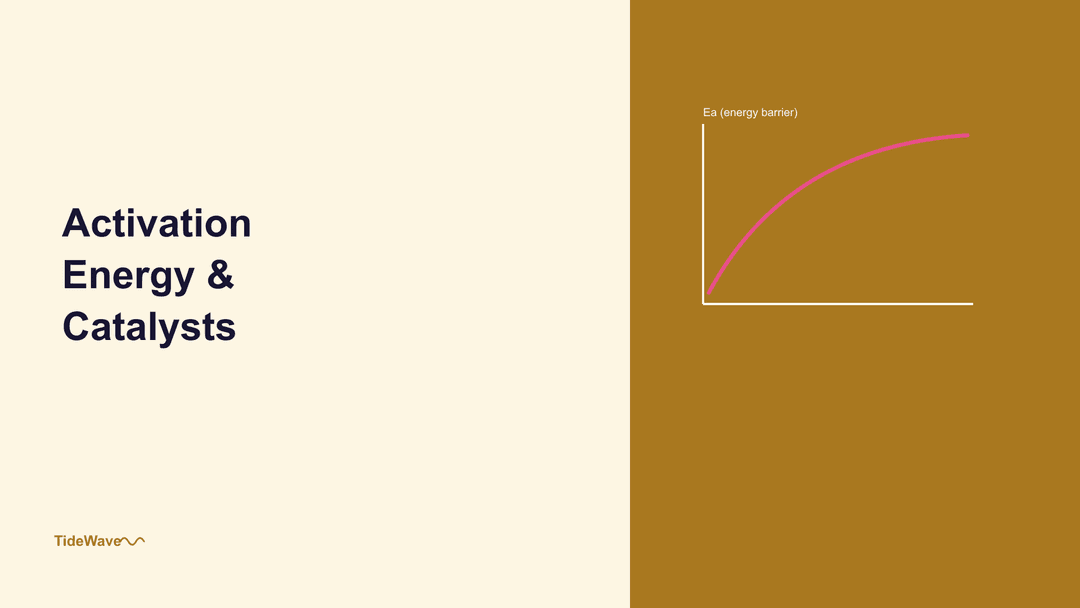
A catalyst is any substance that increases a reaction's rate without being permanently changed or used up itself. It works by providing an alternative reaction pathway with a lower activation energy, the minimum energy barrier that reacting molecules need to overcome before a reaction can proceed. Lower the barrier, and a much larger fraction of molecules have enough energy to react at any given moment, dramatically speeding up the overall reaction rate.
Enzymes are simply nature's version of this same principle, but with a level of precision and specificity that far exceeds most industrial chemical catalysts.
The Lock-and-Key Model
Early explanations of enzyme function used the lock-and-key model: an enzyme has a specifically shaped region, called the active site, into which only a molecule of the correct, complementary shape, called the substrate, can fit. This shape-matching explains why a given enzyme typically works on only one specific substrate (or a small family of closely related ones), rather than catalyzing reactions indiscriminately.
The Induced Fit Model: A More Accurate Picture
Modern biochemistry has refined this picture into the induced fit model, which recognizes that enzymes aren't perfectly rigid locks; the active site actually changes shape slightly as the substrate binds, molding itself around the substrate to grip it more precisely and position it optimally for the reaction to occur. This subtle flexibility, rather than a perfectly fixed shape, helps explain why enzymes can be so effective at aligning reactive groups exactly where they need to be, and why extreme conditions (like high heat) that alter a protein's shape can disable an enzyme's function entirely.
How Enzymes Lower Activation Energy
Enzymes speed up reactions through a few specific mechanisms, often working in combination:
- Proper orientation: by holding two reactant molecules in exactly the right position and orientation relative to each other, an enzyme dramatically increases the chance of a productive collision, something that would otherwise depend on random, inefficient molecular motion.
- Strain and distortion: binding to the active site can slightly bend or stretch particular bonds within the substrate, making them easier to break during the reaction.
- Providing a favorable chemical environment: the active site's specific arrangement of amino acid side chains can stabilize a reaction's transition state, or directly participate in the reaction through temporary bond formation with the substrate.
The result of any of these effects is the same: the energy needed to reach the reaction's transition state drops significantly, and the reaction proceeds far faster than it would without the enzyme present.
Enzyme Naming and Specificity
Most enzyme names end in the suffix "-ase," typically attached to the name of the substrate they act on or the type of reaction they catalyze:
- Lactase breaks down lactose (milk sugar).
- Protease breaks down proteins.
- Lipase breaks down lipids (fats).
- DNA polymerase builds new DNA strands.
This naming convention directly reflects enzyme specificity: because of the precise shape-matching required by the (induced fit) active site, a given enzyme generally works on only one substrate or reaction type, which is exactly why the human body needs thousands of distinct enzymes rather than a handful of general-purpose ones.
Factors That Affect Enzyme Activity
Because enzyme function depends entirely on maintaining a precise three-dimensional protein shape, enzyme activity is highly sensitive to the surrounding conditions:
Temperature
Enzyme activity generally increases with temperature up to an optimum point (for most human enzymes, around normal body temperature, 37°C), since higher temperature increases the frequency of productive molecular collisions. Beyond that optimum, activity drops sharply as heat begins to denature the enzyme, permanently disrupting the precise folded protein structure the active site depends on.
pH
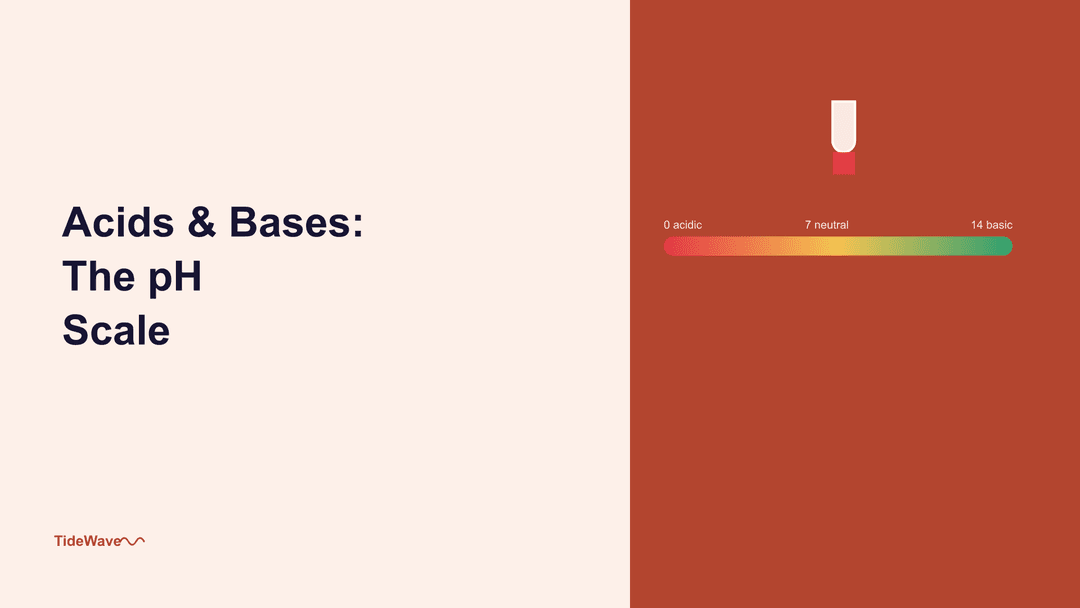
Each enzyme has an optimal pH range, since pH affects the charge and shape of the amino acid side chains that form the active site. Pepsin, a digestive enzyme active in the highly acidic stomach, has an optimum pH around 2, while trypsin, active in the much more alkaline small intestine, has an optimum pH closer to 8, each enzyme finely tuned to the specific chemical environment where it actually operates in the body.
Substrate Concentration
Increasing substrate concentration generally increases reaction rate, up to a point, since more substrate means more opportunities for productive collisions with available active sites. Beyond that point, the rate plateaus, since every enzyme molecule's active site becomes continuously occupied, and adding more substrate can't speed things up any further until more enzyme becomes available.
Inhibitors
Inhibitors are molecules that reduce or block enzyme activity. Competitive inhibitors have a shape similar enough to the true substrate that they can occupy the active site themselves, blocking the real substrate from binding. Non-competitive inhibitors bind elsewhere on the enzyme entirely, but still distort its overall shape enough to disrupt the active site's function indirectly. Many medications, including some widely used antibiotics and blood pressure treatments, work specifically by acting as enzyme inhibitors, deliberately blocking a particular biological reaction.
Why Enzymes Matter Beyond Biology
Enzymes aren't confined to biology textbooks; they're widely used industrially, precisely because of how efficiently and specifically they catalyze reactions under relatively mild conditions:
- Laundry detergents often contain protease and lipase enzymes to help break down protein- and fat-based stains.
- Food production relies heavily on enzymes, from rennet (used in cheesemaking) to amylase (used in baking and brewing to break down starches into fermentable sugars).
- Biotechnology and medicine use engineered enzymes for everything from diagnostic testing to manufacturing pharmaceutical compounds more efficiently than conventional chemical synthesis could achieve.
FAQ
High heat provides enough energy to disrupt the weak intramolecular forces (like hydrogen bonds) holding an enzyme's precise three-dimensional folded structure together. Once that structure unravels, a process called denaturation, the active site's specific shape is destroyed, and in most cases the protein cannot refold correctly back into its original functional shape even after cooling.
The vast majority of biological catalysts are enzymes (proteins), but a notable exception exists: certain RNA molecules, called ribozymes, can also catalyze specific biological reactions, most famously within the ribosome during protein synthesis. This was a significant discovery, since it was long assumed that only proteins were capable of enzymatic catalysis.
Because competitive inhibitors bind reversibly (rather than forming a permanent bond) and rely on shape similarity rather than being chemically identical to the true substrate, increasing the concentration of the actual substrate can outcompete the inhibitor for access to the active site, restoring normal enzyme activity as the true substrate binds more frequently.
Yes. Many enzymes catalyze reversible reactions and can work in either direction depending on the relative concentrations of reactants and products present, following the same underlying logic described in chemical equilibrium; the enzyme itself doesn't determine the reaction's direction, only how quickly equilibrium is reached.
Lactose intolerance results from an insufficient amount of the enzyme lactase, needed to break lactose (milk sugar) down into simpler, absorbable sugars. Without enough active lactase, undigested lactose passes into the large intestine, where gut bacteria ferment it, producing the gas and discomfort typically associated with the condition.
Conclusion
Enzymes solve a real problem: many of the reactions life depends on are simply too slow to happen fast enough on their own under the mild conditions found inside a living cell. By binding substrates with high specificity, whether through the classic lock-and-key idea or the more accurate induced fit model, and lowering the activation energy needed for a reaction to proceed, enzymes make biology's chemistry run at the speed life actually requires. Their extreme sensitivity to temperature, pH, and inhibitors isn't a flaw, it's a direct, unavoidable consequence of relying on a precisely folded protein shape to do such demanding, specific chemical work.
Here are some useful references if you want to go deeper:
- Khan Academy – Enzymes — free lessons on enzyme structure, function, and kinetics.
- Chemguide – Enzymes — an accessible chemistry-focused explanation of enzyme mechanisms.
- NIH – Enzymes and Their Function — a detailed biochemical reference on enzyme catalysis and regulation.