Blog
Organic Chemistry Basics: Functional Groups and Naming Compounds
Organic chemistry is the study of carbon-based compounds, and carbon's unique ability to form stable, complex chains and rings with other carbon
Continue Reading
Isotopes and Radioactive Decay: What Makes an Atom Unstable
Every atom of carbon has exactly six protons; that's what makes it carbon rather than nitrogen or oxygen, since atomic number
Continue Reading
Redox Reactions and the Basics of Electrochemistry
Every battery that powers a phone, every patch of rust on an old car, and every breath your cells take to release energy from food all rely on the sa
Continue Reading
Chemical Equilibrium and Le Chatelier's Principle Explained
Not every chemical reaction runs to completion and stops. Many reactions are reversible, meaning the products can react again to reform the origi
Continue Reading
Moles and Stoichiometry: The Chemist's Counting System
Atoms and molecules are far too small and far too numerous to count individually, a single drop of water contains roughly 1.7 sextillion molecules, s
Continue Reading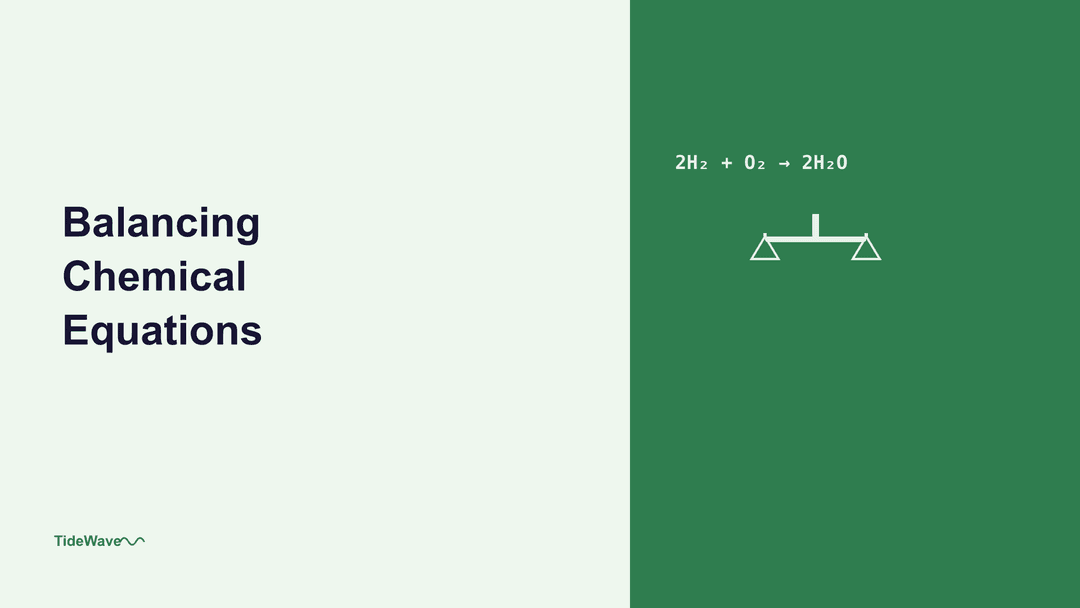
Balancing Chemical Equations: A Step-by-Step Guide
Every chemical equation is a claim about what happens to matter during a reaction, and matter doesn't simply appear or disappear. This is the **Law o
Continue Reading