Nextjs
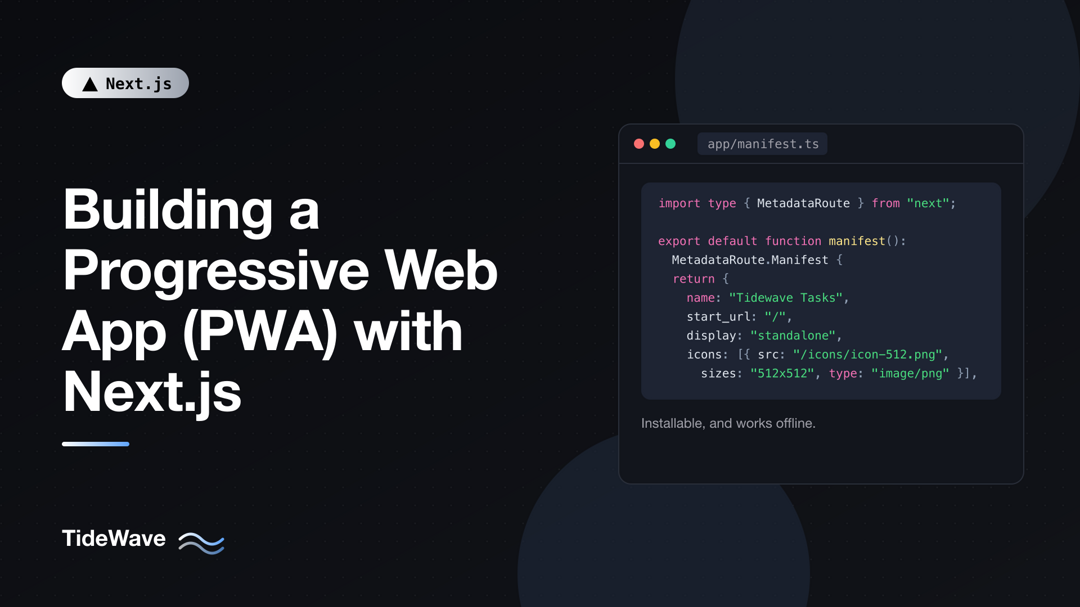
Building a Progressive Web App (PWA) with Next.js
A Progressive Web App is a website that can behave like an installed app. Users can add it to their home screen or dock, it opens in its own window w
Continue Reading
Building a Monorepo with Next.js and Turborepo
The second Next.js app is usually where things get messy. You build a marketing site, then a dashboard, then maybe a docs site, and each one needs th
Continue Reading
Implementing Rate Limiting in Next.js Route Handlers
Every public endpoint will eventually get hit harder than you planned. Sometimes it's a scraper, sometimes a bot trying passwords on your login route
Continue Reading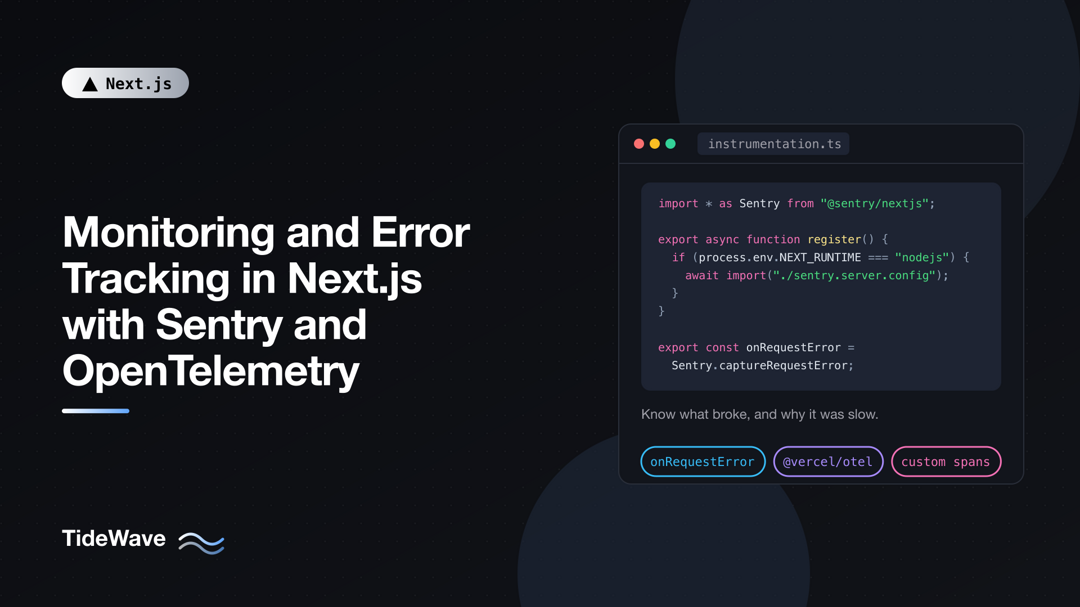
Monitoring and Error Tracking in Next.js with Sentry and OpenTelemetry
In development, Next.js shows you every error in a big red overlay. In production, an error in a Server Component turns into a generic "Something wen
Continue Reading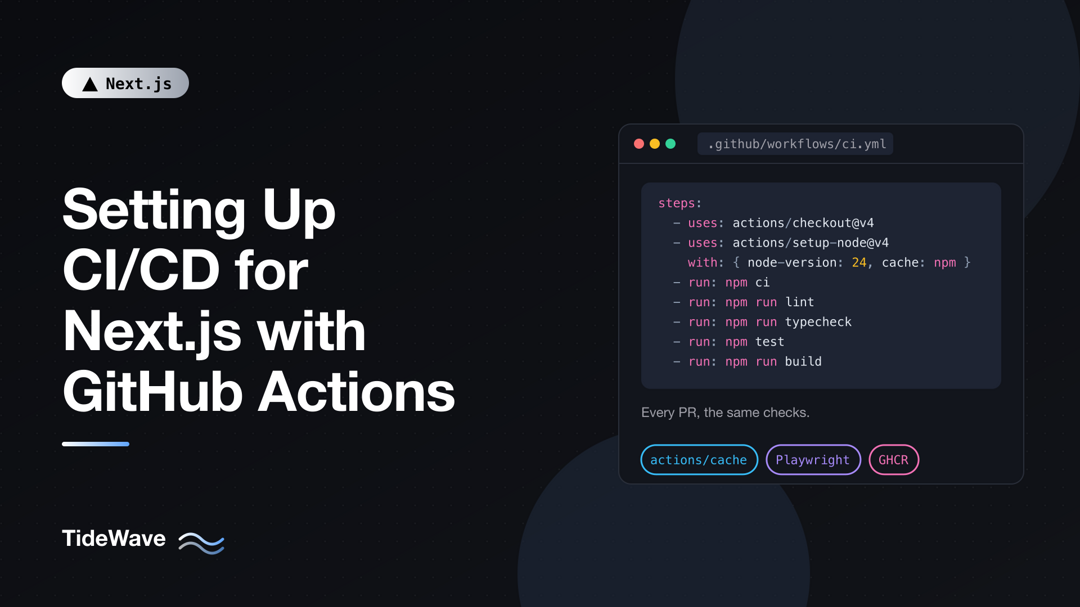
Setting Up CI/CD for Next.js with GitHub Actions
A Next.js project without CI relies on everyone remembering to run the linter, the type checker, and the tests before they push. Somebody eventually
Continue Reading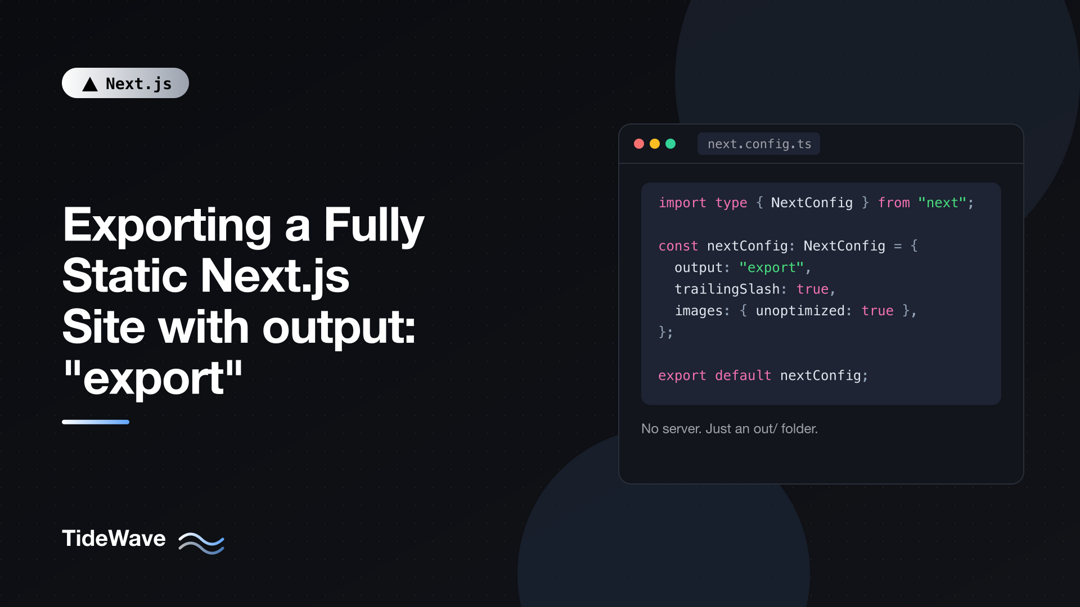
Exporting a Fully Static Next.js Site with output: "export"
Not every Next.js project needs a server. A documentation site, a portfolio, a marketing site, or a blog whose content changes only when you deploy c
Continue Reading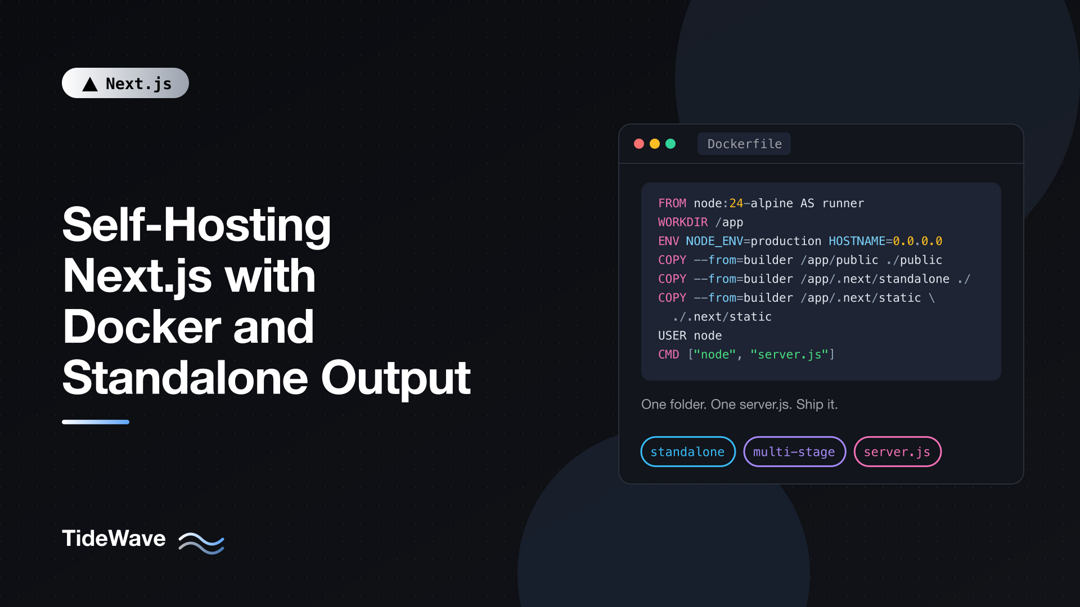
Self-Hosting Next.js with Docker and Standalone Output
Next.js runs anywhere Node.js runs. You don't need a specific platform to get Server Components, streaming, image optimization, Server Actions, or `p
Continue Reading
A Deep Dive into next.config Options Every Developer Should Know
next.config.ts is the one file every Next.js project has and almost nobody reads end to end. It starts as an empty object, then slowly collects a r
Continue Reading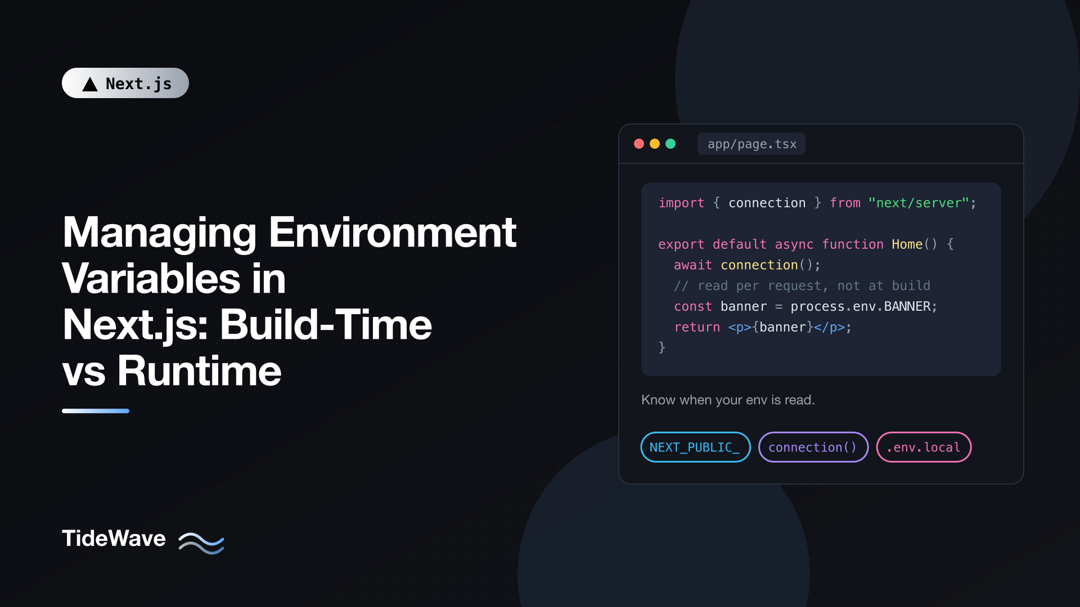
Managing Environment Variables in Next.js: Build-Time vs Runtime
Environment variables in Next.js look simple: put a value in .env, read it with process.env.SOMETHING, done. Then you deploy, change a value in y
Continue Reading
Common Next.js Errors and How to Fix Them
Most Next.js errors aren't really bugs in your logic. They're the framework telling you that code ended up on the wrong side of the server-client bou
Continue Reading
Fixing Hydration Mismatch Errors in Next.js
"Hydration failed because the server rendered HTML didn't match the client." If you've built anything non-trivial with Next.js, you've probably seen
Continue Reading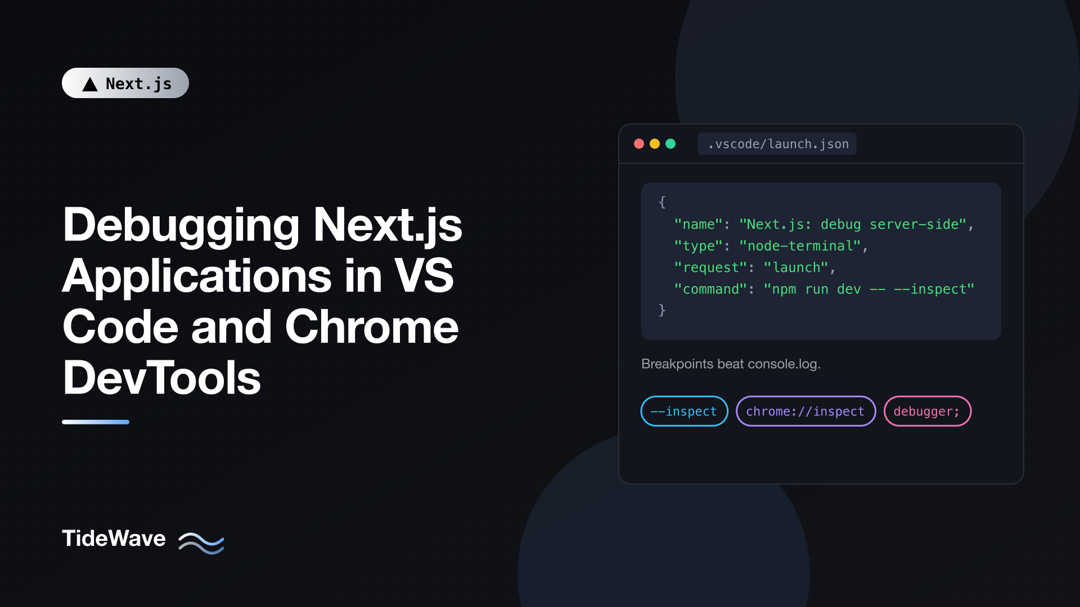
Debugging Next.js Applications in VS Code and Chrome DevTools
A Next.js app runs in two places at once. Server Components, Server Actions, Route Handlers, and proxy.ts execute in a Node.js process. Client Comp
Continue Reading
Testing Next.js Applications with Vitest
Vitest has become the default test runner for a lot of new JavaScript projects. It's fast, it understands TypeScript and ESM natively, its API is clo
Continue Reading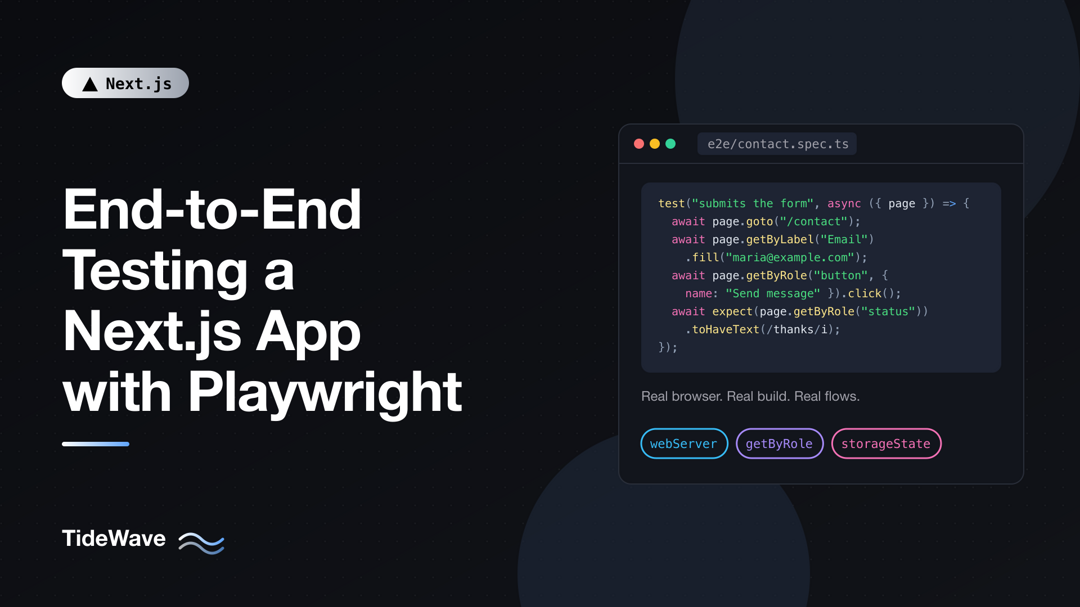
End-to-End Testing a Next.js App with Playwright
Unit tests tell you that a component renders the right markup for a given set of props. They can't tell you that your login flow works, that a Server
Continue Reading
Unit Testing Next.js Components with Jest and React Testing Library
Unit tests are the fastest feedback loop you can have on a Next.js project. They run in milliseconds, don't need a browser or a running server, and t
Continue Reading
Building Multi-Step Forms in Next.js with React Hook Form
Long forms are hard to complete. Splitting a signup, checkout, or onboarding flow into a few short steps makes it feel lighter, lets you validate as
Continue Reading
Syncing State with URL Search Params in Next.js
Think about the last time you filtered a product list, refreshed the page, and lost every filter you'd set. Or shared a link to a search result and t
Continue Reading
State Management in Next.js: Context, Zustand, or Redux Toolkit?
State management used to be one of the first architecture decisions in a React app. You picked Redux (or MobX, or something else), wired up a store a
Continue Reading
Building an AI Chat Interface in Next.js with the Vercel AI SDK
A chat interface looks like a simple feature: a list of messages and a text box. Under the hood, it needs streaming responses so text appears as the
Continue Reading
Using a Headless CMS with Next.js: Sanity, Contentful, and Strapi Compared
Markdown files in a Git repository are a great way to run a developer blog. They stop being great the moment someone who doesn't use Git needs to pub
Continue Reading
Role-Based Access Control in Next.js: Protecting Pages and Server Actions
Authentication answers "who are you?". Authorization answers "what are you allowed to do?". Most Next.js tutorials stop at the first question: once t
Continue Reading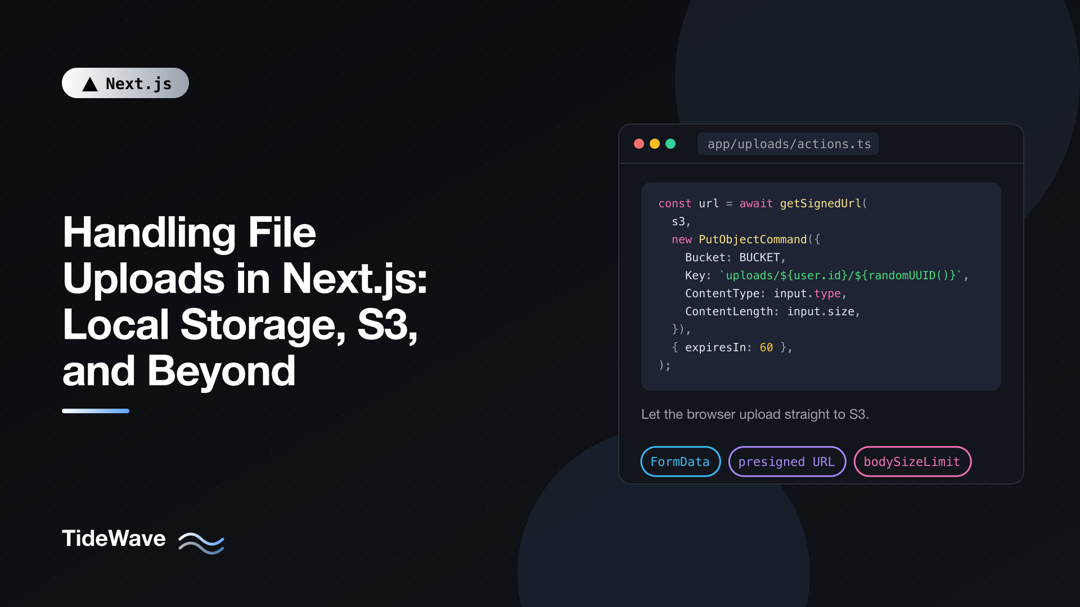
Handling File Uploads in Next.js: Local Storage, S3, and Beyond
File uploads look simple: a file input, a submit button, and somewhere to put the bytes. In practice, the "somewhere" decides almost everything. Writ
Continue Reading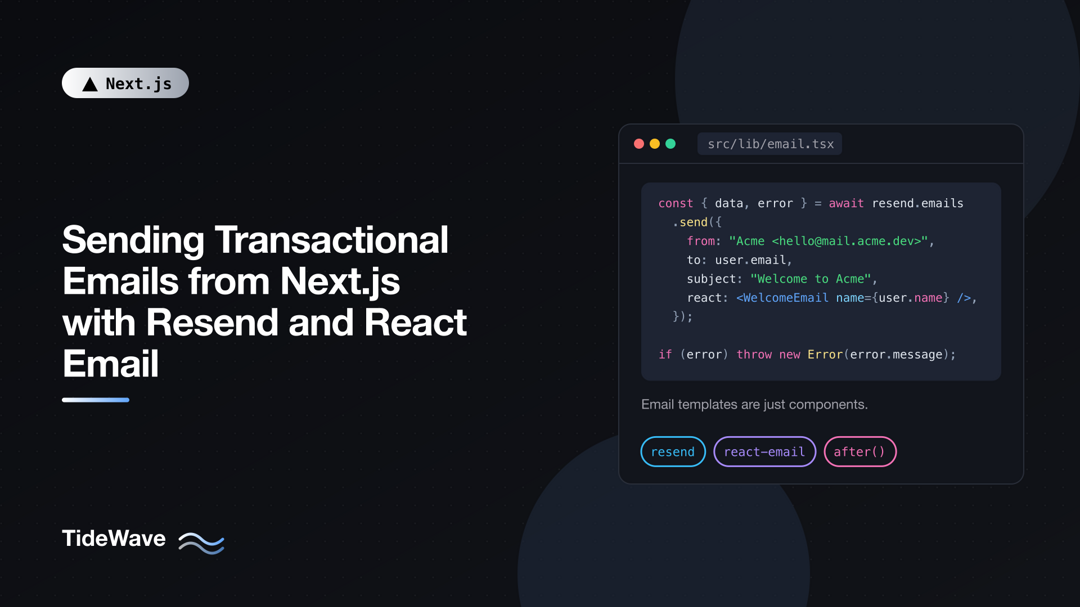
Sending Transactional Emails from Next.js with Resend and React Email
Almost every app sends email: welcome messages, password resets, receipts, invitations, "someone replied to your comment". These transactional emails
Continue Reading
Integrating Stripe Payments into a Next.js Application
Taking payments is one of those features where the happy path is easy and the edge cases are where money goes missing. A customer closes the tab befo
Continue Reading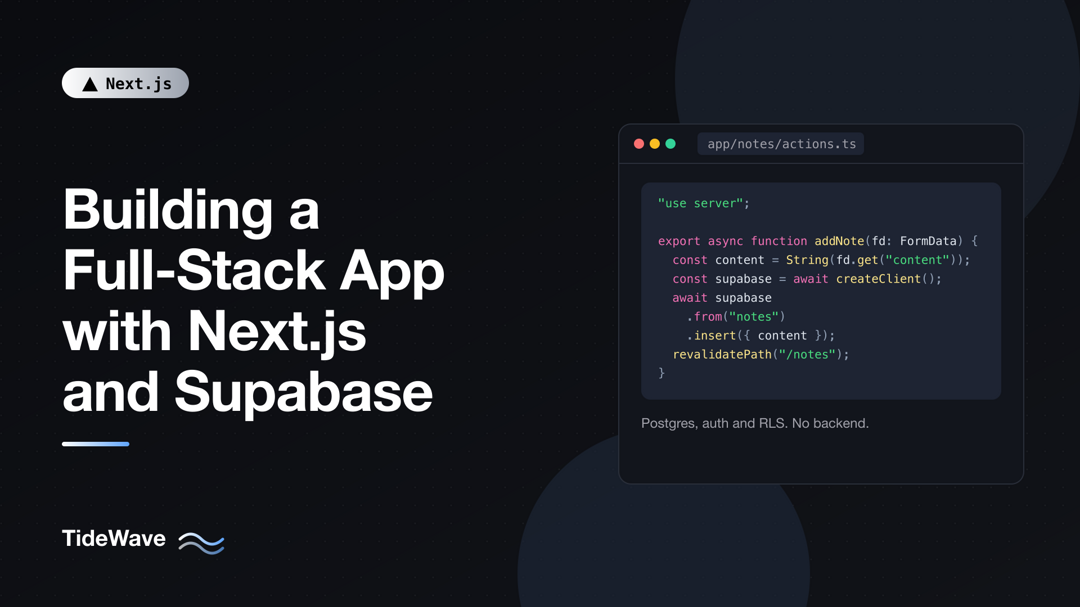
Building a Full-Stack App with Next.js and Supabase
Supabase gives you a Postgres database, authentication, file storage, and realtime subscriptions behind one project and one client library. Next.js g
Continue Reading
Connecting MongoDB to Next.js: Handling Connections in Serverless Environments
Connecting MongoDB to Next.js takes about five lines of code. Connecting it so it still works when your app has real traffic takes a bit more thought
Continue Reading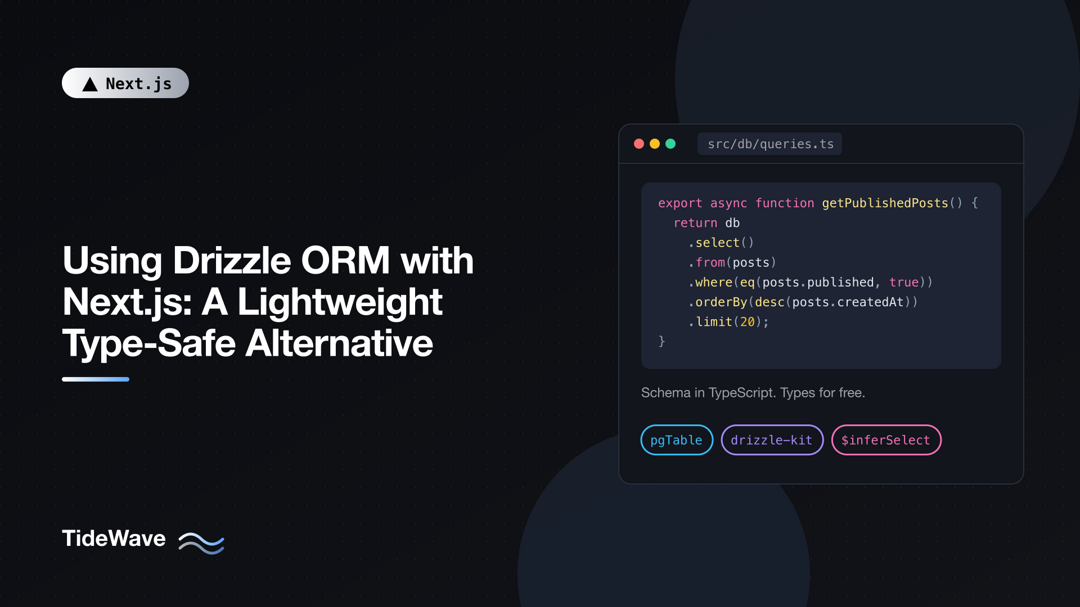
Using Drizzle ORM with Next.js: A Lightweight Type-Safe Alternative
Drizzle ORM has become the go-to choice for Next.js developers who want type safety without a heavy runtime. There is no separate schema language, no
Continue Reading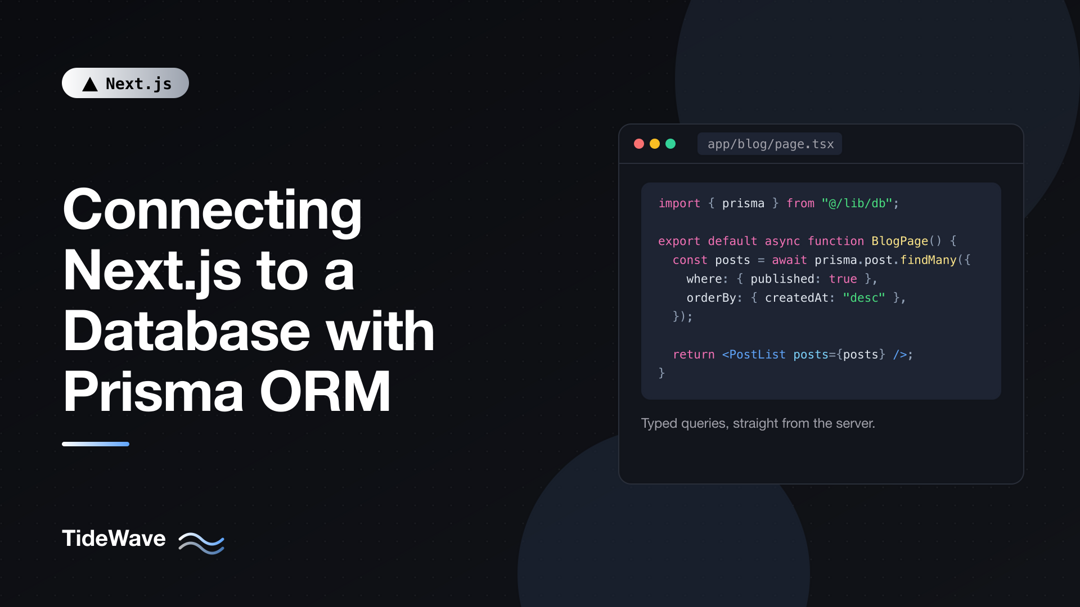
Connecting Next.js to a Database with Prisma ORM
The App Router changed how Next.js apps talk to databases. Server Components run on the server, so a page can query the database directly with no API
Continue Reading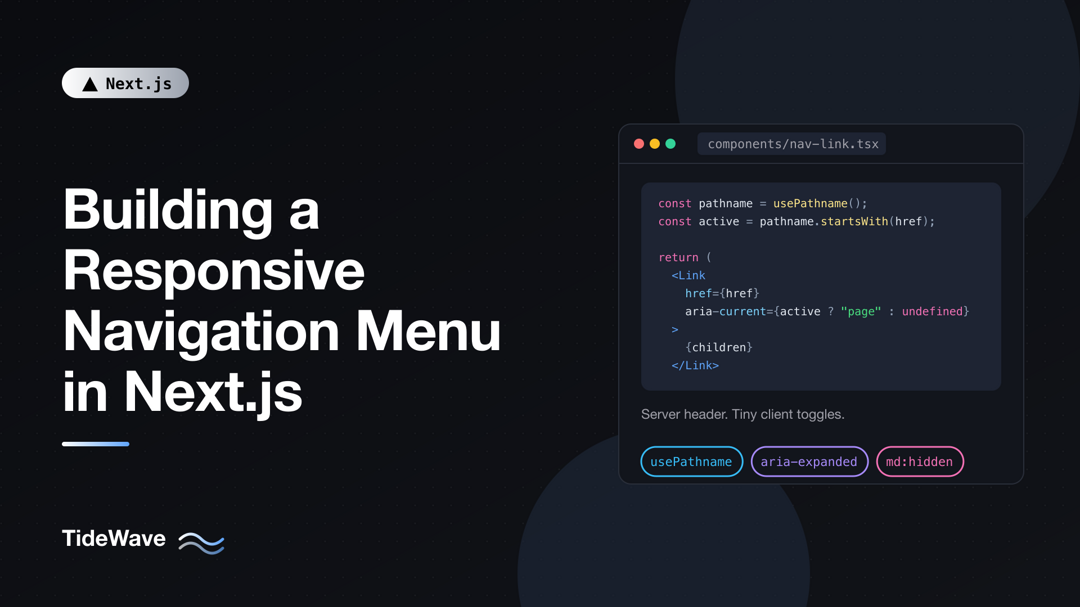
Building a Responsive Navigation Menu in Next.js
Every site needs navigation, and almost every site needs it to work in two shapes: a horizontal row of links on wide screens and a collapsible menu b
Continue Reading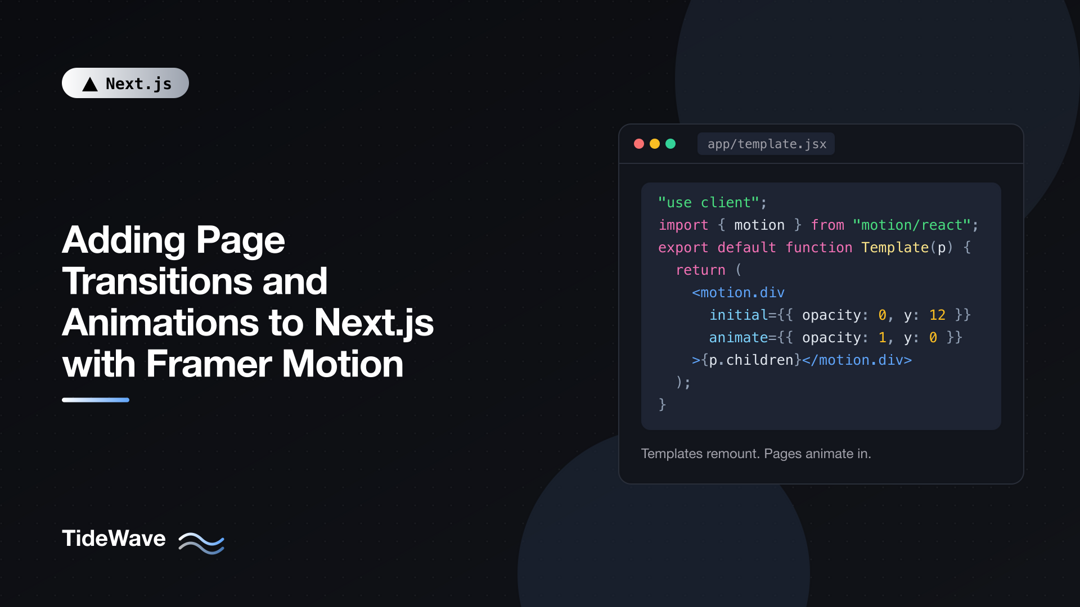
Adding Page Transitions and Animations to Next.js with Framer Motion
Animation is one of the easiest ways to make an app feel polished, and one of the easiest ways to make it feel slow. A subtle fade when a page loads,
Continue Reading
Building Accessible UI Components in Next.js with shadcn/ui
Building a dropdown menu that looks right takes an afternoon. Building one that works with a keyboard, announces itself to screen readers, traps and
Continue Reading
Using CSS Modules in Next.js: Scoped Styles Made Simple
Global CSS has one big problem: every class name lives in the same namespace. Name something .card or .title and sooner or later another componen
Continue Reading
Implementing Dark Mode in Next.js Without a Flash of Unstyled Content
You add a dark mode toggle, pick dark, and reload the page. For a split second the page is bright white, then it snaps to dark. That flash is the mos
Continue Reading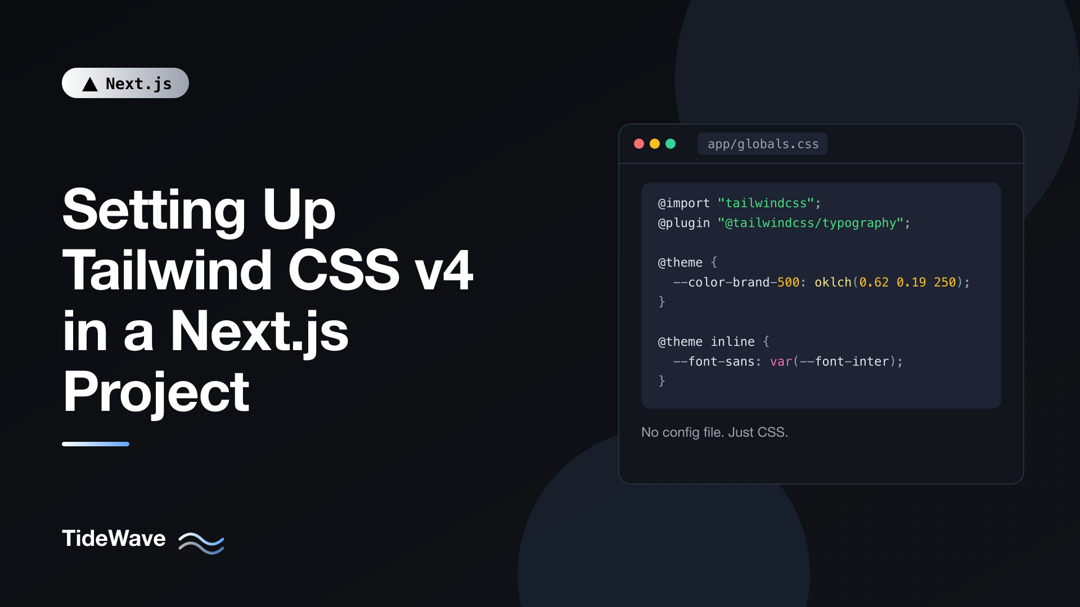
Setting Up Tailwind CSS v4 in a Next.js Project
Tailwind CSS and Next.js are the default pairing for a lot of React projects, and with Tailwind v4 the setup has become noticeably smaller. There's n
Continue Reading
Adding Syntax Highlighting to Code Blocks in a Next.js Blog
If you write about code, your code blocks are half the post. Plain monospace text in a gray box works, but readers scan code by color: keywords, stri
Continue Reading
Generating an RSS Feed for Your Next.js Blog
RSS never went away. Feed readers, newsletter tools, podcast apps, Slack integrations, and plenty of aggregators still pull content from a plain XML
Continue Reading
Creating Custom MDX Components and Shortcodes in Next.js
Plain Markdown gets you headings, paragraphs, lists, links, and code. That covers most of a blog post, but sooner or later you want something it can'
Continue Reading
Building a Markdown-Powered Blog with Next.js and MDX
A blog built from Markdown files in your repository is hard to beat for a developer's site or documentation. Posts live next to your code, they're ve
Continue Reading
Adding JSON-LD Structured Data to Next.js Pages for Rich Search Results
Search engines are good at reading pages, but they still guess. Is "4.7" a rating or a version number? Is that date when the article was published or
Continue Reading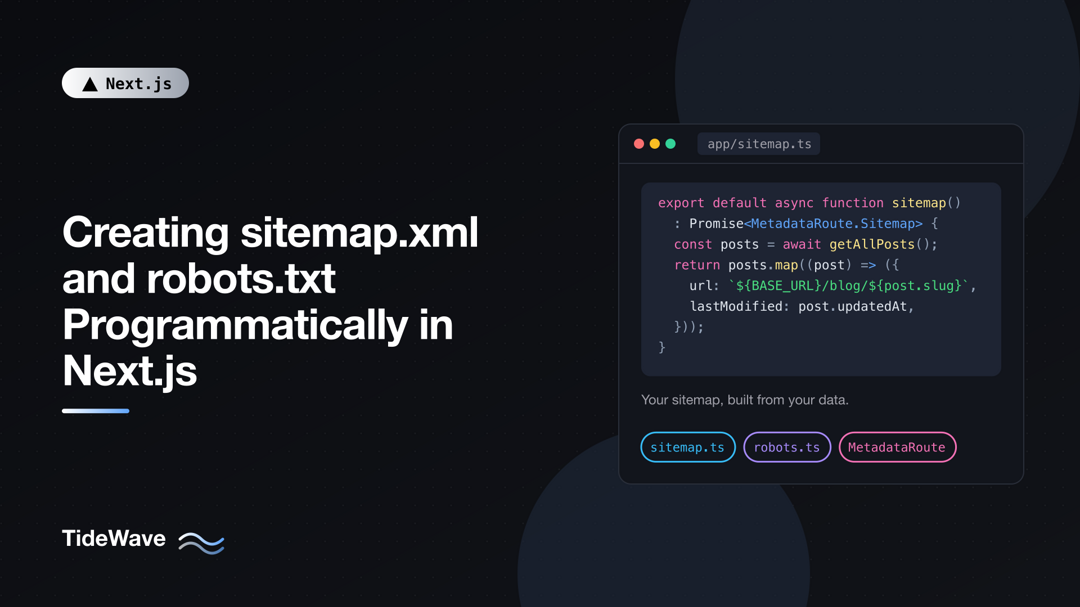
Creating sitemap.xml and robots.txt Programmatically in Next.js
A sitemap tells search engines which URLs exist on your site and when they last changed. A robots.txt tells crawlers where they're allowed to go an
Continue Reading
Generating Dynamic Open Graph Images in Next.js with ImageResponse
When someone shares a link to your site, the preview image does most of the work of getting it clicked. A generic logo on every page looks the same i
Continue Reading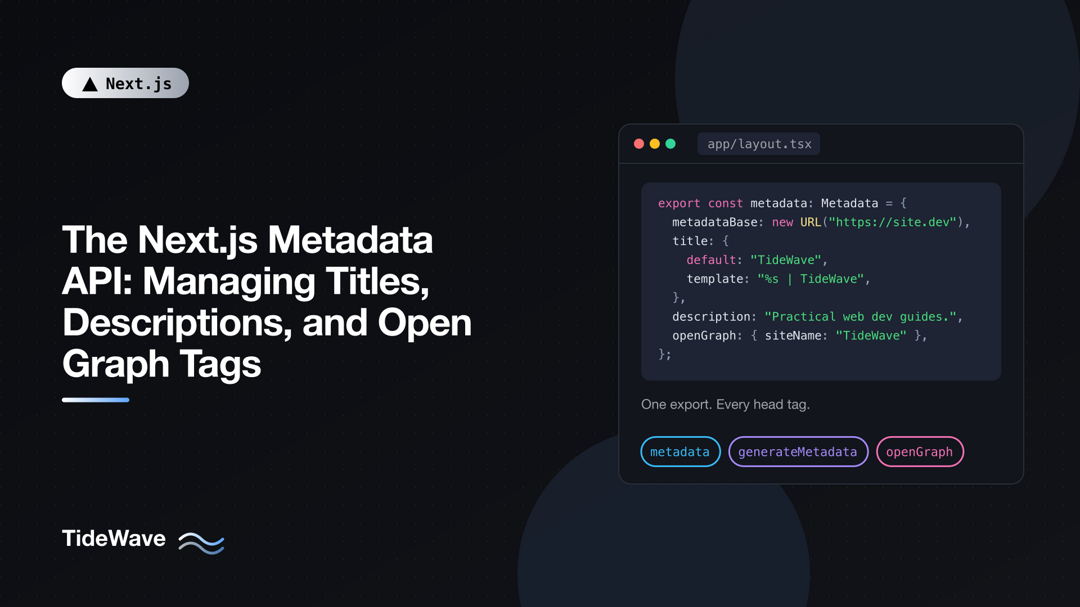
The Next.js Metadata API: Managing Titles, Descriptions, and Open Graph Tags
Every page on your site needs a title, a description, and a set of tags that tell search engines and social platforms how to present it. In the Pages
Continue Reading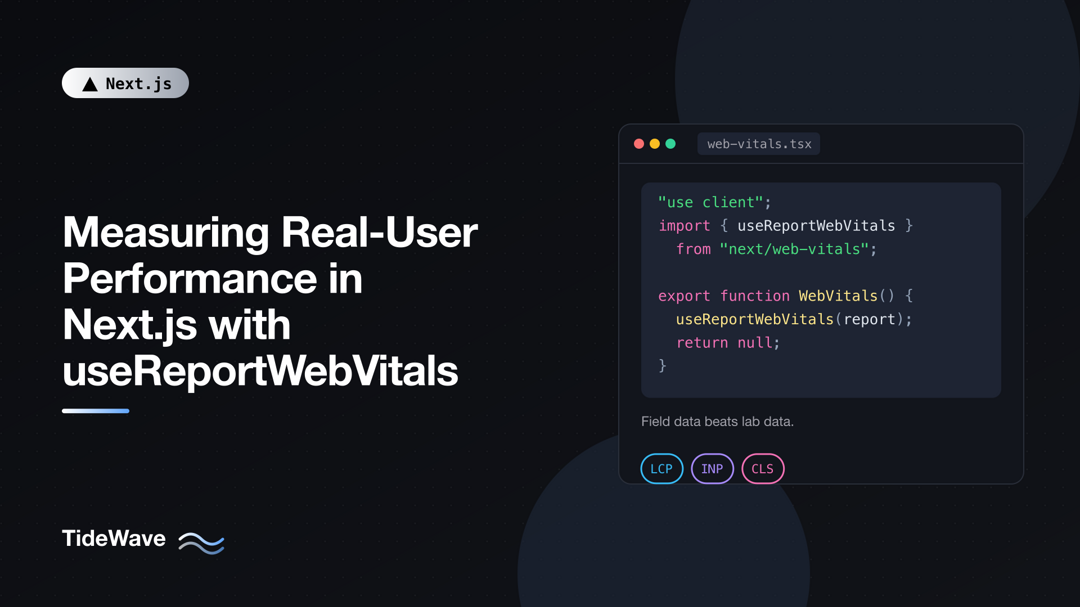
Measuring Real-User Performance in Next.js with useReportWebVitals
Lighthouse tells you how your page performs on one simulated device, on one simulated network, on one run. Your users are on hundreds of different ph
Continue Reading
Edge Runtime vs Node.js Runtime in Next.js: Choosing the Right One
For a few years, "should this route run on the Edge?" was a real question in Next.js projects. You could add export const runtime = "edge" to a pag
Continue Reading
Turbopack in Next.js: What It Is and How It Speeds Up Development
If you started a Next.js project recently, you're already using Turbopack. Since Next.js 16 it's the default bundler for both next dev and `next bu
Continue Reading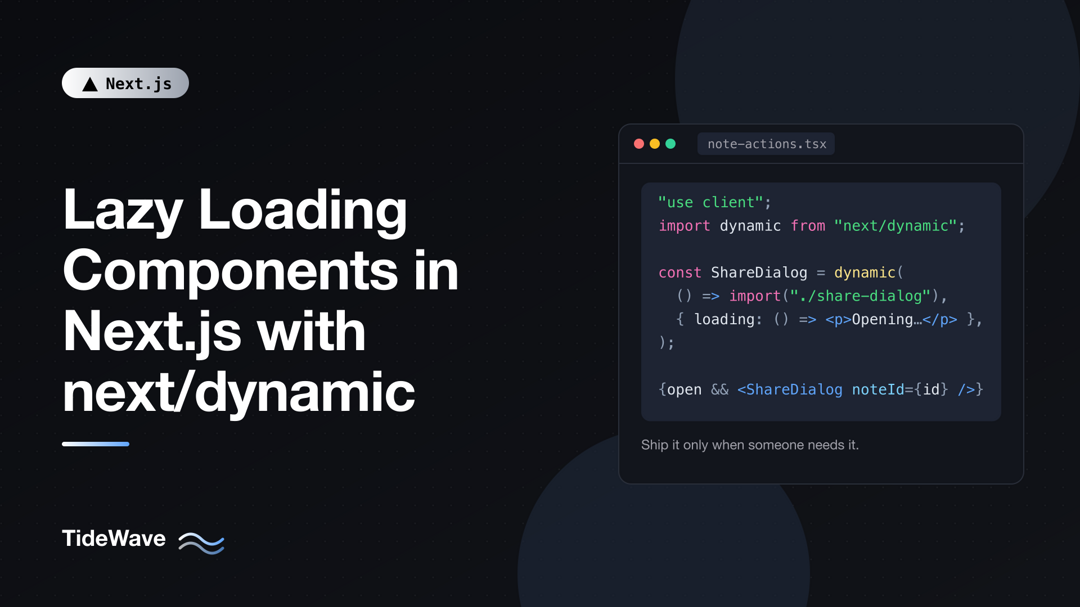
Lazy Loading Components in Next.js with next/dynamic
Not every component on a page is needed the moment the page loads. The rich text editor only matters once someone clicks "Edit". The chart sits three
Continue Reading
Analyzing and Reducing Bundle Size in Next.js with the Bundle Analyzer
Every kilobyte of JavaScript you send has to be downloaded, parsed, and executed before the page is fully interactive, and on a mid-range phone, pars
Continue Reading
Improving Core Web Vitals in a Next.js Application
Core Web Vitals are Google's three measurements of how a page feels to real users: how fast the main content appears, how quickly the page responds t
Continue Reading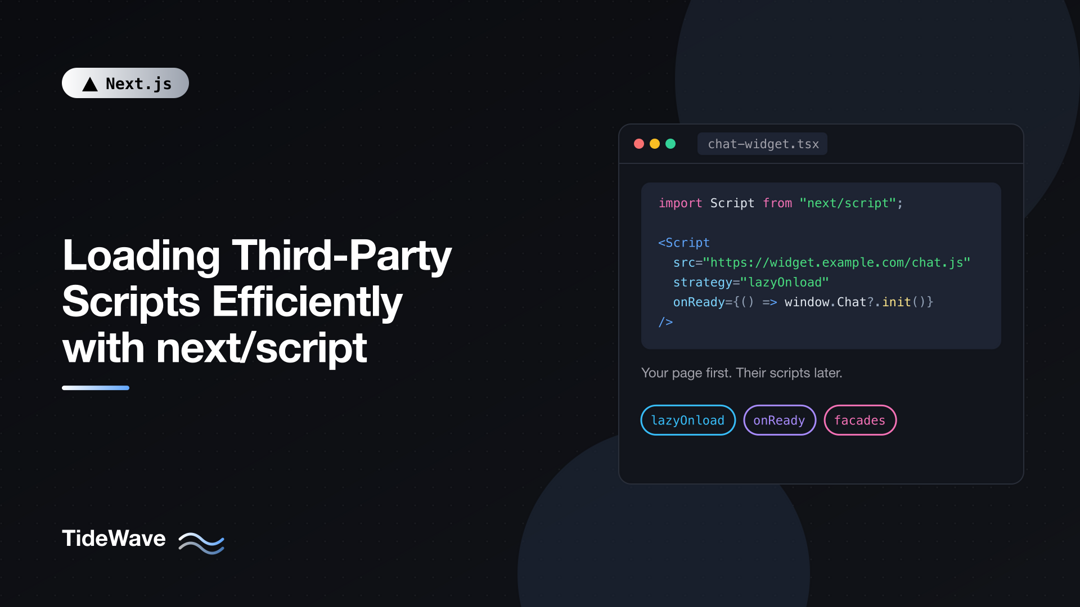
Loading Third-Party Scripts Efficiently with next/script
You can spend weeks shaving kilobytes off your own JavaScript and then lose all of it to a single chat widget. Third-party scripts (analytics, tag ma
Continue Reading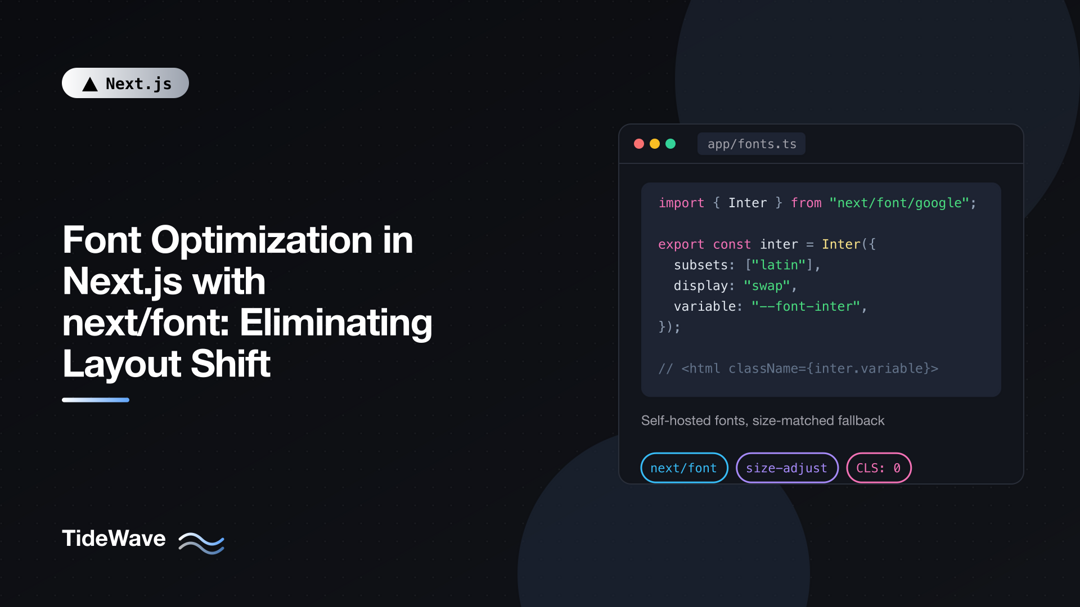
Font Optimization in Next.js with next/font: Eliminating Layout Shift
You load a page, start reading the first paragraph, and then the text jumps. Lines rewrap, a button moves down, the paragraph you were reading is sud
Continue Reading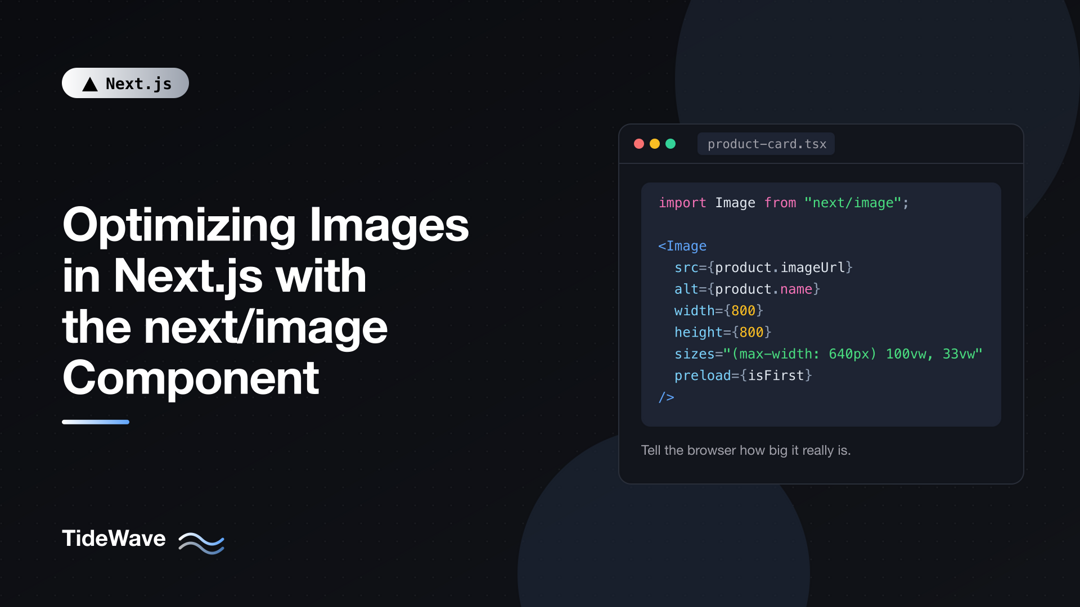
Optimizing Images in Next.js with the next/image Component
Images are usually the heaviest thing on a page. A single unoptimized hero photo can outweigh all of your JavaScript, and images without reserved spa
Continue Reading
Streaming Responses and Server-Sent Events with Next.js Route Handlers
Most HTTP responses are all-or-nothing: the server does its work, then sends the whole body at once. That's fine for a list of products. It's not fin
Continue Reading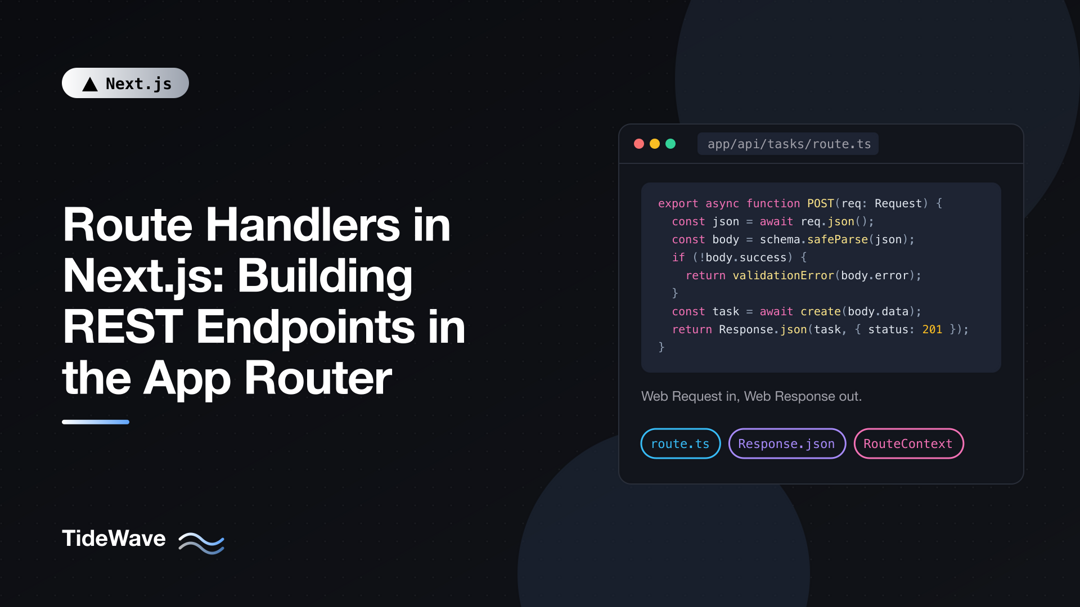
Route Handlers in Next.js: Building REST Endpoints in the App Router
Server Components and Server Actions cover most of what a Next.js app needs from the server. Your pages read data directly, and your forms call funct
Continue Reading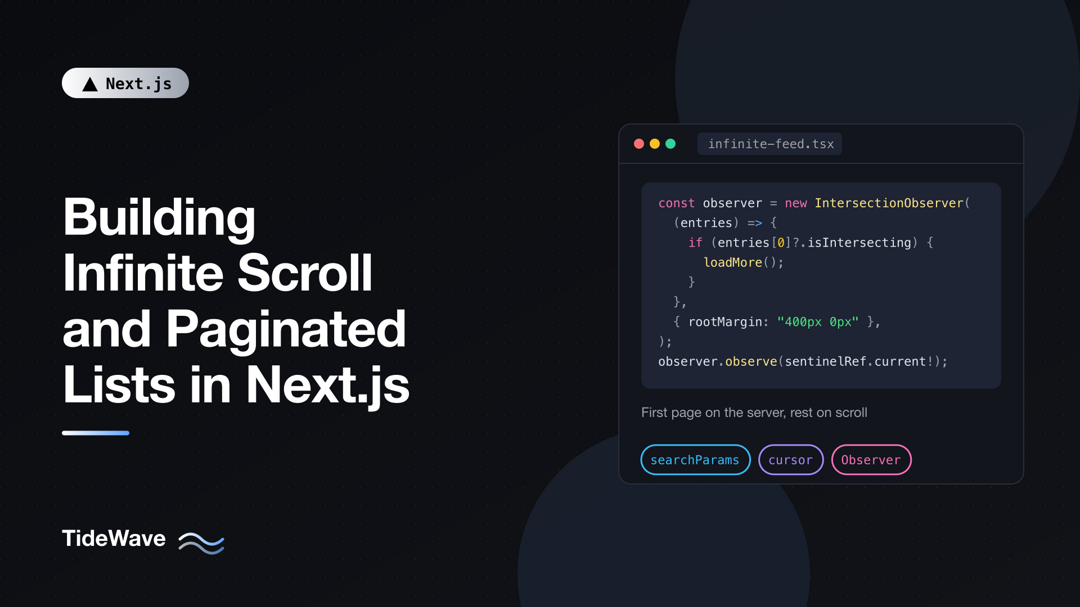
Building Infinite Scroll and Paginated Lists in Next.js
Almost every app eventually has a list that's too long to render in one go: blog posts, products, comments, search results, activity feeds. You have
Continue Reading
Using SWR and TanStack Query Alongside Next.js Server Components
Before the App Router, SWR and TanStack Query (formerly React Query) were close to mandatory in a serious React app. They handled loading states, cac
Continue Reading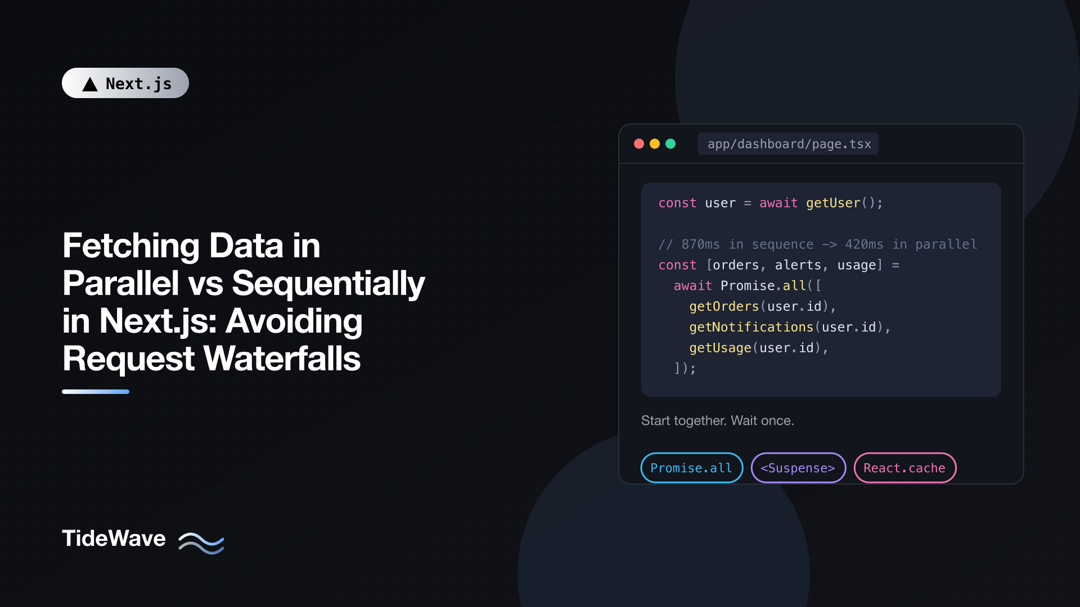
Fetching Data in Parallel vs Sequentially in Next.js: Avoiding Request Waterfalls
Server Components make data fetching feel almost too easy. You mark a component async, await whatever you need, and render. But that convenience
Continue Reading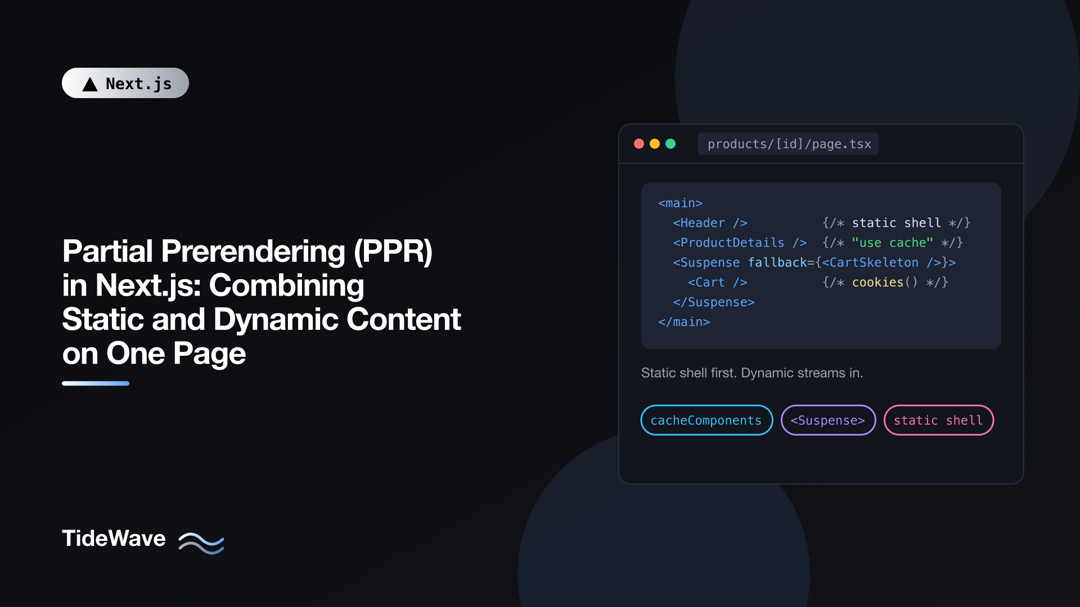
Partial Prerendering (PPR) in Next.js: Combining Static and Dynamic Content on One Page
For years, every route in a Next.js app had to pick a side. A static route was prerendered once and served instantly from a CDN, but it couldn't show
Continue Reading
The "use cache" Directive in Next.js: A Guide to the New Caching Model
Caching in the App Router used to be something that happened to you. fetch calls were cached or not depending on the version, routes became static
Continue Reading
On-Demand Revalidation in Next.js with revalidatePath and revalidateTag
Caching makes Next.js pages fast, but cached content has an obvious problem: it can go out of date. Time-based revalidation helps, since you can tell
Continue Reading
Understanding the Next.js Caching Layers: Request Memoization, Data Cache, and Full Route Cache
Most confusion about caching in Next.js comes from treating it as one thing. You change a record in the database, reload the page, and the old value
Continue Reading
Form Validation in Next.js with Zod and Server Actions
Server Actions make it easy to accept a form submission, but they hand you a FormData object full of strings, nulls, and the occasional File. Bef
Continue Reading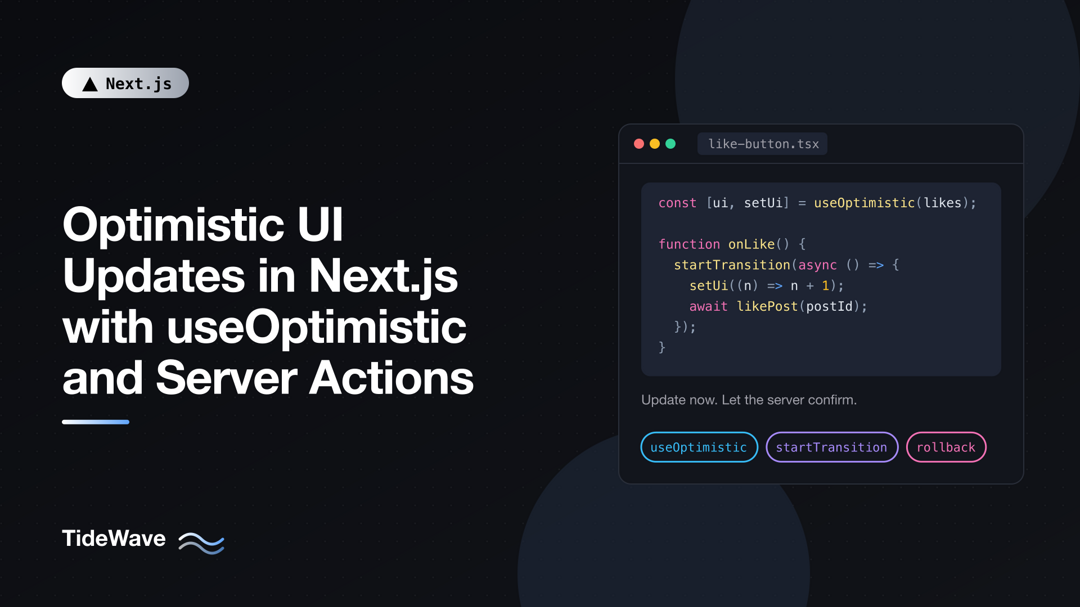
Optimistic UI Updates in Next.js with useOptimistic and Server Actions
Every mutation that goes through the server has a gap between the click and the result. On a fast connection that gap might be 100 milliseconds; on a
Continue Reading
Server Actions in Next.js: Handling Form Submissions Without API Routes
For a long time, handling a form in a React app meant writing the same plumbing over and over. You built an API route, wrote a client component with
Continue Reading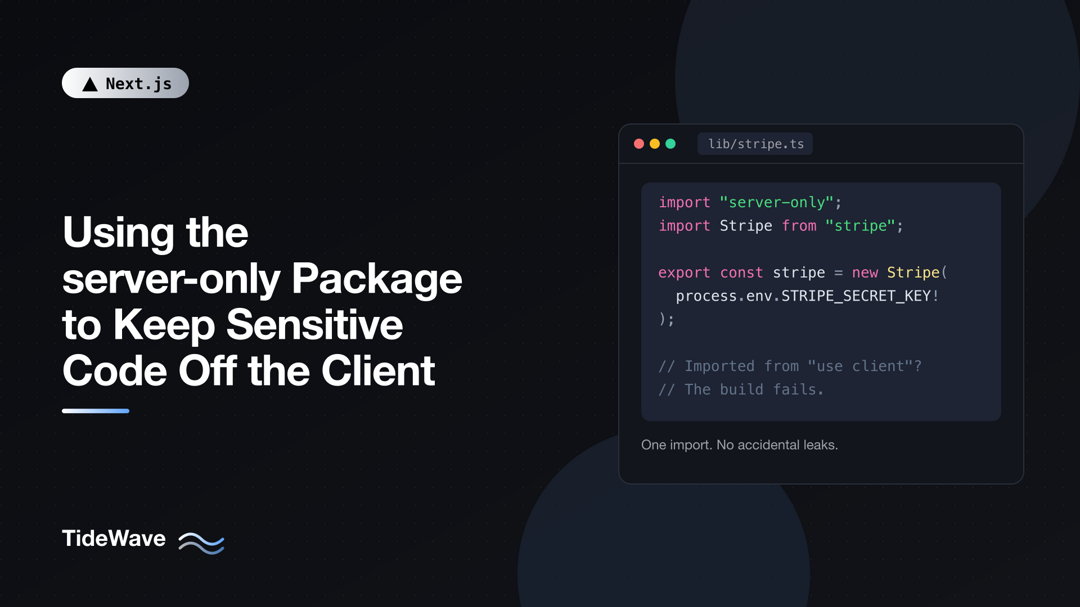
Using the server-only Package to Keep Sensitive Code Off the Client
In the App Router, a module doesn't declare whether it's server code or client code. It becomes one or the other, or both, depending on who imports i
Continue Reading
Composition Patterns for Mixing Server and Client Components in Next.js
Knowing the rules of Server and Client Components is one thing. Structuring a real page with them is another. A modal that contains server-fetched da
Continue Reading
Passing Data from Server Components to Client Components Without Leaking Secrets
Server Components make it easy to forget where the server ends. You query the database right inside a component, the code never ships to the browser,
Continue Reading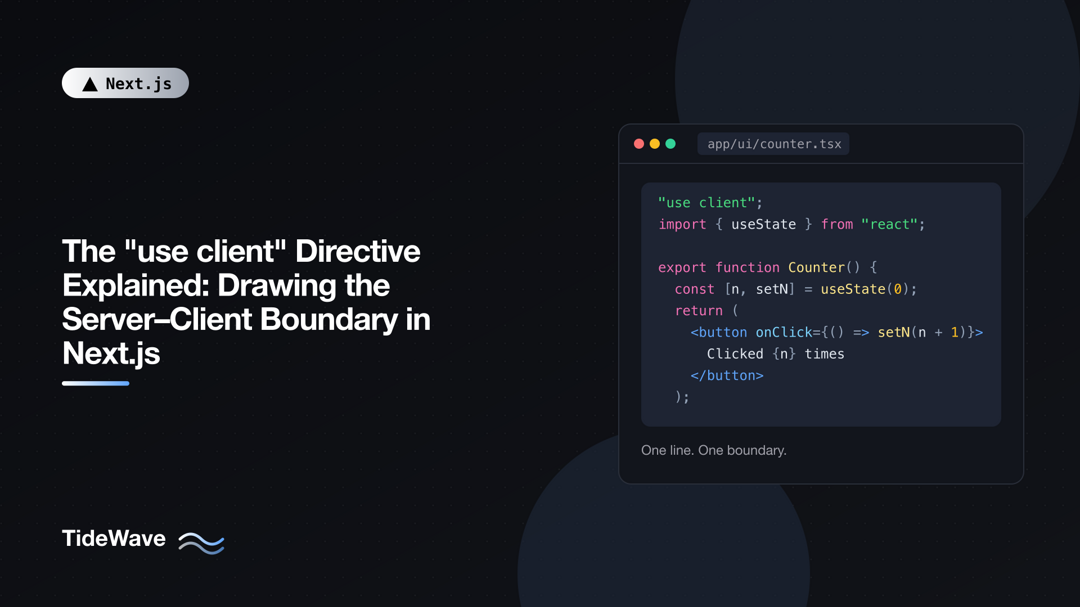
The "use client" Directive Explained: Drawing the Server–Client Boundary in Next.js
"use client" is one line at the top of a file, and it's responsible for a surprising amount of confusion. Developers add it to silence an error and
Continue Reading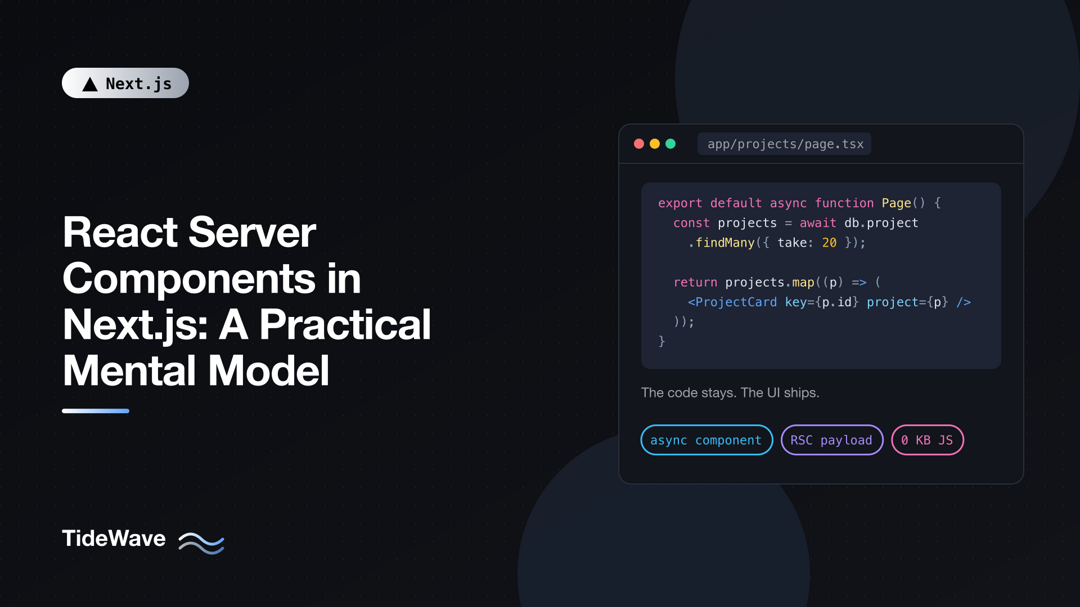
React Server Components in Next.js: A Practical Mental Model
React Server Components (RSC) are the default in the Next.js App Router, which means you're using them whether you've thought about them or not. Ever
Continue Reading
The Next.js Link Component: Prefetching, Scroll Behavior, and Best Practices
Link is probably the component you use most in a Next.js app, and the one you think about least. You import it from next/link, give it an href,
Continue Reading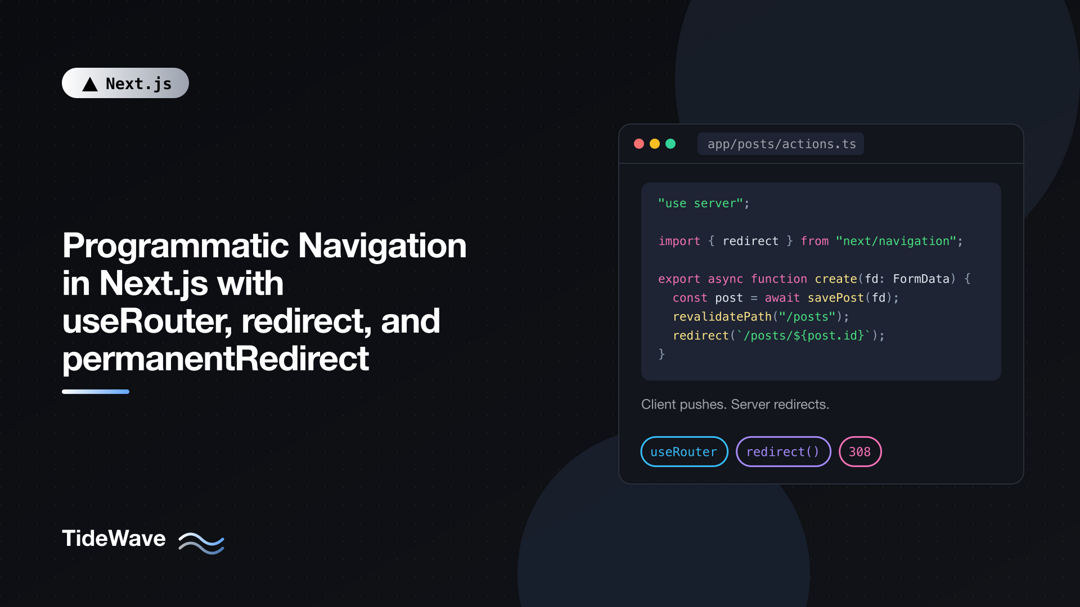
Programmatic Navigation in Next.js with useRouter, redirect, and permanentRedirect
Most navigation in a Next.js app happens through links: the user clicks, the URL changes, a new page renders. But plenty of navigation isn't triggere
Continue Reading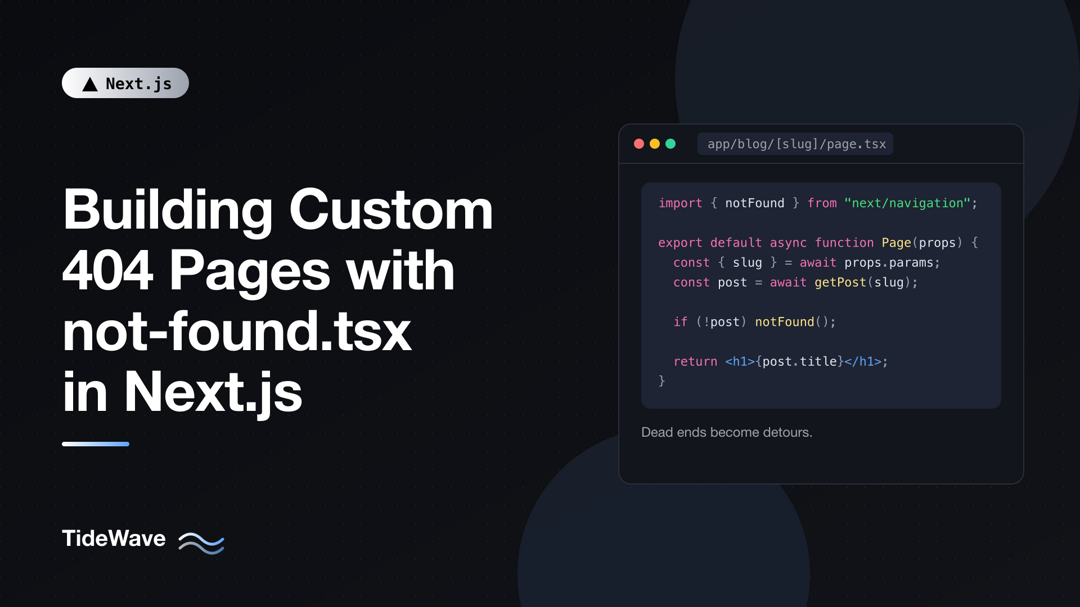
Building Custom 404 Pages with not-found.tsx in Next.js
A 404 page is one of the most visited pages on a typical site, and one of the least designed. People land on it from old links, typos, deleted produc
Continue Reading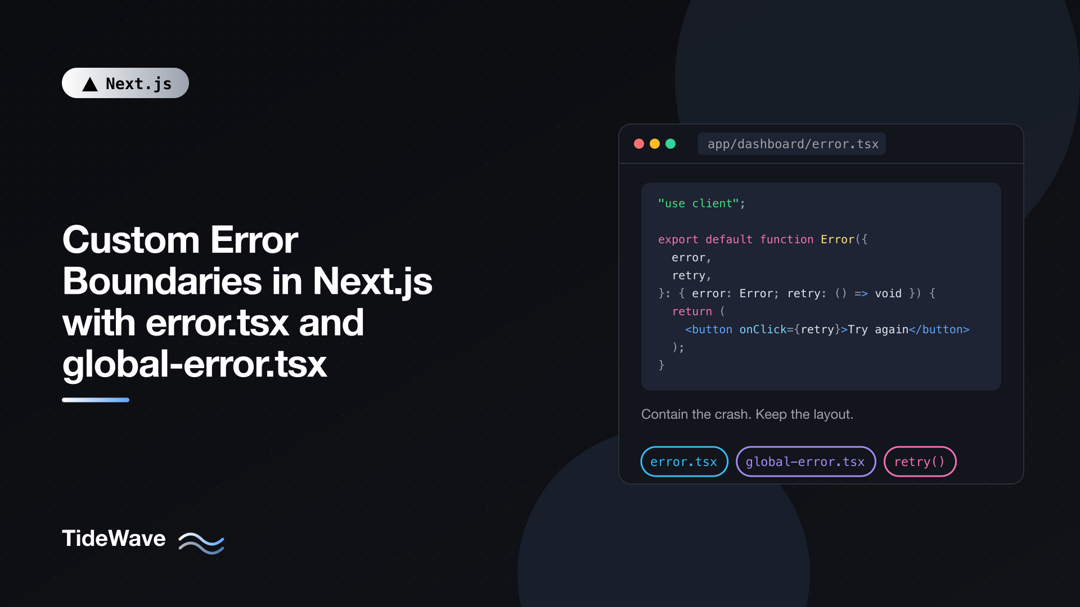
Custom Error Boundaries in Next.js with error.tsx and global-error.tsx
Every app eventually throws an error you didn't plan for. A database times out, an upstream API returns HTML instead of JSON, or someone ships a comp
Continue Reading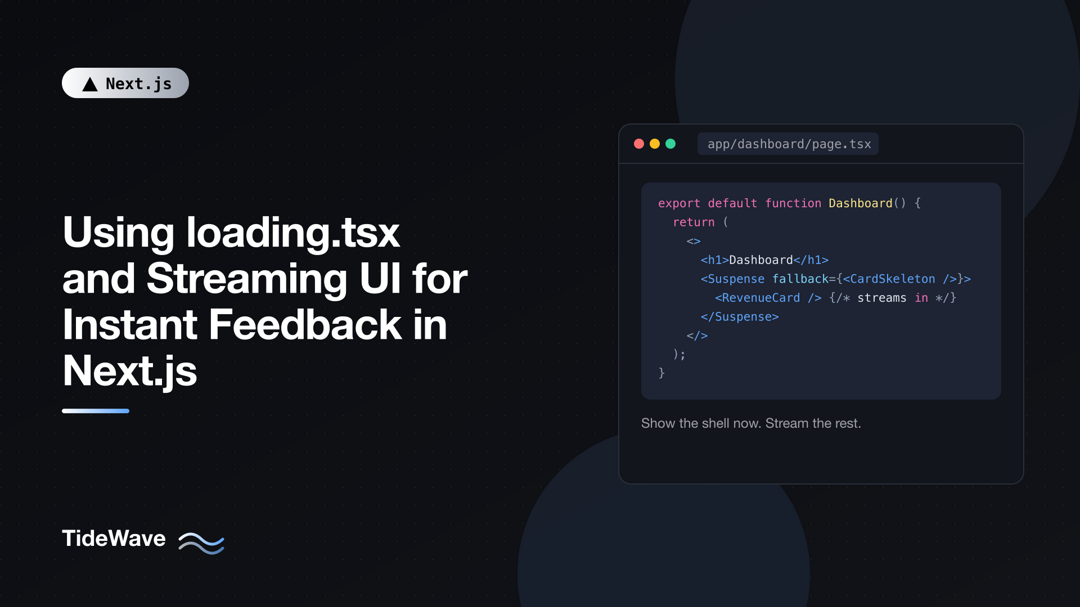
Using loading.tsx and Streaming UI for Instant Feedback in Next.js
When a page depends on slow data, the worst thing it can do is nothing. The user clicks a link, the old page stays on screen, and for a second or two
Continue Reading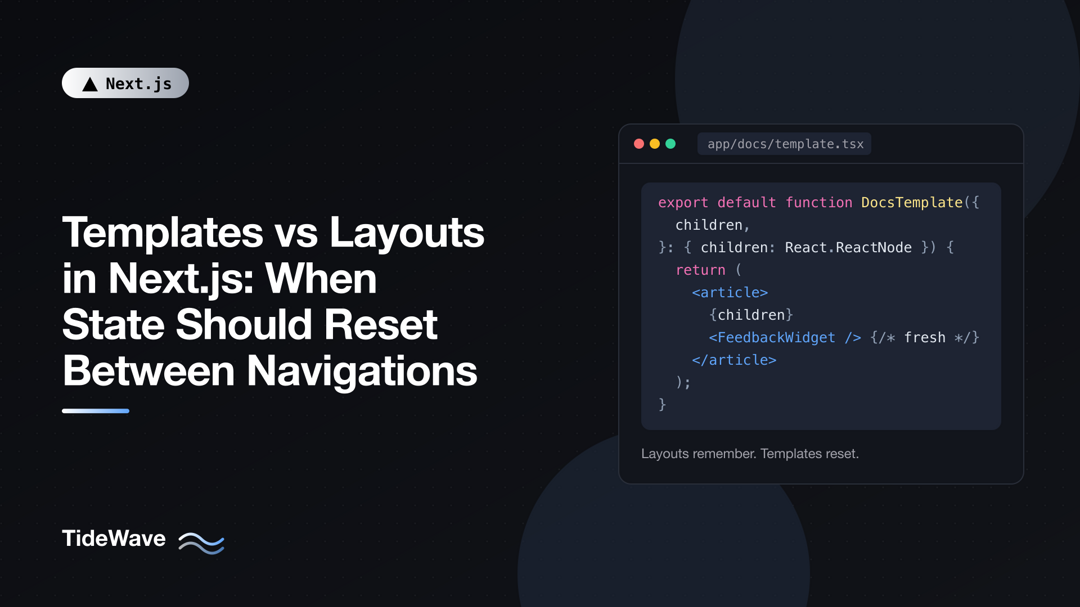
Templates vs Layouts in Next.js: When State Should Reset Between Navigations
Layouts in the App Router are built to persist. Navigate between two pages that share a layout, and the layout stays mounted: its state, its DOM, and
Continue Reading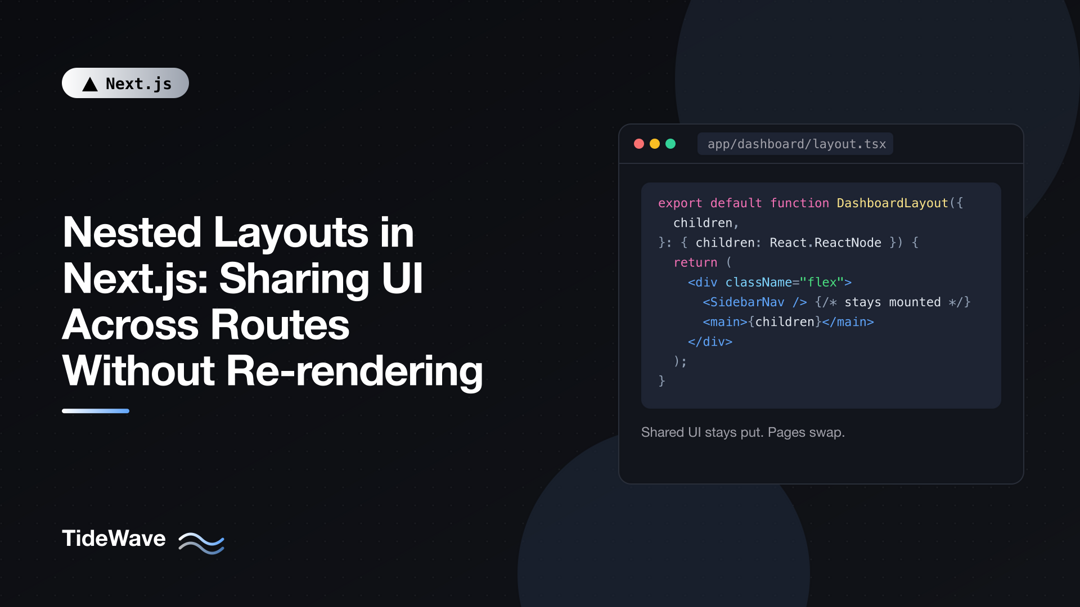
Nested Layouts in Next.js: Sharing UI Across Routes Without Re-rendering
Most apps have UI that repeats across many pages: a top navigation bar, a sidebar inside the dashboard, a row of tabs inside settings. In a tradition
Continue Reading
Intercepting Routes in Next.js: Creating Modal Experiences the Right Way
Most modals are built with a piece of state: const [open, setOpen] = useState(false). That works until someone wants to share what's in the modal,
Continue Reading
Parallel Routes in Next.js: Building Dashboards with Independent Sections
A dashboard is rarely one thing. It's a revenue chart, a list of recent orders, an activity feed, and maybe a panel of alerts, each pulling from a di
Continue Reading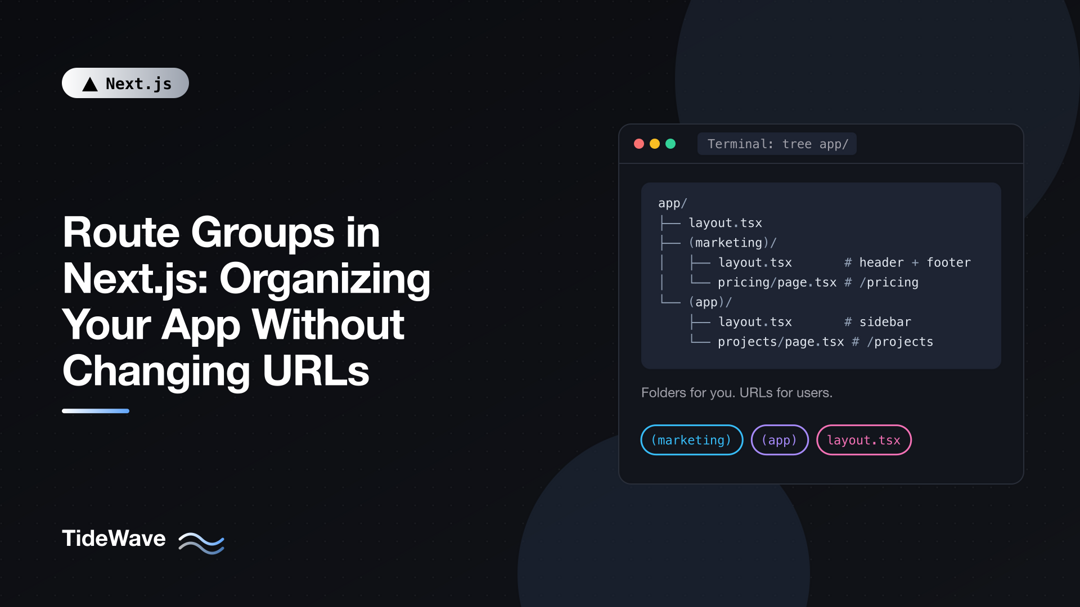
Route Groups in Next.js: Organizing Your App Without Changing URLs
In the App Router, folders are URLs. app/dashboard/settings/page.tsx becomes /dashboard/settings, and every layout.tsx along the way wraps the
Continue Reading
Dynamic Routes in Next.js: Mastering [slug], Catch-All, and Optional Catch-All Segments
Most real routes aren't known ahead of time. A blog has a page per post, a store has a page per product, and a docs site has pages nested three or fo
Continue Reading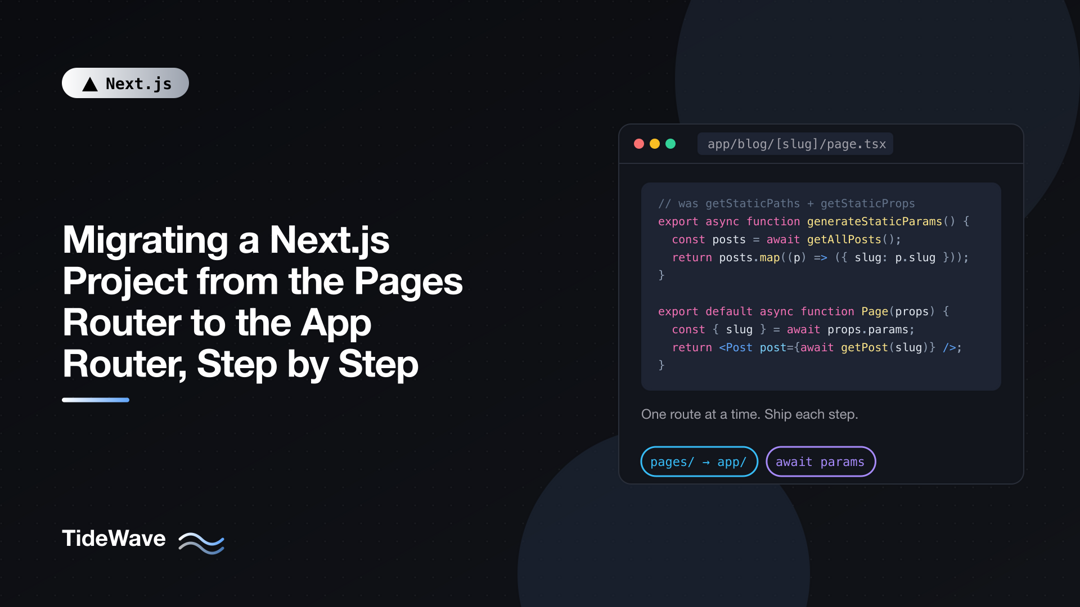
Migrating a Next.js Project from the Pages Router to the App Router, Step by Step
Moving a real project from the Pages Router to the App Router is less scary than it looks, as long as you don't try to do it all at once. The app a
Continue Reading
App Router vs Pages Router in Next.js: Which One Should You Use in 2026?
Next.js ships with two routers. The Pages Router is the original one: a pages directory where every file is a route, data loaded through `getServer
Continue Reading
What is Next.js?
You stand at the precipice of building a modern web application. You have chosen React, a powerful library for crafting dynamic user interfaces. But
Continue Reading
Beyond the Basics: Unlocking the Full Power of Next.js Middleware
Next.js Middleware is more than just a tool for routing and redirection—it's your gateway to building smarter, more responsive applications. If you'r
Continue Reading
How Do You Efficiently Manage API Routes in Large-Scale Next.js Applications?
As Next.js grows in popularity for building full-stack applications, efficiently managing [API routes](https://nextjs.org/
Continue Reading
What is Code Splitting in Next.js? How Does It Improve Performance?
Code splitting is a crucial
Continue Reading
Security Considerations When Building a Next.js Application and Mitigating Common Security Risks
Building secure web applications is crucial to protect both users and the application itself from various security threats.Next.js, a popular React f
Continue Reading
How to Integrate CSS and Sass in Next.js?
Next.js is a powerful React framework that provides built-in support for CSS and **Sass*
Continue Reading
How to Use TypeScript with Next.js and the Benefits of Using TypeScript?
TypeScript has gained significant popularity among developers due to its ability to catch errors at compil
Continue Reading
Managing Authentication in a Next.js Application: A Detailed Guide of NextAuth.js
Authentication is a critical aspect of many web applications, ensuring that users can securely access their data and functionalities. In **[Next.
Continue Reading
Understanding Middleware in Next.js: Concept and Example
Middleware is an integral part of web development that enables deve
Continue Reading
Incremental Static Regeneration (ISR) in Next.js: A Comprehensive Guide
Incremental Static Regeneration (ISR) is
Continue Reading
Understanding Server-Side Rendering (SSR) in Next.js
Server-Side Rendering (SSR) is a crucial feature in modern
Continue Reading
Understanding Internationalization (i18n) in Next.js
Internationalization, often abbreviated as i18n, is the process of designing and developing software applications that can be adapted to differen
Continue Reading
Integrating Next.js with Other Backend Technologies: Express, GraphQL, and Beyond
Next.js, a versatile React framework, is often used for building frontend applications. However, its flexibility extends beyon
Continue Reading
Exploring Advanced Data Fetching in Next.js
Data fetching is a critical aspect of web development, enabling applications
Continue Reading
Common Deployment Strategies for Next.js Applications
Deploying a Next.js application involves several strategies tailored to various needs, from simple static sites to **dynamic s
Continue Reading
Understanding Static Site Generation (SSG) in Next.js and When to Use It
Static Site Generation (SSG) is a powerful feature pr
Continue Reading
How Does Next.js Handle Routing and What Are Its Advantages Over Client-Side Routing Libraries?
Next.js is a popular React framework known for its robust features, including a powerful routing system. Routing is an
Continue Reading
The Benefits of Using Next.js for SEO
Next.js, a React-based framework, offers powerful features that enhance web development efficiency and performance
Continue Reading
What is Next.js and how does it differ from React?
Next.js has emerged as one of the leading frameworks in the modern web development landscape, especially for React application
Continue Reading