Blog

Molecular Polarity: Why Shape Determines Charge Distribution
Carbon dioxide (CO₂) and water (H₂O) both contain polar covalent bonds, yet CO₂ is a nonpolar molecule overall while water is strongly polar. This is
Continue Reading
Hybridization Explained: sp, sp2, and sp3 Orbitals
A carbon atom's electron configuration is 1s² 2s² 2p², which on paper suggests only two unpaired electrons available
Continue Reading
VSEPR Theory: Predicting Molecular Geometry
A 2D Lewis structure tells you which atoms are bonded to which, but it says nothing about a molecule's actual three-dimensional shape, and shape turn
Continue Reading
Real Gases vs. Ideal Gases: Where the Model Breaks Down
The ideal gas law is one of the most useful equations in introductory chemistry precisely because it's so broadly a
Continue Reading
Boyle's Law, Charles's Law, and the Combined Gas Laws
Before the ideal gas law unified gas behavior into one equation, scientists discovered its individual pieces separa
Continue Reading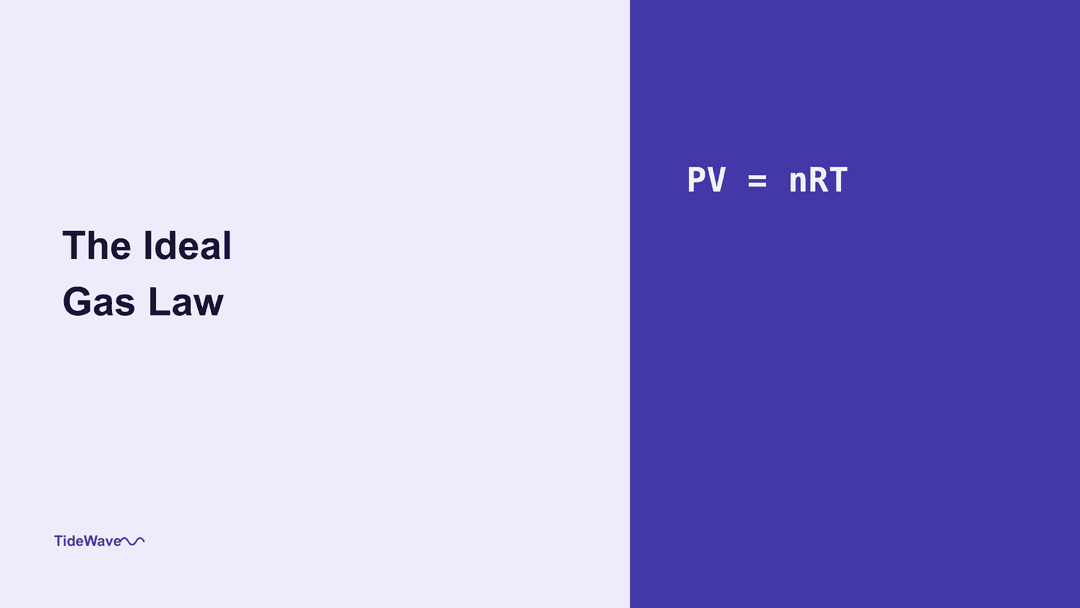
The Ideal Gas Law: Understanding PV = nRT
Of the three states of matter covered in introductory chemistry, gases are by far the most mathematically
Continue Reading