Blog
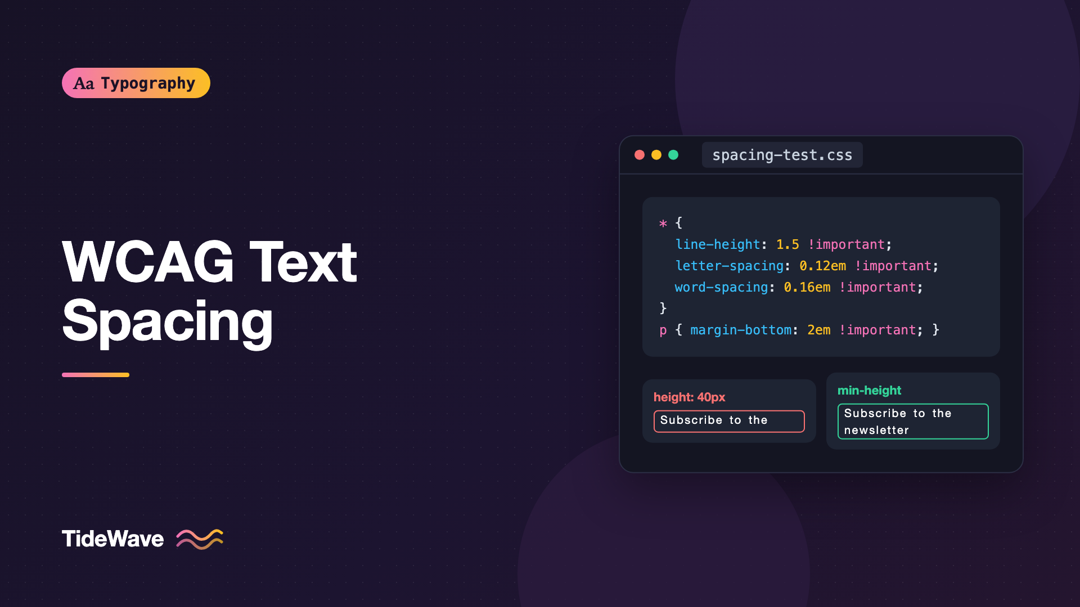
Meeting WCAG Text Spacing Requirements
- Maria
- Typography
- 23 Oct, 2026
A user with low vision or dyslexia installs a browser extension that adds extra space between letters, words, and lines. On most sites, articles refl
Continue Reading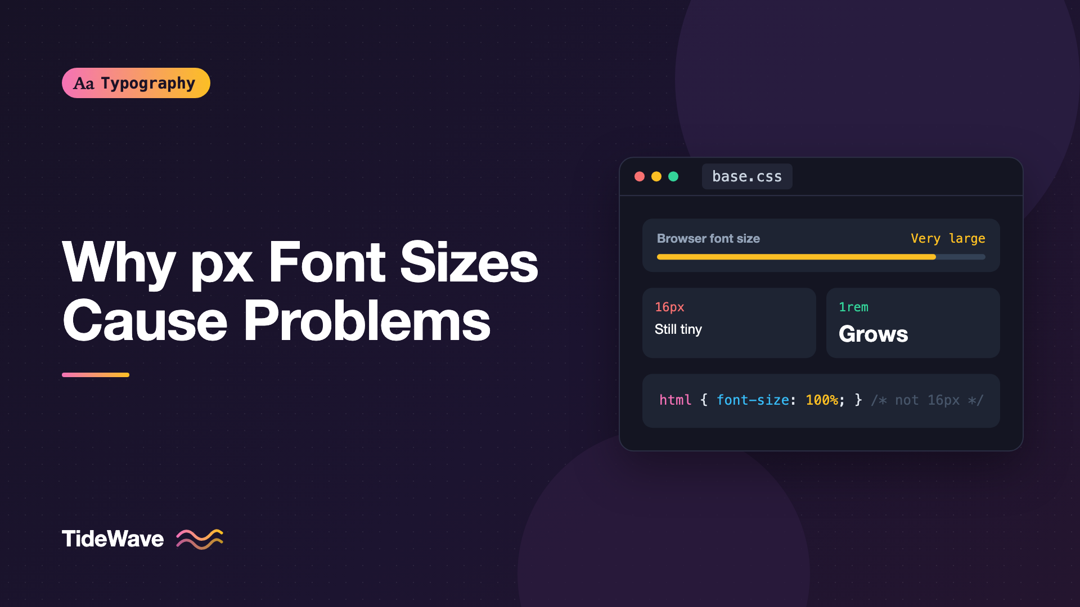
Respecting User Font Size Preferences: Why px Font Sizes Cause Problems
- Maria
- Typography
- 23 Oct, 2026
Open your browser's settings and look for the font size option. In Chrome it's under Appearance, in Firefox under Fonts. It's set to "Medium" or 16 b
Continue Reading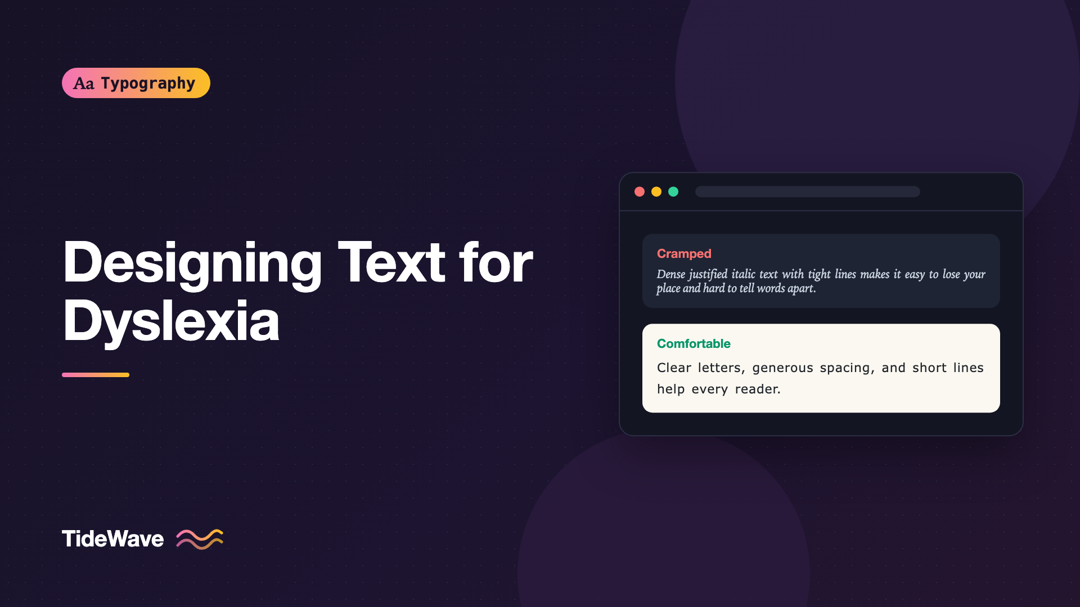
Designing Text for Users with Dyslexia
- Maria
- Typography
- 23 Oct, 2026
Picture a dense block of justified text, set in a light italic font, with tight line spacing and long lines, on a bright white background. Most reade
Continue Reading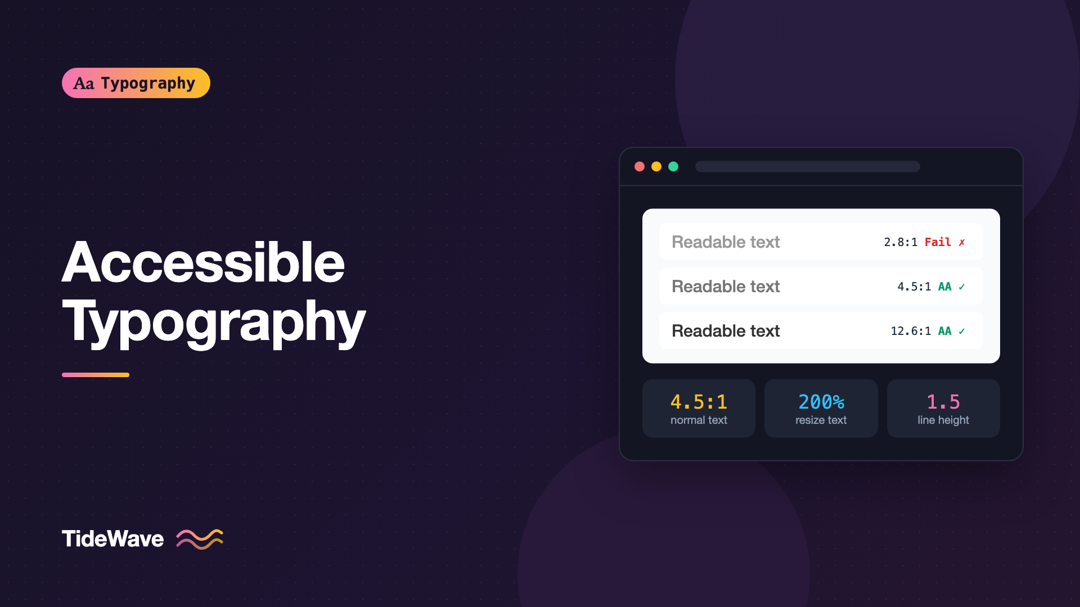
Accessible Typography: Font Size, Contrast, and Spacing Guidelines
- Maria
- Typography
- 23 Oct, 2026
Most accessibility work on a website involves text. Navigation labels, form instructions, error messages, article bodies, button captions: if people
Continue Reading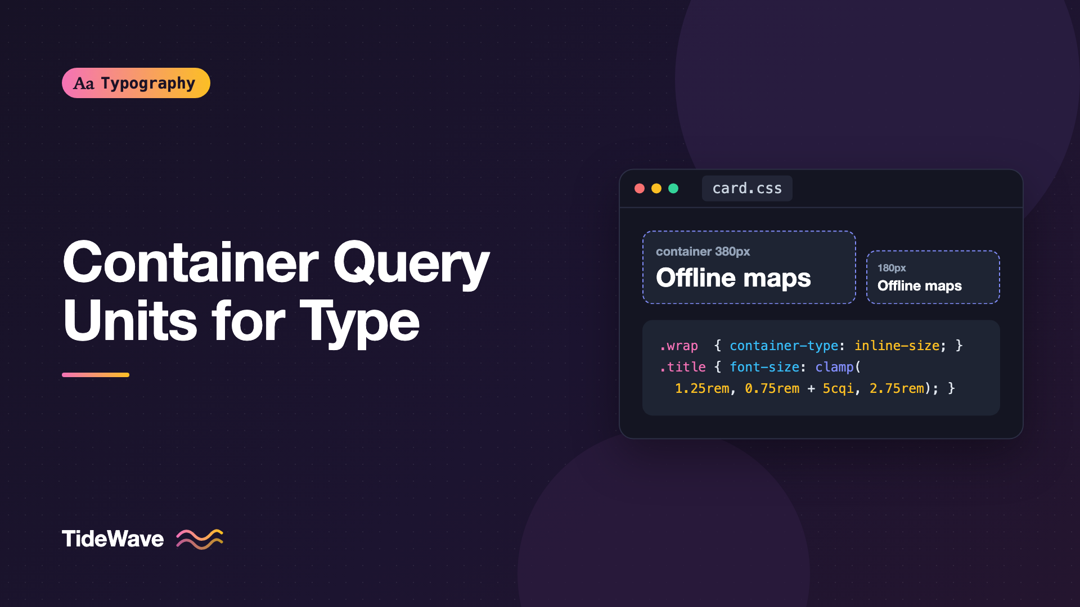
Using CSS Container Query Units for Component-Level Typography
- Maria
- Typography
- 23 Oct, 2026
Fluid typography built on viewport units has a blind spot. A card title sized with clamp(1.25rem, 1rem + 1.5vw, 2rem) looks great when the card spa
Continue Reading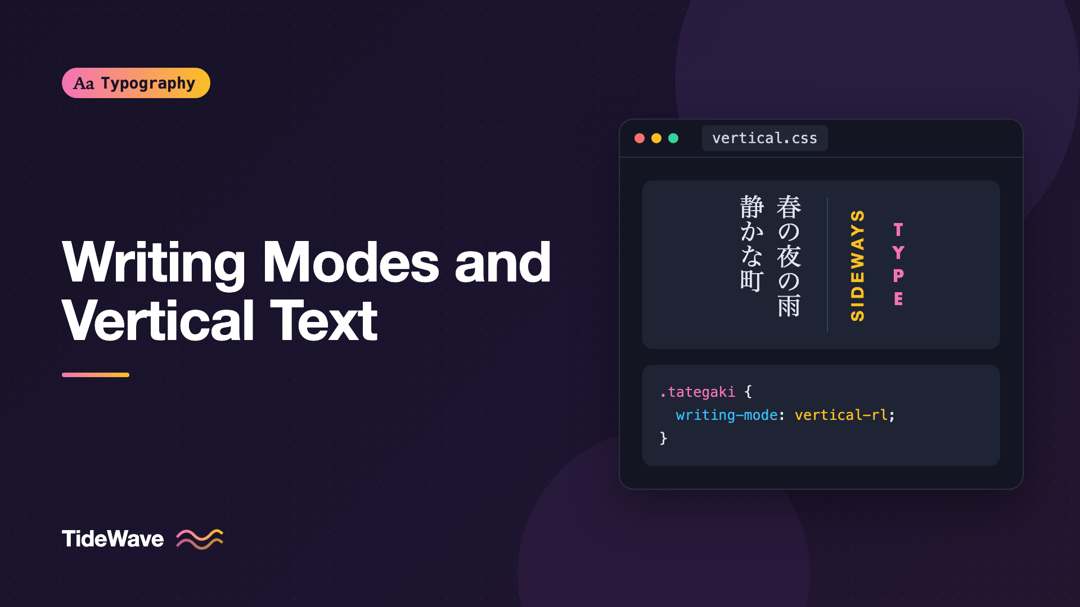
Writing Modes and Vertical Text in CSS
- Maria
- Typography
- 23 Oct, 2026
Most web layouts assume text runs left to right and lines stack from top to bottom. That assumption is so deep that properties like margin-left and
Continue Reading