Blog

Corrosion Chemistry: Why Metals Rust and How to Prevent It
An old car fender developing a reddish-brown patch of rust looks like simple decay, but what's actually happening is a fully functioning [electrochem
Continue Reading
Fuel Cells: Clean Energy Through Electrochemistry
A hydrogen-powered vehicle can refuel in about five minutes and drive for hundreds of miles, producing nothing but water vapor from its tailpipe. The
Continue Reading
How Batteries Work: A Chemistry Perspective
A battery doesn't actually store electricity the way a water tank stores water. What it stores is a chemical reaction waiting to happen, one that
Continue Reading
Dimensional Analysis: The Chemist's Method for Unit Conversion
Chemistry problems rarely hand you data in the exact units you need. A reaction might give you a volume in milliliters when you need liters, a mass i
Continue Reading
Percent Composition: Finding an Element's Share of a Compound
Every sample of pure water, anywhere on Earth, is made of exactly 11.2% hydrogen and 88.8% oxygen by mass, without exception. This fixed ratio isn't
Continue Reading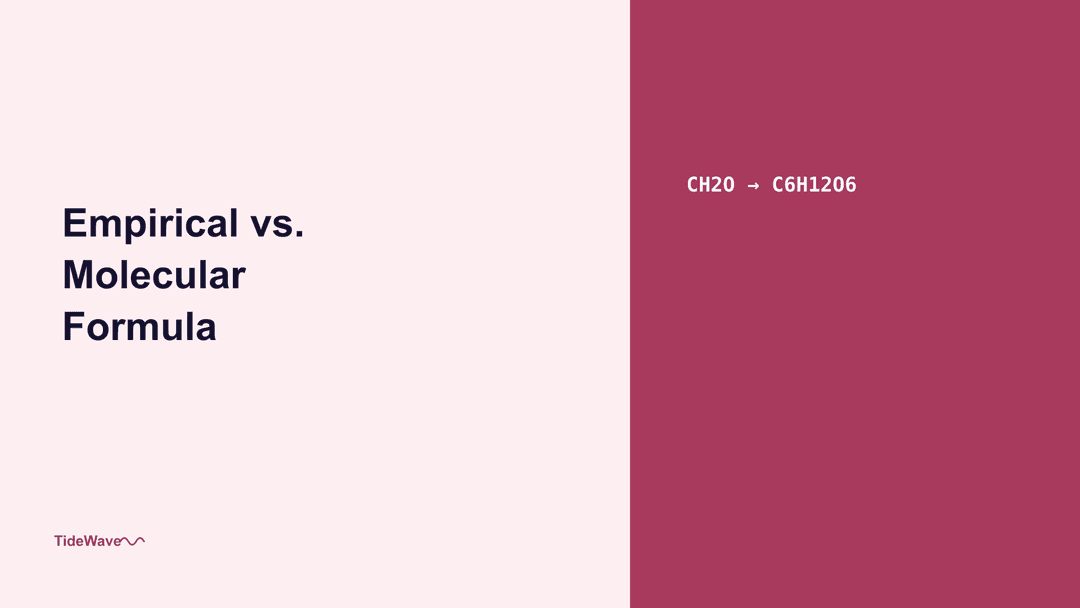
Empirical Formula vs. Molecular Formula Explained
Formaldehyde (a preservative and industrial chemical) and glucose (the sugar your body runs on) share something surprising: the exact same simplest r
Continue Reading